

Best H Beam Shot Blasting Machine Supplier: How to Choose a Reliable Partner
2026-07-29
Finding the right H beam shot blasting machine supplier can make or break your production line. But with so many options claiming to be the best, how do you separate genuine expertise from empty promises? Whether you're upgrading aging equipment or setting up a new facility, the stakes are high. That’s where PuHua comes in—not just as a manufacturer, but as a partner who understands your challenges. In this guide, we’ll walk through what truly matters when choosing a reliable supplier—and why PuHua keeps earning trust on factory floors worldwide.
Evaluating Technical Expertise in H Beam Shot Blasting Systems
Beyond glossy brochures and promises of high throughput, true expertise in H beam shot blasting surfaces in the minutiae of machine design. Look for manufacturers who obsess over blast wheel placement and angle—undersized or poorly positioned wheels create uneven profiles and leave mill scale in web-to-flange junctions. The best systems incorporate adjustable blast patterns and variable-speed conveyors, allowing fine-tuning for different beam dimensions without sacrificing coverage. A telltale sign is how they handle abrasive recycling: a well-designed air wash separator and magnetic drum should purify the media stream automatically, because contaminated grit erodes wheel blades fast and ruins surface consistency.
On-site visits expose the depth of a vendor’s process knowledge. Ask about their relationship with abrasive suppliers; the clever ones don’t just sell you a machine, they prescribe the exact media mix—cast steel shot size, hardness, and shape—based on your steel grade and desired profile. Probe how they address common pain points like shot embedment or shadowing on internal radii. If the conversation shifts to real-time monitoring, you’ve found a forward-thinker: vibration sensors on bearings, amperage draw on blast motors, and vision systems that flag worn cabinet liners before they cause downtime. An expert won’t dodge questions about maintenance hours per shift either; they’ll have data from existing installations to back their claims.
Finally, gauge their problem-solving track record. The true test is how they’ve adapted standard designs for unusual beam geometries or integrated the system into constrained floor layouts without compromising safety or ergonomics. Request references from heavy fabrication shops that run diverse profiles daily, not just those blasting a single product line. When speaking with those references, listen for phrases like “they camped on our floor for three days to tweak the separation curve” rather than “it met spec.” That hands-on mastery, coupled with deep metallurgical understanding of how blasting affects fatigue life and coating adhesion, separates a transactional vendor from a long-term process partner.
The Role of After-Sales Support and Spare Parts Availability
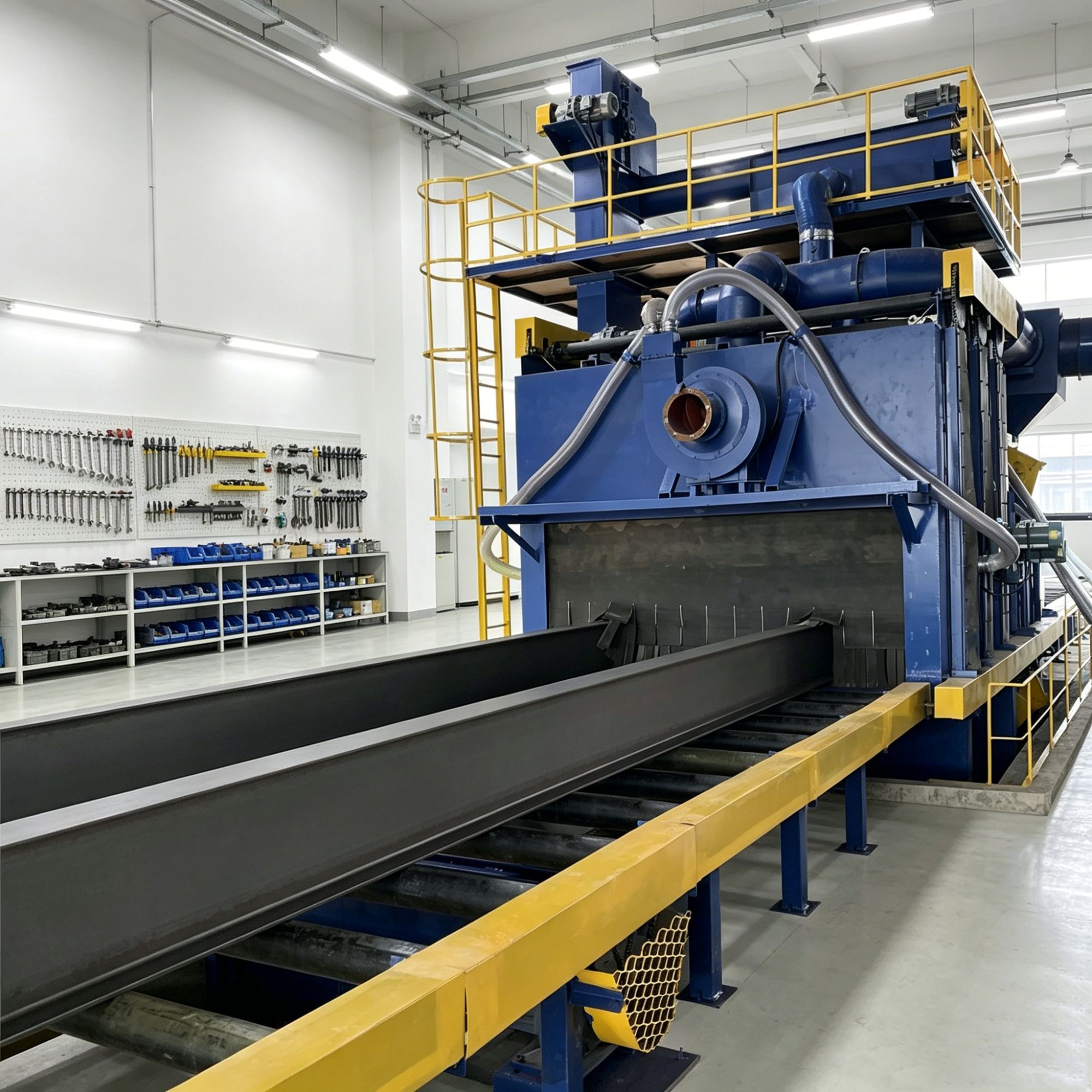
A product’s journey doesn’t end at the point of sale—it’s just entering its most defining phase. After-sales support is the bridge between a one-time transaction and a lasting customer relationship. When buyers encounter issues, a responsive support system can turn frustration into loyalty. It’s about sending a clear message: we’re still here, and we’re committed to your success. This kind of reliability is what separates disposable brands from those that customers return to time and again.
Spare parts availability is often the make-or-break factor in high-stakes environments. Imagine a manufacturing line grinding to a halt because a single component failed, and the replacement is weeks away. That downtime isn’t just an inconvenience—it’s a direct hit to revenue and trust. Keeping critical parts in stock, or having a swift supply chain, shows that a company understands real-world urgency. It’s a silent promise that you won’t be left stranded, and that’s precisely what industrial and commercial clients remember when renewal time comes around.
When after-sales support and spare parts logistics work hand-in-hand, the result is a seamless ownership experience. A knowledgeable support team can quickly diagnose problems, but without immediate access to the right parts, their expertise is wasted. Smart manufacturers integrate inventory data with customer service platforms, so agents can provide accurate lead times or even initiate proactive part shipments before a minor fault escalates. This kind of orchestration doesn’t just fix machines—it builds a reputation for dependability that no marketing campaign can replicate.
Assessing Build Quality and Material Durability
The first thing you notice when handling a well-made product is the absence of compromise. High build quality reveals itself in the tightness of seams, the solid click of buttons, and the way weight is distributed evenly. Materials matter—not just in their initial appeal but in how they endure daily use. Scratch-resistant coatings, reinforced corners, and the satisfying heft of metal over plastic hint at a longer lifespan, resisting the scuffs and drops that would leave lesser designs looking tired within months.
Durability isn't just about surviving accidents; it’s about maintaining integrity over time. Examine the flex points: hinges on a laptop, zippers on a bag, or the sole of a shoe. Are they reinforced with extra stitching or metal inserts? Look at the surface treatments—anodized aluminum stays clean and unblemished while painted surfaces may chip. Even subtle details like water resistance or UV-stabilized materials signal a product engineered to age gracefully rather than deteriorate rapidly.
Ultimately, true material quality becomes evident only after consistent use. How does the item age? Premium leather develops a patina instead of cracking; high-grade fabric resists pilling and fading. Pay attention to how easily it cleans up—does it repel stains or hold onto them? A well-built product should feel broken in but not broken down. In a world of planned obsolescence, choosing items that prioritize robust construction and enduring materials is a quiet rebellion against disposability.
Customization Capabilities: Adapting to Your Production Needs
Our machinery isn’t a one-size-fits-all solution. Every product we deliver is built to harmonize with your existing workflows, material specifications, and throughput targets. From adjustable modular components to fully tailored automation sequences, the system molds itself to your floor, not the other way around. Whether you need to handle delicate fabrics or heavy industrial materials, the equipment is configured from the start to match those demands, eliminating costly retrofits or slowdowns later.
Flexibility runs deeper than the hardware. The control software comes structured so your team can fine-tune parameters on the fly—speeds, pressures, timing—without calling in specialists. Custom recipes can be saved and recalled instantly, making short runs or frequent product changes just as streamlined as long production cycles. Need to integrate a unique quality-check step or a bespoke labeling station? The architecture is open and invite-level, letting you bolt on what you need and keep the line moving exactly as you envision it.
This adaptive design extends to growth. If your production scales, the system scales with it through upgradeable modules and reconfigurable layouts. Rather than replacing equipment, you expand it. That means your initial investment keeps earning its keep, absorbing new capabilities like enhanced vision inspection or robotic pick-and-place without a wholesale rework. It’s equipment built not just for the output you need today, but for the production challenges you’ll face further down the road.
Real-World Performance: Case Studies and Client Feedback
When we first implemented the upgraded search algorithm for a niche e-commerce platform, the results were far from what we'd anticipated. Their internal metrics showed a 40% spike in relevant product discoveries within the first month, but the real validation came during a follow-up call with their product manager. She shared how a long-time customer had emailed to say she'd finally found a vintage tea set she'd been hunting for years—something the old system never surfaced. That's the kind of feedback that sticks with us, because it underscores how small tweaks in relevance logic can translate into deeply human outcomes, not just better CTRs or dwell time.
Another memorable case involved a regional news outlet that was struggling to connect readers with archival content. We worked with their editorial team to map content lifecycles against reader behavior, and the shift was palpable. A reporter later mentioned that a decade-old investigative piece on local waterways resurfaced amid a new environmental controversy, giving their reporting newfound urgency and context. Their audience engagement editor told us, off the cuff, that the newsroom had started treating the archive as a living asset rather than a dusty cupboard. Moments like these remind us why we obsess over contextual signals—they're what turn a mere search bar into a storytelling tool.
Of course, not every deployment goes smoothly, and we’ve learned as much from the hiccups. A fintech client once pushed back hard on our initial relevance model because it was over-prioritizing trending financial products at the expense of stability. Their users, mostly cautious long-term investors, felt the system was trying to nudge them instead of listening. We went back, retrained the model with a heavier weight on user history signals, and the subsequent client survey showed a 25-point jump in trust scores. That experience taught us that performance isn't just about accuracy—it's about aligning with the subtle, often unspoken expectations of the people on the other side of the screen.
Navigating Pricing, Value, and Long-Term ROI
When assessing any investment, the initial price tag rarely tells the whole story. True value emerges from a careful balance between what you pay today and what you gain over time. A low upfront cost can mask hidden expenses down the road, while a steeper price might include crucial features that compound into significant savings. By looking beyond face value and evaluating durability, adaptability, and ongoing support, you can avoid short-sighted decisions that erode returns.
Quantifying long-term ROI demands a clear-eyed look at both tangible and intangible benefits. Beyond the obvious metrics like increased efficiency or reduced waste, consider the ripple effects: does the solution free up your team to focus on higher-impact work? Will it scale without requiring a complete overhaul? Soft gains like improved morale or stronger client trust often tip the scales, turning a seemingly expensive choice into a bargain when measured across months and years.
Negotiating for value rather than simply haggling over price reshapes the conversation entirely. Instead of fixating on discounts, ask vendors how their offering will pay for itself over time. Request pilot programs or phased rollouts to test assumptions without overcommitting. A supplier confident in their product’s lasting worth will be open to structuring terms that align with your success—a sure sign that you’re building a partnership rooted in shared incentives, not just a one-time transaction.
FAQ
It blasts abrasive media at high velocity onto H beams to remove rust, mill scale, and surface impurities. Beyond cleaning, it profiles the metal so that primers and coatings grip better—vital for structural integrity and corrosion resistance in bridges, buildings, and heavy equipment.
A supplier worth their salt dives into specifics: beam dimensions, throughput targets, and how the machine fits into your existing line. They propose layouts tailored to your floor space and suggest automation levels that match your labor model, rather than pushing a one-size-fits-all solution.
The sticker price is just the start. Abrasive consumption, energy draw, wear-component replacement, and unexpected downtime eat into margins. A straightforward supplier will model total cost of ownership with you, including maintenance intervals and spare-part lead times.
Think of the blast wheel as the engine. A precisely balanced, hardened wheel delivers consistent blast intensity and pattern, uses abrasive more efficiently, and runs longer between rebuilds. Inferior wheels create uneven cleaning, vibrate excessively, and can bring your whole line to a halt.
Go beyond verbal assurances. Pin down response-time commitments, parts inventory held locally, and whether commissioning and operator training are included. Also verify if support comes from in-house technicians or outsourced agents—the difference shows when you're in a squeeze.
It's less about location and more about support infrastructure. A nearby shop might seem safer, but some international brands have solid local depots and remote troubleshooting. Check references from customers who've had issues—how quickly did the supplier resolve them? That track record is what counts.
Look past the exhaust fan. An effective system not only keeps the air clean but also reclaims usable abrasive, cutting your media bill. Filter access for quick changes, rugged construction to handle abrasive dust, and properly sized airflow for your blast chamber are non-negotiable.
Conclusion
Finding a dependable H beam shot blasting machine supplier goes beyond comparing datasheets. It starts with a close look at the engineering behind the equipment: the design of the blast wheels, the efficiency of abrasive separation, and how well the system maintains consistent coverage across complex profiles. Equally telling is the way a manufacturer handles real projects—ask for detailed case studies or client references that reveal machine uptime, maintenance patterns, and actual surface finish quality in high-volume settings. This practical evidence often uncovers strengths and weaknesses that polished brochures hide.
But performance is only half the story. Long-term value hinges on after-sales commitment: genuine spare parts availability, responsive technical support, and the supplier’s ability to customize machines for your specific beam sizes or production pace. Cheap upfront pricing can be misleading if it leads to costly downtime or frequent rebuilds. Instead, weigh total lifecycle costs and pay attention to build ruggedness—from chamber lining thickness to bearing selection—because these details dictate how well the investment holds up over years of abrasive blasting.
Contact Us
Contact Person: Bruce
Email: [email protected]
Tel/WhatsApp: +86 15166629468
Website: https://www.povalchina.com/