

BOPP Masterbatch Brand Selection: Key Factors for High-Performance Film Production
2026-08-15
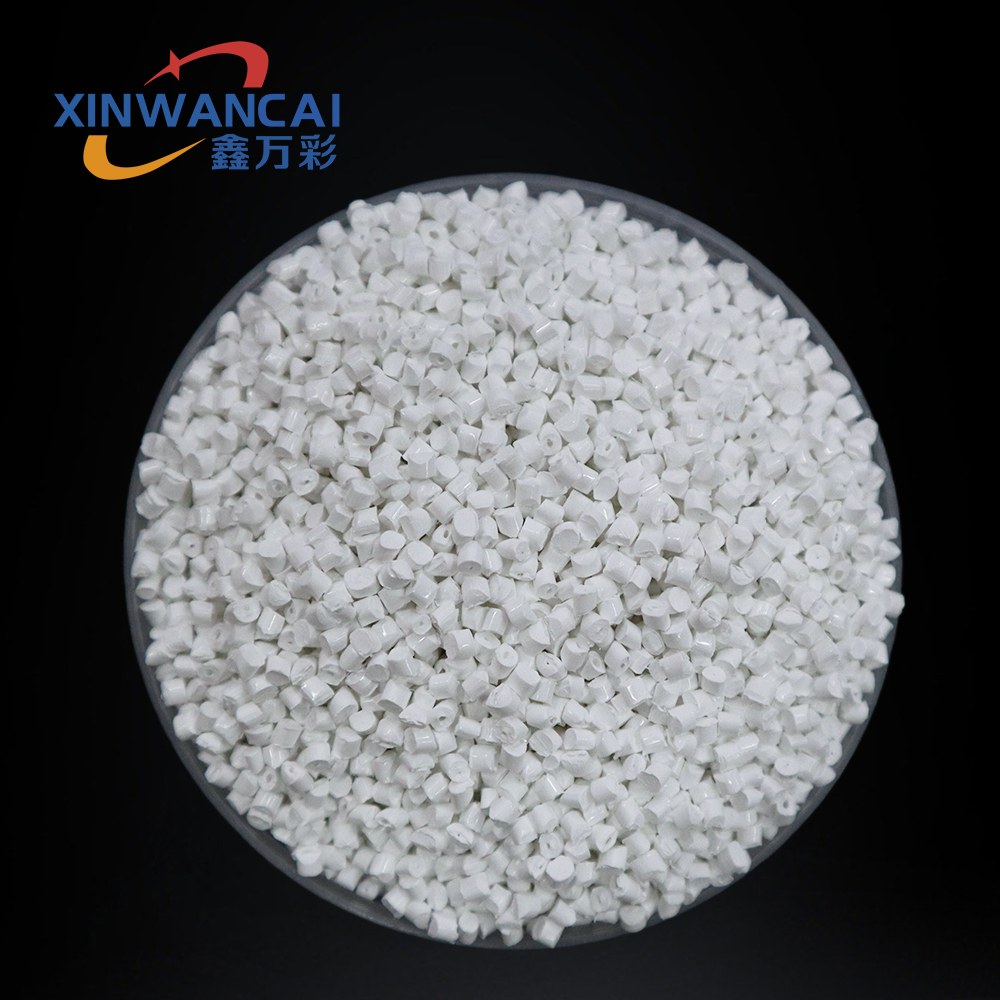
Choosing a BOPP masterbatch supplier is rarely just about price. The wrong pigment dispersion or carrier resin can trigger die lines, reduced film strength, or unpredictable shrinkage—problems that only surface after you've already committed to production. That's why more converters are taking a closer look at Xinwancai, a brand focused on batch-to-batch consistency and tailored masterbatch solutions for high-speed BOPP lines. Below, we break down the selection criteria that actually matter for high-performance film production, from dispersion quality and thermal stability to regulatory compliance and technical support.
Why Resin Compatibility Makes or Breaks BOPP Film Clarity
Resin compatibility isn't just a technical checkbox in BOPP film production—it’s the quiet arbitrator of how light travels through the final sheet. When the base polypropylene and any added modifiers, such as hydrocarbon resins or clarifying agents, share similar refractive indices and disperse uniformly at the molecular level, the film emerges with near-perfect optical clarity. Even a slight mismatch in polarity or melt viscosity can seed microscopic phase separation. Those tiny domains scatter light, turning what should be a crystal-clear web into a hazy, milky layer that fails the most basic visual inspection on the packaging line.
The trouble often starts at the extrusion stage, where incompatible resins resist blending and create localized areas of different density. Under biaxial stretching, these pockets elongate into streak-like defects or fisheyes that distort light paths. Film converters know the frustration: a haze meter reads 2.5% on one roll and 6% on the next, driven by nothing more than a batch-to-batch shift in resin supplier. True compatibility goes beyond solubility parameters—it demands matching crystallization kinetics so the stretching process aligns polymer chains without trapping amorphous boundaries that act as light-scattering interfaces.
In practice, achieving that harmony means treating resin selection as a formulation science rather than a procurement afterthought. Blending a slightly incompatible clarifying masterbatch might survive monolayer coextrusion, yet fail spectacularly when pushed through a high-speed tenter frame. The clearest BOPP films come from lines where operators map the ternary phase behavior of the resin system before committing to production—testing melt blends under shear, checking for gel formation, and confirming that thermal history doesn't trigger additive migration. Miss that step, and you don't just lose clarity; you lose the entire value proposition of a transparent packaging film.
Dispersion Quality: The Hidden Driver of Uniform Film Properties
In coating and casting, the finest formulation details often get overlooked until defects show up. Dispersion quality operates in the background, shaping how particles, pigments, or polymers arrange themselves as the film forms. When agglomerates survive mixing or when stabilizers fail to keep particles apart, local viscosity shifts and surface tension gradients appear. The result is rarely catastrophic at once; instead, you see subtle thickness variation, haze, or weak mechanical spots that only become obvious under stress.
A well-dispersed system lets the continuous phase dominate the drying or curing front. Particles move with the fluid rather than against it, so the film's cross-section stays consistent. Poor dispersion, by contrast, forces the liquid to navigate around clusters. Those clusters act as nucleation sites for pores, cracks, or residual stress. Even small differences in particle size distribution can redirect solvent evaporation, leaving edges that dry faster or slower than the center.
Uniform film properties depend less on raw material purity and more on how thoroughly the components have been separated and suspended. Mixing energy, additive choice, and milling time each leave a signature in the final microstructure. When those signatures are inconsistent, no downstream process can fully correct them. Treating dispersion as a process variable rather than a batch-to-batch afterthought is what separates films that perform predictably from those that only pass a single inspection.
Heat Stability That Survives High-Speed Stenter Lines
Stenter rails rarely run cool. At full throughput, surface temperatures sit above 200°C while the chain cycles every few seconds. A heat-stable lubricant has to hold its film strength in that window without turning into varnish. The right base fluid paired with a high-temperature antioxidant keeps oxidation out of the equation long enough for a full production week, not just a single shift.
On high-speed lines, that difference shows up where it hurts: clip wear and fabric contamination. When the lubricant stays put, pin plates glide instead of dragging, and the oil film doesn’t spatter onto the selvedge. Maintenance crews spend less time chiseling carbon from the rail returns, and the line keeps its rated speed without heat-related slowdowns.
Functional Additives That Boost Film Performance Without Trade-offs
Historically, chasing one film property often meant quietly sacrificing another—more slip led to haze, better blocking resistance dulled clarity, and anti-static treatments compromised seal strength. Modern functional additives have flipped that script. By pairing controlled-migration amides with precisely sized silica microspheres, formulators now achieve coefficient-of-friction drops below 0.2 while holding haze under 2% and gloss above 90. The trick isn't a single miracle molecule but a deliberate mismatch of particle geometry and surface energy, so the additive layer stays thin, uniform, and optically inert.
In agricultural and fresh-produce films, the old either/or between anti-fog and anti-static behavior has faded. New non-ionic surfactants grafted onto low-molecular-weight polyethylene backbones bloom slowly to the surface, creating a durable, water-sheeting monolayer that also dissipates static charge. Growers get clear, droplet-free film without dust attraction, and converters avoid the sticky die buildup that used to plague high-load anti-fog masterbatches. The key is kinetics: migration is tuned to match the film's intended service life, so performance holds steady from roll to field.
Processing aids tell the same story from the machine side. Fluoropolymer-based additives at 200–400 ppm eliminate melt fracture and reduce die pressure in blown film lines, yet because they remain as sub-micron droplets in the melt—never forming a continuous surface layer—they don't interfere with heat sealing, ink adhesion, or lamination. This opens the door to downgauging and faster line speeds without the historical penalty of weaker seals or mottled optics. When formulators combine these carefully engineered additives, the result is a film that feels slippery, looks sharp, seals fast, and processes cleanly—no trade-offs left on the table.
Lot-to-Lot Consistency: What Leading Brands Do Differently
Leading brands treat every lot as a continuation of the previous one, not a fresh start. They keep a reference library of retained samples from each batch for years, so if a customer flags lot 247, the lab can pull 246 and 248 and compare color, viscosity, odor, and pH drift under accelerated aging. That kind of forensic habit is surprisingly rare among smaller manufacturers, who often discard retains after a few months.
Blending discipline also separates the top tier. Instead of relying on a single tank mix, leading manufacturers hold back a small portion of the prior lot and fold it into the next one, smoothing out tiny raw material variations. They also run a pre-shipment sensory panel trained on the product's gold standard profile, catching off-notes that a spec sheet would never flag.
Evaluating Technical Support and Supply Chain Reliability Beyond Price
Price gets you to the table, but it won't answer a 3 a.m. call when a production line stalls. A supplier's technical support should be judged by how quickly engineers can diagnose a fault remotely, whether replacement parts sit in a nearby warehouse or need to cross an ocean, and how often updates and patches arrive without being chased. If the vendor's help desk only works during your business hours, that's a hidden cost you'll eventually pay in downtime.
Supply chain reliability matters more than a slightly lower unit price. Ask for concrete lead times under normal conditions and stress scenarios, not just glossy delivery promises. Check if the supplier carries safety stock for critical components, uses multiple manufacturing sites, or has regional distribution hubs. A vendor that can reroute shipments or tap alternative logistics partners when a port closes or a factory halts will protect your operations better than one offering a 2% discount but no backup plan.
FAQ
Look for suppliers who control particle size below 10 microns and use high-purity carriers. Inconsistent dispersion leads to fisheyes and haze, which ruin clarity. A dependable brand will provide batch-to-batch particle distribution data and offer pre-dispersion testing on your specific resin system.
It determines whether the masterbatch migrates evenly or causes die build-up. A brand that matches the carrier's melt flow index to your base polypropylene and uses low-volatile additives will let you run longer between cleanings without sacrificing line speed.
Plate-out usually comes from low-molecular-weight additives or incompatible waxes. Premium brands formulate with thermally stable, high-molecular-weight slip and anti-block agents that stay in the film instead of volatilizing onto metal surfaces, so production stays cleaner and more stable.
Even a 5% variation in additive concentration can shift coefficient of friction enough to cause web tracking problems or sealing failures. Top-tier brands use statistical process control and release certificates with actual measured values for each lot, not just nominal specs.
Neither alone is sufficient. A highly loaded masterbatch might cost more per kilogram but allow lower addition rates and reduce logistics. The smarter metric is cost per ton of finished film, factoring in scrap rate, downtime from screen pack changes, and downgraded film from optical defects.
Request pilot-line trials on a coextrusion setup similar to your own, paying attention to layer-to-layer migration of slip agents. A trustworthy brand will provide migration data and recommend layer placement—often suggesting lower additive levels in tie layers to prevent interlayer slip.
Strong suppliers help with start-up trials, troubleshoot gauge bands or die lines, and suggest adjustments for different film grades. They should also offer additive combination expertise, like pairing anti-static with anti-fog without causing plate-out, rather than just selling a catalog product.
Conclusion
Choosing a BOPP masterbatch supplier isn't just about matching a data sheet—it's about understanding how the carrier resin interacts with your base polypropylene. A mismatch here shows up immediately as haze or fisheyes, even if the additive loading looks right on paper. The best brands invest in controlled rheology and compatibility testing so clarity stays consistent from edge to edge. Dispersion quality matters just as much; agglomerates that escape detection in the lab become thickness bands or print defects at full line speed. Heat stability is non-negotiable when stenter temperatures push past 200°C, and a masterbatch that survives a short thermal test may still degrade during a 30-minute residence time.
Beyond the polymer science, functional additives should work without stealing from other properties—anti-block without haze, slip without plate-out, antistat without affecting seal strength. Leading manufacturers achieve this through synergistic formulations, not just higher dosing. Lot-to-lot consistency separates reliable brands from commodity suppliers; tight control over pigment particle size and additive concentration means you don't retune the extruder every shipment. Finally, technical support and supply chain reliability often outweigh price. A supplier that understands BOPP stretching ratios and can respond quickly to a line trial or a batch deviation saves more money than a marginal discount.
Contact Us
Contact Person: JACK
Email: [email protected]
Tel/WhatsApp: 86 18650130917
Website: https://www.xinwancai.com/