

Bubble Sensor Vendor Selection: Essential Criteria for High-Performance Systems
2026-10-16
Selecting the right bubble sensor vendor can make or break your high-performance system, yet many teams still rely on outdated checklists. From signal stability under variable flow to calibration drift and response time, the gap between a generic component and a mission-ready sensor is wider than it looks. That’s where Siansonic enters the conversation—not as just another name on a supplier list, but as a benchmark for what rigorous vendor evaluation should reveal. In this post, we’ll unpack the criteria that separate dependable bubble sensor partners from costly compromises.
Verifying accuracy claims under your own process conditions
A supplier's data sheet might claim ±0.5% accuracy for a flow meter, but those numbers almost always come from a clean calibration bench with tight temperature control and a single reference fluid. Your process line, with its pulsation, varying viscosity, or trace particulates, can push that error well past the printed spec. Instead of trusting the headline figure, pull out a calibrated reference standard and run a side-by-side check at the operating points you actually care about. Keep the test duration long enough to catch drift, not just a quick snapshot.
It helps to map the claim to your own measurement range. If the sensor spends most of its time below 20% of full scale, ask the vendor how accuracy was verified there, not just at full span. Repeated runs under normal shift conditions can tell you more than a single lab report: log the reference value, the device reading, and the ambient temperature for each point. Over a week or two, you'll see whether the stated accuracy holds, or if it only survives under conditions your process never sees.
Material compatibility and its impact on drift and lifespan
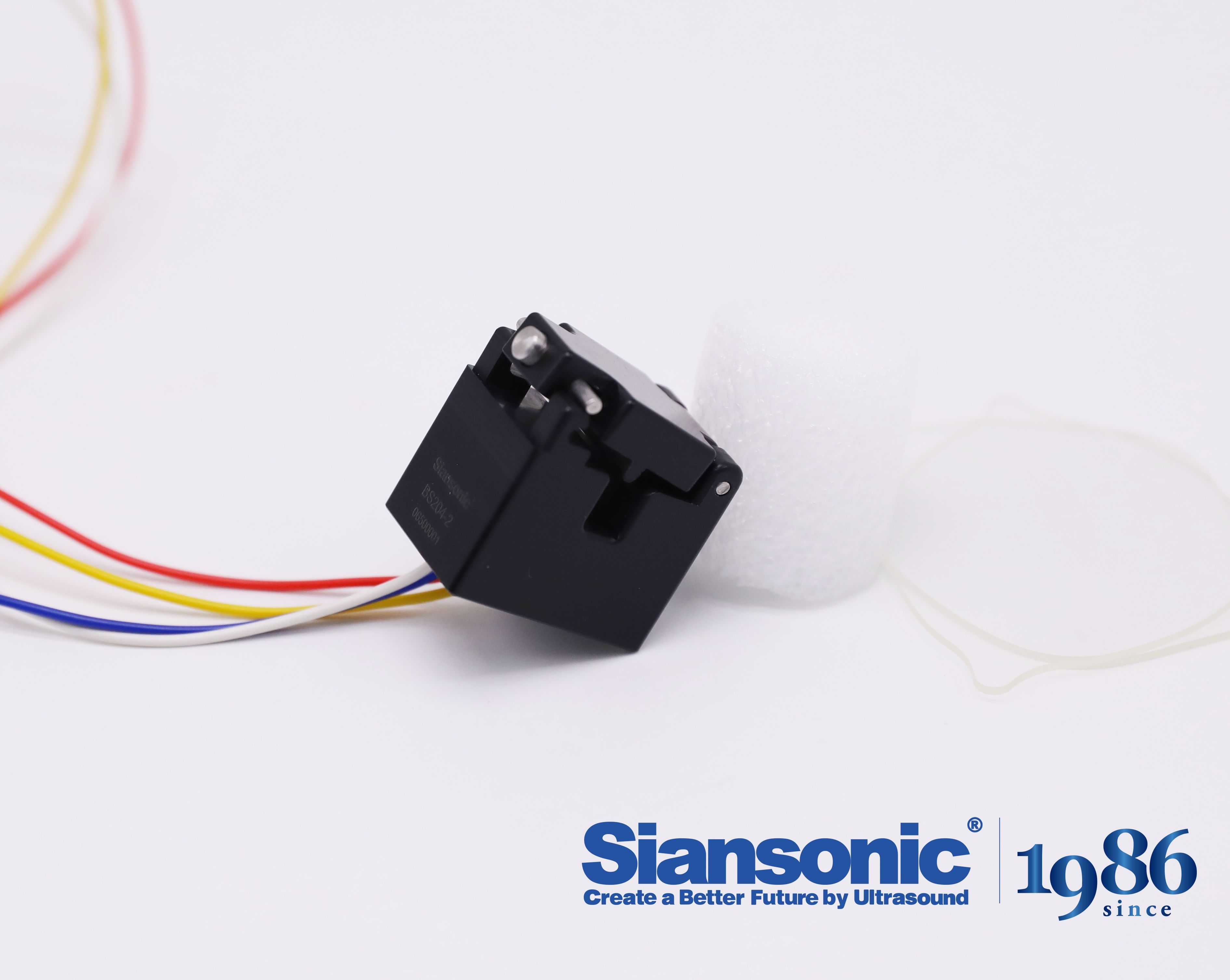
Material compatibility quietly decides how long a sensor holds its calibration and whether its readings wander over time. When housing, seals, adhesives, or even cable jackets react with the measured media or the surrounding atmosphere, tiny chemical changes begin at the contact surfaces. These reactions might start as invisible surface softening or ion leaching, but they gradually alter the mechanical and electrical properties that keep the sensing element stable. A polyurethane gasket that swells in humid air, for instance, can shift the position of a diaphragm by a few microns — enough to introduce a slow, persistent drift that looks like sensor aging but is really material mismatch.
The impact on lifespan is just as direct, though it often shows up first as erratic behavior rather than outright failure. Incompatible materials may outgas plasticizers, corrode metal leads, or attract moisture into junctions that were meant to stay dry. Each of these pathways accelerates stress on the sensing element, forcing the electronics to compensate more aggressively. Over months of operation, the drift becomes harder to correct, and the device ends up outside its specified accuracy window far earlier than its design life suggests. Choosing materials that share similar thermal expansion coefficients and resist chemical attack from the expected environment isn't just a nicety — it's how you keep drift low enough that the sensor's true lifespan matches the datasheet numbers.
A practical way to think about this is to treat material compatibility as a hidden performance parameter. Two sensors can look identical on the outside, use the same sensing technology, and even pass the same factory calibration, yet diverge within weeks because one uses a cheaper potting compound that interacts with trace solvents. That divergence shows up as a downward slope in long-term stability tests, a rising baseline in field data, or an unexplained increase in calibration frequency. Paying attention to the full chemical and mechanical stack — from the O-ring material to the solder mask — removes the quiet mismatches that steal accuracy and shorten usable life, without fanfare or warning.
Response time benchmarks for fast-moving fluid systems
In fast-moving fluid systems, response time is rarely a single number. It depends on the interaction between valve dynamics, line capacitance, and the inertia of the fluid column. Benchmarks typically break this down into components like dead time, rise time, and settling time, each measured under controlled step-change conditions.
A common benchmark for high-speed servo-hydraulic valves might specify a 90% step response in under 5 milliseconds, but that figure only holds at rated supply pressure and a specific load condition. Once you add long hoses, accumulators, or varying bulk modulus, the actual system response can stretch well beyond the component datasheet. That gap between component spec and system behavior is where most surprises occur.
When testing, many engineers use a fast-response pressure transducer or a laser displacement sensor to capture the actual motion. Repeating the test across a range of frequencies and amplitudes builds a response surface that reveals nonlinearities, such as valve overlap or fluid compressibility effects, which single-point benchmarks miss.
Field-ready calibration without excessive downtime
Calibration routines have long carried a reputation for eating into production schedules, but that doesn't have to be the norm. The shift toward field-ready tools means technicians can verify and adjust instruments right where they operate, skipping the back-and-forth of lab returns. By focusing on quick, repeatable checks that slot into brief maintenance windows, teams avoid the ripple effects of extended unplanned pauses. The goal isn't just speed for its own sake; it's keeping the line moving while preserving the confidence that comes from a properly tuned device.
One practical approach is to lean on reference standards that are rugged enough to travel and stable enough to trust outside a controlled environment. Instead of waiting for a scheduled shutdown, a technician can run a streamlined comparison on the spot, note any drift, and apply corrections in minutes. This cuts the temptation to defer calibration until later, which often leads to larger errors and more invasive fixes. The result is a workflow where uptime and measurement integrity reinforce each other rather than compete.
Another overlooked factor is documentation. Field calibration works best when the process is simple to log, with clear pass/fail thresholds and automatic flagging for outliers. That removes the administrative drag that sometimes follows even a fast physical check. When every step from hookup to sign-off takes less time than a coffee break, calibration stops being a special event and becomes a routine, low-friction part of the day. Downtime shrinks not because corners are cut, but because the whole sequence is designed for the real-world pace of the field.
Design weaknesses that surface during long-term operation
Long-term operation often exposes flaws that laboratory testing never anticipated. A common issue is the gradual accumulation of micro-fractures in load-bearing components, caused by repeated thermal cycling or vibration. These hairline cracks may remain invisible for years, then suddenly propagate under a routine stress peak, leading to unexpected failure during normal use rather than under extreme conditions.
Electrical subsystems can also reveal hidden weaknesses as insulation materials age. Capacitors may lose their dielectric strength, resistors drift beyond tolerance, and solder joints develop intermittent contacts. What initially appears as random glitches or spurious resets often traces back to a marginal design choice that only becomes critical after thousands of hours of operation. Field technicians frequently note that the root cause is not a single catastrophic defect, but a slow, cumulative degradation that simulation models failed to predict.
Environmental sealing is another area where long-term weaknesses emerge. Gaskets and O-rings lose elasticity, coatings develop micro-porosity, and connectors suffer from fretting corrosion. In humid or salt-laden atmospheres, these effects accelerate, allowing moisture ingress that eventually shorts circuit boards or corrodes structural fasteners. Designers often underestimate the combination of temperature swings, UV exposure, and chemical contaminants that equipment must endure over a decade or more in the field.
What separates genuine vendor support from generic helpdesks
The first clue often hides in the rhythm of the response. A generic helpdesk runs on scripts, escalations, and ticket queues — they ask for your account number three times, then promise a callback that never comes. Genuine vendor support, by contrast, moves like someone who has read the source code and sat in the product standups. When you describe a strange timeout on a Tuesday afternoon, they don’t ask you to clear your cache; they ask what version of the underlying runtime you’re on, because they remember the regression that shipped in 4.3.1. The difference is not friendliness — both can be polite — but whether the person on the other end can reason about your problem from first principles instead of searching a knowledge base.
Then there’s the matter of appetite. A helpdesk wants to close the ticket; a vendor wants the integration to survive. That means real support will sometimes tell you the uncomfortable truth: your architecture is the problem, your retry logic is making things worse, or the feature you requested is not coming because it breaks a deeper design contract. Generic support avoids these conversations because they require ownership, and ownership is expensive. Vendor support earns its name by pushing back when you’re wrong, documenting workarounds that aren’t in the manual, and occasionally hand-patching a fix before the next release lands.
Finally, look at what happens after the issue is “resolved.” A generic helpdesk sends a satisfaction survey and disappears into the CRM. A genuine vendor support team follows up two weeks later because they saw a related error spike in your region. They file an internal bug report with your exact reproduction steps, reach out to the engineering lead, and keep your ticket alive in a private channel. That persistent, almost proprietary interest is the real signal — not a badge on a pricing page, but the feeling that someone inside the company has your environment in the back of their mind when they make decisions.
FAQ
A suitable sensor needs sub-millisecond response times and the ability to detect bubbles as small as a few microns without interrupting flow. Look for suppliers that provide verified performance data under your specific flow rates and fluid viscosities, not just generic spec sheets.
It is often the difference between a sensor that lasts years and one that fails within weeks. The sensor's wetted materials must withstand your process fluids, cleaning agents, and sterilization methods. Request chemical compatibility charts and ask for references from customers using similar fluids.
You should ask how often recalibration is needed, whether the sensor includes built-in self-diagnostics, and what drift rate is expected over its lifetime. A transparent vendor will share accelerated aging test results and offer calibration services or compensation algorithms.
That depends on the sensor's sensing principle. Optical and ultrasonic sensors often detect any impedance mismatch, so they can catch gas bubbles in liquid, but liquid droplets in gas lines may require a different configuration. Confirm with the vendor which phase discontinuities their sensor is optimized for.
Many sensors are only rated for atmospheric pressure. Under high pressure, housing materials can deform, and under vacuum, outgassing can create false readings. A vendor with experience in extreme environments will provide pressure ratings, leak test reports, and design features like hermetic sealing.
The output electronics determine how easily the sensor integrates with your control system. Look for vendors offering configurable digital interfaces (I2C, SPI, RS-485), adjustable threshold alarms, and open-drain outputs that can directly drive safety interlocks without extra components.
You should assess their engineering team's responsiveness, whether they have in-house rapid prototyping, and whether they have a track record of customizing sensor geometry or mounting for OEM applications. Ask for a timeline from concept to first samples and whether they provide FMEA documentation.
Conclusion
When evaluating bubble sensor vendors for high-performance systems, verifying accuracy claims under your own process conditions is non-negotiable. A sensor that performs well on a vendor's bench often behaves differently when faced with your specific fluid viscosity, bubble size distribution, or flow turbulence. Requesting a loaner unit and running side-by-side tests against your current reference method exposes discrepancies early. Equally important is material compatibility—exposure to aggressive chemicals, temperature cycling, or repeated sterilization can silently degrade sensor components. Drift and lifespan are rarely dictated by the sensing element alone; O-rings, adhesives, and cable jackets often fail first. For fast-moving fluid systems, response time benchmarks should come from your actual flow velocities, not static lab conditions. A sensor that misses transient bubbles at high flow rates can compromise downstream detection or trigger false alarms.
Field-ready calibration is another differentiator. Vendors who offer one-touch or pre-calibrated cartridges minimize downtime, but be wary of systems that require proprietary software or a technician visit for what should be a routine adjustment. Long-term operation reveals design weaknesses that short-term evaluations miss: connector corrosion, sensor drift after thermal shock, or mechanical fatigue in mounting brackets. Finally, genuine vendor support goes beyond a scripted helpdesk. You want engineers who ask about your process details, share failure data openly, and propose fixes tailored to your application rather than reading from a generic troubleshooting tree. These six criteria, when weighed together, separate dependable suppliers from those selling hardware alone.
Contact Us
Contact Person: Ivy Zhang
Email: [email protected]
Tel/WhatsApp: +86 1081502288
Website: https://www.siansonic.com/