

China Centrifugal Compressor: Engineering Advances and Market Outlook
2026-08-24
Centrifugal compressors are the beating heart of modern industry, quietly driving everything from LNG plants to petrochemical giants. Yet, for years, China's market leaned heavily on imported designs. That narrative is changing fast. This article unpacks the latest engineering breakthroughs reshaping Chinese centrifugal compressor technology—from high-efficiency impellers to smart monitoring systems—and explores how Seize Air is carving out a competitive edge in a market poised for double-digit growth. But can domestic innovation truly outpace established global players? Read on to find out.
Impeller Redesigns Target Surging and Wide Operating Ranges
Impeller redesigns aimed at surge suppression often begin with the blade exit angle and the shape of the shroud near the diffuser. By smoothing the transition from impeller outlet to volute or diffuser throat, designers can reduce the abrupt pressure recovery that typically triggers low-frequency flow oscillations. Small changes in blade lean or rake also help keep the boundary layer attached over a wider flow range, which directly lowers the risk of inlet recirculation.
Another effective route is the use of alternating splitter blades that extend partway along the meridional channel. These short blades break up the large low-energy wakes behind full blades and reduce the tendency for reverse flow at part load. When combined with a modestly smaller outlet diameter, this approach widens the usable operating window without sacrificing peak efficiency, making the impeller less sensitive to sudden changes in system resistance.
In practice, these geometry changes often improve the surge margin by double digits while allowing the machine to operate stably at 40 to 50 percent of design flow. Rather than adding complex active control systems, the redesign keeps the solution entirely within the hydraulic passages, which lowers maintenance burden and extends the life of seals and bearings that would otherwise suffer from repeated surge cycles.
Active Magnetic Bearings Gain Ground in Critical Service
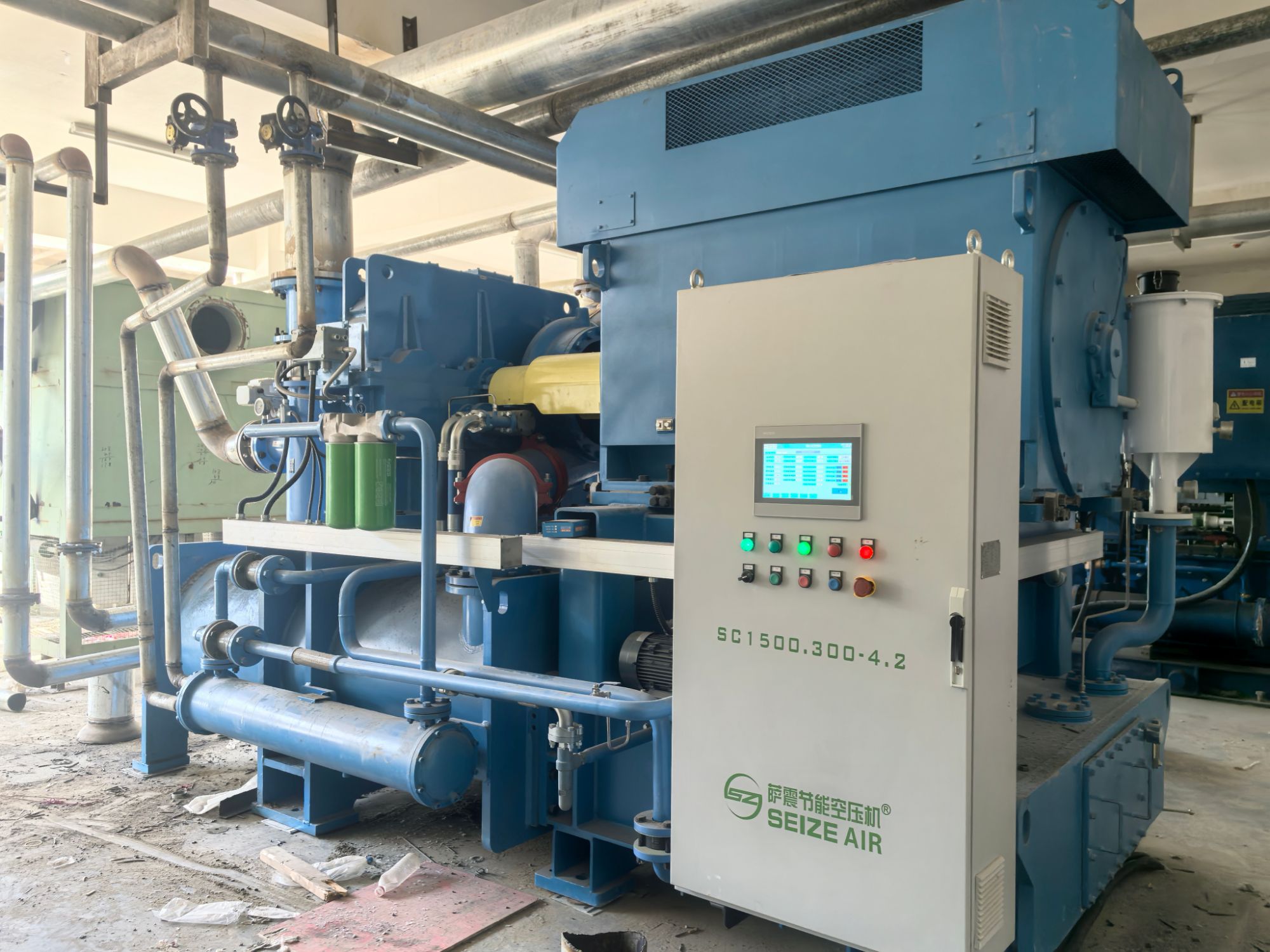
Active magnetic bearings have moved from laboratory curiosities to dependable components in processes where downtime carries steep penalties. Unlike conventional oil-film or rolling-element bearings, they support shafts through electromagnetic force, eliminating metal-to-metal contact. This is especially attractive in gas compressors and high-speed turbines, where lubricant contamination and wear have long been maintenance headaches.
The shift is not just about avoiding oil systems. Embedded sensors in magnetic bearings continuously track rotor position and vibration, feeding that data to control loops that adjust levitation thousands of times per second. Operators gain real-time insight into machine health, and the bearings can actively dampen instabilities that would otherwise go unnoticed until failure.
Experience on offshore platforms and in remote pumping stations has strengthened confidence. Early concerns about control complexity and power consumption are being outweighed by longer runtimes between overhauls and the ability to ride through transient loads. As manufacturers refine the hardware and simplify commissioning, active magnetic bearings are becoming the default choice for critical service where conventional bearings simply cannot keep pace.
Manufacturers Tap Additive Processes for Complex Casings
For complex casings, the old route of welding together a dozen machined plates is fading. Shops serving aerospace and industrial gas turbine customers now routinely print Inconel and titanium housings with conformal cooling passages that would be impossible to drill. A single production cell can shift from a pump volute to a gearbox shell by loading a new file and swapping out metal powder—no hard tooling required.
The real savings show up in the part count. A fuel manifold once assembled from 14 brazed components now ships as a single laser-sintered piece, cutting leak points and inspection time. Designers rely on topology optimization to remove material only where stress analysis says it can go, producing organic ribs and hollow bosses that look odd to a machinist but carry loads more efficiently.
Qualification remains the bottleneck. Print parameters, powder chemistry, and post-build heat treatment all have to be locked down before a printed casing earns its way onto a flight-critical engine. Even so, the backlog of castings and forgings keeps pushing manufacturers toward hybrid routes: print the near-net shape, then machine only the sealing faces and bearing bores. That blend of additive freedom and subtractive precision is becoming the standard for complex casings.
Coal-to-Chemicals Modernization Underpins Order Books
Older coal-to-chemicals capacity is undergoing a wave of efficiency- and emissions-led retrofits, and that directly translates into long-cycle procurement demand for reactors, compressors, separation columns and specialty catalysts. For many engineering firms, the share of coal-chemical upgrade work in new contracts has climbed noticeably in the first half of the year, while some equipment makers now have production schedules stretching into 2026. Order visibility here is firmer than in conventional refining and petrochemical projects.
Unlike the previous expansion cycle that chased sheer volume, this round of modernization is pushing product chains toward higher-margin downstream materials. Coal-to-olefins, coal-to-ethylene glycol and biodegradable plastics units have become the focus of tenders, with owners leaning toward modular design and intelligent control systems during equipment selection. That gives suppliers with integrated process-package capabilities more bargaining power. The order mix has also shifted from standalone equipment purchases to system integration contracts covering design, installation and commissioning, which improves both contract value and gross margin.
Regionally, project approvals in Inner Mongolia, Shaanxi and Ningxia have picked up pace, and second-phase tenders for several large integrated bases are already underway. Because most retrofits take place inside existing plant boundaries, construction windows are tight, making delivery records and engineering experience more important to owners. This is further concentrating orders among leading players. Compared with greenfield projects, the release of orders driven by renewal of existing assets is less volatile, giving related companies a relatively firm revenue base for the next two years.
Service Networks Expand as Export Ambitions Grow
As manufacturers look beyond domestic demand, the need for dependable service infrastructure has moved from a nice-to-have to a hard requirement. Buyers in new markets rarely separate the product from the support around it; they ask who will maintain it, where spare parts come from, and how quickly a technician can arrive.
This pressure is visible in the expansion of regional hubs, training centers, and local parts depots. Rather than running everything from headquarters, exporters are placing technical staff closer to key customers, often partnering with local firms to shorten response times. The result is a network that grows in step with sales, but demands careful coordination to avoid uneven service quality.
Hydrogen-Ready Compressors Face Real-World Validation
Manufacturers once leaned heavily on lab data and simulation to support hydrogen-ready compressor claims. That is changing. A growing number of units are now cycling through extended field trials at gas storage sites, industrial parks, and pipeline injection points, where operators watch how seals, valve plates, and lubrication systems behave under actual hydrogen blends rather than idealized test gases.
The early results are uneven. Some compressors have logged thousands of hours on 10% hydrogen blends with no measurable loss in volumetric efficiency, while others have shown unexpected seal swelling and higher-than-predicted vibration when running on 100% hydrogen at lower inlet pressures. These findings are pushing suppliers to revise material selections, adjust clearance settings, and rethink cooling loops before committing to large-scale fleet rollouts.
Independent third-party validation is also becoming more common. Engineering consultancies and certification bodies are now overseeing extended run cycles, collecting teardown data, and publishing findings that go beyond vendor self-assessments. The practical knowledge gained from these programs—especially around leak rates, component wear, and start-stop durability—is shaping the next round of compressor designs more than any white paper could.
FAQ
Improved impeller geometries developed through computational fluid dynamics, active magnetic bearing adoption on high-speed trains, and digitally controlled inlet guide vanes have pushed efficiency upward. Process integrators also now commonly pair aerodynamic upgrades with multi-stage intercooling to reduce specific power consumption in air separation and LNG service.
The gap has narrowed considerably, particularly in medium-flow industrial gas applications, where isentropic efficiency within a few percentage points of leading European and Japanese designs is common. Large pipeline and refinery units still trail in some advanced sealing and rotor dynamic packages, but not by the wide margins seen ten years ago.
Petrochemical expansions, coal-to-chemicals projects, liquefied natural gas receiving terminals, and growing air separation capacity for steel and electronics remain the backbone. Demand is also emerging from hydrogen compression pilot plants, carbon capture and storage test loops, and wastewater treatment aeration upgrades.
Corrosion-resistant nickel alloys and duplex stainless steels are increasingly specified for wet gas and sour service, while tungsten carbide and ceramic-based coatings protect impellers from erosion. Additive manufacturing is used selectively to repair blade tips and produce complex cooling passages that conventional casting cannot achieve.
Operators now rely on digital twins that compare live vibration and bearing temperature data against performance maps, flagging fouling or surge risk before trips occur. Remote diagnostic centers run by Chinese OEMs allow plants to share real-time compressor health data with engineers, cutting unplanned downtime and extending overhaul intervals.
Demand will pivot toward hydrogen-ready compressors, low-global-warming-potential refrigerant cycles, and machines sized for carbon capture compression. Domestic replacement of imported high-pressure units will accelerate as local certifications mature, while export growth is likely to concentrate in Southeast Asia, Central Asia, and the Middle East.
Yes in selected niches such as air separation plants, small-to-mid LNG liquefaction packages, and blast furnace blowers for steel mills in developing economies. Brand perception and long-term service networks still limit penetration in North America and Western Europe, though modular skid-mounted designs have gained a foothold in Africa and South America.
Rotor stability at high shaft speeds, dry gas seal reliability under fluctuating discharge pressures, and thermal deformation of casings in multi-stage configurations remain active research areas. Validating these designs through full-load string tests and long-duration field trials is still expensive, slowing adoption of domestically built units for ethylene and fertilizer mega-plants.
Conclusion
Chinese centrifugal compressor builders are extending impeller operating maps through redesigned blade geometries, adjusted diffuser vane angles, and casing treatments that delay surge without sacrificing peak efficiency. The goal is broader turndown capability for processes that no longer run at fixed capacity. Active magnetic bearings are gaining ground in critical service as operators weigh oil-free operation, lower maintenance intervals, and continuous rotor monitoring against conventional bearing costs. Additive manufacturing has also moved from prototypes to production parts for complex casings and internal flow paths, allowing foundry-free iteration and shorter delivery for high-alloy components where traditional casting yields are poor. This shift is not uniform across the industry; it concentrates among suppliers serving refinery, petrochemical, and fertilizer expansions where unscheduled downtime carries severe financial penalties.
Order books remain anchored by coal-to-chemicals modernization, particularly replacement and debottlenecking projects for syngas, refrigeration, and recycle compression trains. Domestic firms are pairing machine sales with regional service hubs, stocking critical rotors and seals closer to overseas customers, which suggests export strategies now depend on long-term support contracts rather than one-off shipments. Hydrogen-ready compressor platforms are entering pilot service and early commercial projects, but their acceptance hinges on field data for dry gas seals, material compatibility, and efficiency across varying hydrogen-natural gas blends before they displace incumbent designs at scale. Meanwhile, export credit support and localization requirements in Belt and Road markets are creating openings for packaged compressor trains, although aftermarket responsiveness remains the deciding factor for repeat orders outside China.
Contact Us
Contact Person: Mia
Email: [email protected]
Tel/WhatsApp: +86 19821985894
Website: https://www.seize-air.com