

China Diesel Forklift: Key Features and Buying Considerations for Industrial Use
2026-10-13
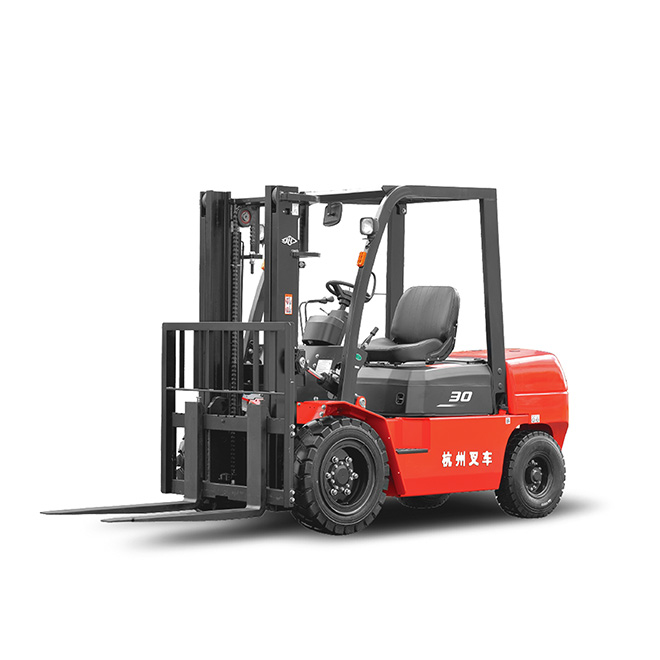
When a warehouse floor demands serious torque and all-day runtime, the choice of forklift can make or break your throughput. Chinese diesel forklifts have earned a reputation for rugged performance and competitive pricing, but separating genuinely industrial-grade machines from short-lived imports takes a closer look. Among the names that consistently appears in procurement shortlists is HANGCHA, a manufacturer known for blending heavy-duty engineering with practical maintenance access. This guide walks through the key features—engine durability, load capacity, hydraulic responsiveness, and operator comfort—along with buying considerations like emission standards, parts availability, and total cost of ownership, so you can evaluate whether a China-built diesel forklift fits your operation.
Engine Longevity in High-Dust and High-Heat Environments
High-dust and high-heat conditions push engines toward premature wear, but the real difference comes down to filtration and cooling design. In dusty settings, the intake system becomes the first line of defense—multi-stage air cleaners with pre-filters and cyclonic separation keep abrasive particles from reaching cylinder walls. Without this, even a few grams of fine silica can act like sandpaper on piston rings, gradually widening clearances and dropping compression. On the heat side, oil degrades faster when temperatures climb, so engines built for these environments often use larger oil coolers, higher-capacity sumps, and synthetic lubricants with better thermal stability. The goal is to keep oil viscosity within its working range instead of thinning out under load.
Cooling system layout matters just as much. Radiators in high-dust areas clog quickly, so designs that allow easy cleaning—or use reversible fans to blow debris outward—tend to last longer. Some heavy-duty engines also rely on dual thermostat setups that open at different temperatures, smoothing out thermal cycling that would otherwise stress head gaskets and exhaust manifolds. For operators, the practice of letting engines idle down for a few minutes after hard work is not just an old habit; it prevents localized hot spots in turbochargers and cylinder heads from coking the oil. Small habits like checking air filter restriction gauges daily and washing radiator fins with low-pressure water extend service life more than most people realize.
Material selection is another quiet factor. Valve seats and piston crowns made from high-nickel alloys resist erosion when dust slips past filters, while cylinder liners with plateau honing hold oil better under high heat. In the field, engines that survive these environments are rarely the most powerful—they are the ones with conservative tuning, robust sealing, and maintenance schedules that treat dust and heat as constants rather than exceptions. The difference shows up at the 5,000-hour mark, when a well-protected engine still holds oil pressure at idle while others burn a quart every hundred miles.
Why Mast Build Quality Varies More Than You'd Expect
A lot of sailors assume that two masts with the same dimensions and alloy spec will perform and last identically, but that's rarely the case. The reality is that mast construction still relies heavily on skilled labor. Even within a single manufacturer's lineup, differences in welder technique, heat treatment timing, and how carefully the extrusion is straightened after cooling can introduce subtle but meaningful variations. One mast might have a barely perceptible curve near the spreader attachment, while its twin comes out arrow-straight. These aren't defects that show up on a spec sheet, yet they affect rig tune, sail shape, and long-term fatigue resistance.
Batch-level material inconsistencies add another layer. Aluminum extrusion plants source raw billets from different suppliers, and even with the same alloy designation (say, 6061-T6), trace amounts of magnesium, silicon, or iron can shift within allowable limits. That changes how the metal responds to anodizing or how it behaves when drilled and riveted. Some builders compensate with tighter incoming inspection, while others accept wider tolerances to keep costs down. The result is two masts that look identical on paper but age very differently after a few seasons of hard sailing.
Finally, there's the matter of aftermarket modifications and rigging choices. A mast that leaves the factory in perfect condition can be compromised by a rushed masthead fitting installation or by using stainless steel fasteners without proper isolation, which invites galvanic corrosion. Even the way a mast is stored—horizontal on padded supports versus leaning against a wall—can introduce permanent set over time. So when you compare two boats of the same model, the mast quality may have less to do with the original builder and more to do with everything that happened after it left the shop floor.
Calculating Fuel Costs Per Pallet Move, Not Per Hour
Most warehouse operators still track lift truck fuel expense by the hour, but that metric hides a lot of waste. A truck idling during shift change or creeping between distant pick faces burns just as much fuel as one doing real work, yet the hourly figure looks identical. Shifting the calculation to a per-pallet-move basis forces you to see how far each load actually travels and how often the machine stops and starts. It’s not about total engine time—it’s about what that time accomplishes.
Start with a simple log: record gallons or kilowatt-hours consumed over a full week, then divide by the number of pallets actually moved from one location to another. You’ll quickly spot outliers. One dock may show double the cost per move because its staging area sits fifty yards from the racking instead of ten. Another might reveal that drivers habitually leave engines running while scanning, adding zero pallet movements but plenty of fuel burn. Once you see the per-move cost, you can reposition staging lanes, adjust travel paths, or retrain operators to shut down during non-active minutes.
This approach also gives you a fair baseline for comparing electric versus internal combustion equipment, since a pallet move has the same physical meaning for both. The number will fluctuate with load weight and lift height, so track it by shift or by zone rather than as a single company-wide average. The goal is not a perfect accounting formula; it’s a decision tool that exposes hidden fuel drain and rewards moves that actually matter.
The 1,000-Hour Service Reality Most Buyers Ignore
When comparing products, most shoppers fixate on upfront price tags and spec sheets, glossing over a far more telling number: how many hours of real-world service the thing will actually deliver before it needs replacing. A thousand hours sounds like a lot until you break it down—a little over forty days of continuous use, or roughly a year of typical daily operation. Yet an alarming number of goods are engineered to fall short of that mark, leaving buyers stuck in a cycle of repurchasing what they thought they'd already paid for once.
The gap between advertised durability and actual service life often hides in the fine print of warranties and maintenance schedules. Manufacturers may tout a "long-lasting" design while specifying replacement parts every few hundred hours, quietly shifting the true cost onto the consumer. Ignoring this reality means you're not just buying a product—you're signing up for a subscription to its own failure. The thousand-hour threshold separates tools that earn their keep from ones that simply occupy space between breakdowns.
How Dealer Support Affects Uptime After the Sale
When a machine sits idle, the cost isn't just lost production—it's the ripple effect across scheduling, labor, and customer commitments. Dealer support often becomes the invisible backbone that keeps equipment running long after the paperwork is signed. A responsive parts desk, technicians who know the local operating conditions, and proactive maintenance reminders can mean the difference between a minor hiccup and a multi-day shutdown. For fleets working in remote areas or harsh climates, the dealer's physical proximity and stocked inventory aren't conveniences; they're uptime insurance.
The real test comes during breakdowns. A dealer that offers 24/7 emergency service, remote diagnostics, and a clear escalation path can cut hours off a repair. But support goes beyond reacting to failure. Dealers that track component wear patterns and schedule preventive work during planned downtime help operators avoid the surprise failures that erode profitability. Those that coordinate with the manufacturer on warranty claims and parts availability also reduce the administrative drag that can delay a fix.
Long-term, the relationship shapes equipment lifecycle. Regular software updates, operator training clinics, and honest conversations about when to repair versus replace keep machines productive rather than merely patched together. A dealer that treats uptime as a shared metric—not just a sales pitch—becomes a partner in the operation's bottom line.
Matching Load Capacity to Your Heaviest Routine Lift
A rack or bench stamped with a 500 lb capacity doesn't automatically make it right for your 500 lb deadlift. You have to account for everything the equipment supports during that lift—your body, the bar, plates, and the jolt of a heavy rerack. If your heaviest routine squat is 405 lb and you weigh 220 lb, the rack sees at least 625 lb before you even factor in downward momentum from walking out or dumping the bar. Match the capacity to that total, not just the number on the plates.
A safer approach is to take your heaviest planned lift, add your bodyweight where relevant, then add a 20–30% buffer. That buffer exists because manufacturers rate static load, but real lifting involves acceleration, slight drops, and uneven loading. A bench rated for 600 lb might handle a 300 lb bench press plus a 200 lb lifter, but if you routinely fail reps and let the bar touch the safeties with speed, the actual spike can exceed that rating. Buy for the miss, not the clean rep.
Also consider where you'll be a year from now. If your current routine tops out at 315 lb on the squat but you add 5 lb a week, a rack rated exactly for 315 plus bodyweight is already borderline. Going one step up in capacity usually costs a small fraction of the total price and prevents the slow damage that shows up as wobbly uprights, cracked pads, or bent safeties. Match the load capacity to the heaviest lift you will routinely perform, not the one you hit once on a good day.
FAQ
They strike a solid balance between upfront cost and heavy-duty performance. You get a rugged machine that handles long shifts outdoors without needing a charging station, and spare parts are generally easy to source.
You'll often see Xinchai, Quanchai, or licensed versions of Isuzu and Cummins. Sticking with a recognized engine name usually means better parts availability and a longer service life, so it's worth checking what's under the hood.
Look beyond the rated capacity on the data plate. Consider your heaviest pallet, the load center distance, and any attachments like clamps or side shifters that reduce effective capacity. Leaving a 15–20% safety margin avoids overloading.
Regular oil and filter changes, checking coolant levels, and greasing the mast and steering joints are the basics. Also keep an eye on the air filter if you work in dust, and inspect hydraulic hoses for leaks before they become failures.
Yes, depending on your region you may need to meet EPA, EU Stage V, or China's National IV standards. Older models with lower-tier engines can be cheaper but might face restrictions indoors or in regulated areas.
Diesel wins for outdoor sites with rough terrain and long shifts: lower purchase price, quick refueling, and no expensive battery replacement every few years. Electric is cleaner and cheaper to maintain but higher upfront and charging infrastructure costs.
Check the pump brand, hose routing, and whether the control valve is a known brand like Hydrocontrol or Parker. Smooth lift and tilt without jerking, plus no visible leaks after a test run, are good signs of a well-built system.
Most diesel forklifts start fine in cold weather if the glow plugs and battery are in good shape. For dust, make sure the air intake has a heavy-duty filter and a pre-cleaner, and plan to clean the radiator more often to avoid overheating.
Conclusion
When evaluating a China diesel forklift for industrial use, the first thing that separates a workhorse from a headache is how the engine handles dust and heat. Look beyond the horsepower rating and ask about the air intake design, radiator size, and whether the cooling fan is built for continuous operation in a foundry or grain facility. Chinese manufacturers have improved engine castings and filtration significantly, but the gap between brands often shows up after a few thousand hours. Mast build quality is another area where price alone is misleading. Two forklifts can carry the same capacity on paper, yet one mast may twist under side loads because of thinner channel steel or inconsistent welding. Before buying, watch the mast under load at full lift height and check for visible deflection or uneven roller wear. Fuel budgeting should also shift from a per-hour estimate to a per-pallet-move calculation. A diesel engine burns nearly the same fuel while idling as it does during light travel, so a busy warehouse with short, frequent lifts may have a much higher cost per pallet than a long-run operation.
The 1,000-hour service interval is where hidden ownership costs surface. Many buyers assume oil changes are enough, but the reality includes valve lash adjustments, hydraulic filter swaps, and injector checks that smaller dealers may skip. Skipping these can shorten engine life dramatically in high-dust environments. Dealer support after the sale matters as much as the machine itself. A forklift that sits waiting for a hydraulic hose or a mast bearing because the importer has no local parts stock will erase any initial savings. Ask about parts availability, technician response time, and whether the dealer stocks wear items for your specific model. Finally, size the forklift to your heaviest routine lift, not the absolute maximum rating. Running at 95 percent of rated capacity every shift wears the mast, axles, and transmission far faster than occasional peak loads. Choose a model with a comfortable margin so the diesel engine and hydraulic system operate in their efficient range, not at the edge of failure.
Contact Us
Contact Person: Liuxue
Email: [email protected]
Tel/WhatsApp: +86-19084200370
Website: https://www.hf-ec.com/