China Polyester Lanyard: Your Complete Guide to Durable Custom Branding
2026-11-02
Few things feel as frustrating as lanyards that fray, fade, or snap within weeks. If you're sourcing polyester lanyards from China for custom branding, you already know the gamble of inconsistent quality. DONGCHUANG takes a different route: building durable lanyards that keep your logo visible and your brand looking sharp long after the first event.
What Makes Polyester the Workhorse of Lanyard Materials?
Polyester earns its reputation as the go-to lanyard fabric for reasons that go beyond mere affordability. Unlike cotton or nylon, it holds dye with remarkable tenacity, so colors stay sharp through sun exposure, sweat, and countless washes. That colorfastness matters when a lanyard doubles as a brand badge—logos remain legible, and even vibrant reds or deep blues refuse to fade into a washed-out blur. Add to this an innate resistance to stretching, and you get a strap that keeps its shape around the neck hour after hour, whether it's clipped to an ID card at a trade show or looped around keys on a daily commute.
The material's low moisture absorption is another quiet advantage. Spills, rain, or a humid day won't leave a polyester lanyard feeling damp or heavy—instead, it dries quickly and resists mildew, a trait that nylon can't always match under the same conditions. This practicality extends to its texture: smooth enough for detailed screen printing, yet tough enough to withstand repeated friction from badge reels or attachment clips. For event organizers, that translates to fewer replacements mid-season and a consistent look across thousands of attendees.
What often gets overlooked is how polyester balances softness with stiffness just right. A lanyard that's too limp tangles easily; one that's too rigid chafes. Polyester threads strike a middle ground, giving the strap enough body to hang flat against the chest without curling, while still feeling comfortable against bare skin. This blend of durability, print quality, and everyday wearability is why supply closets keep coming back to polyester—not because it's the cheapest option, but because it quietly outperforms alternatives where it counts.
Customization Options That Go Beyond a Printed Logo
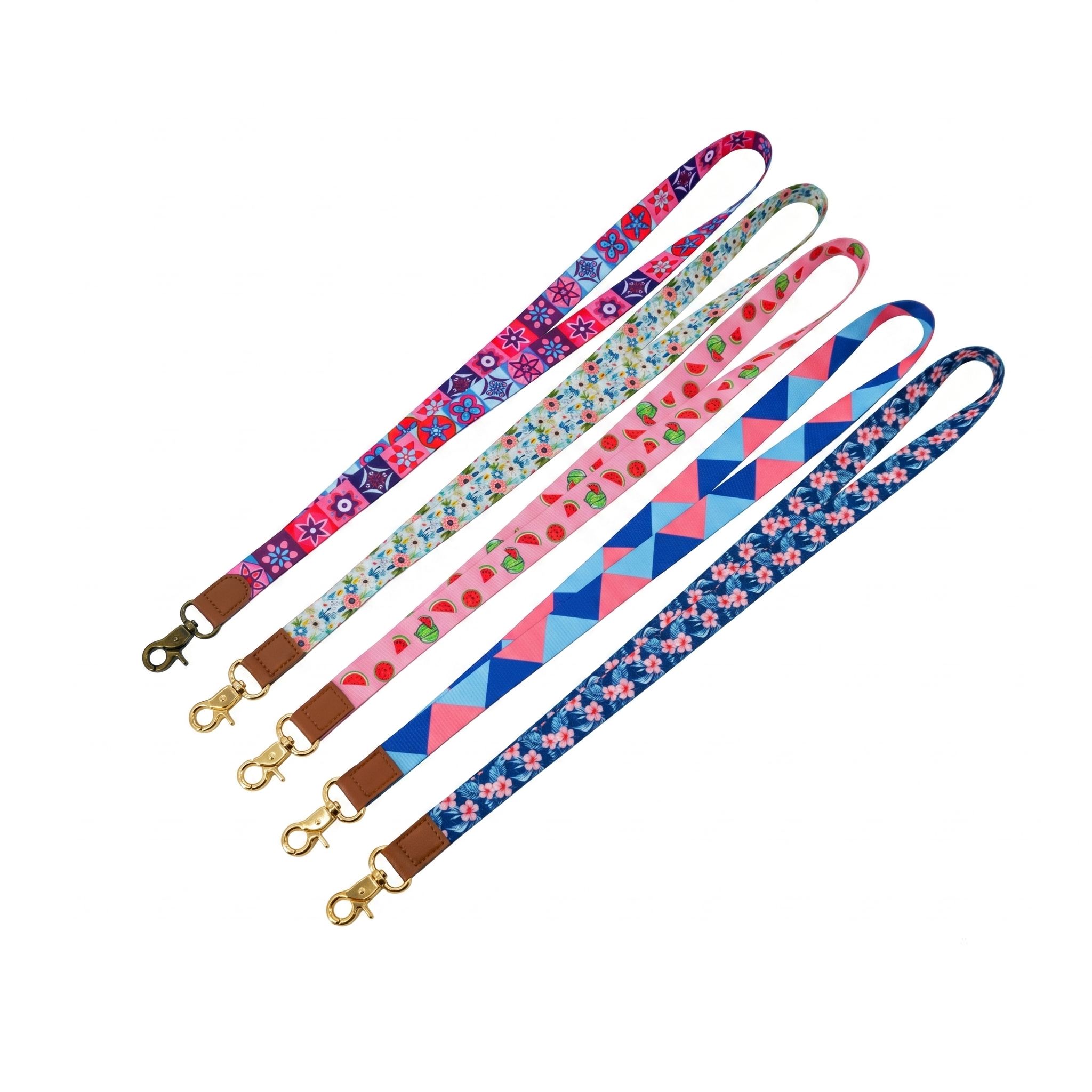
A logo alone rarely tells the whole story. The real differentiator often hides in the details—custom stitching that follows the curve of a collar, an embossed pattern on the inside of a cuff, or a woven label with a texture you can feel before you even see it. These choices turn a generic garment into something that feels intentional, almost personal.
Consider the hardware, too. Buttons can be machined from brushed metal or tinted to match a specific thread color, and zippers might have a subtle matte finish that catches the light differently than the standard shiny pull. Even the choice of lining fabric—whether it's a bold contrast print or a tone-on-tone jacquard—gives a piece a signature that no printed logo could replicate.
Then there's the growing world of structural customization. Adjustable hem systems, removable collars, hidden pockets with laser-cut ventilation, or a hood that packs into its own neckline seam. These functional touches often speak louder than branding, because they solve a problem or adapt to a wearer's routine. That's the kind of customization that sticks with people long after they've forgotten what was printed on the chest.
How Thickness and Weave Affect Everyday Durability
Thickness gives you a head start. Heavier yarns and higher thread counts put more fiber between you and the outside world, so a thick canvas tote shrugs off scuffs that would shred a gauzy curtain. But weight alone can be misleading—some bulky knits are mostly air, and that air is where snags and pills like to hide.
The weave is what turns that thickness into real toughness. A tight plain weave locks yarns side by side, leaving little room for them to shift or fray. Twills go further: their diagonal structure lets the surface take a beating without showing every scratch. Think of how denim ages gracefully while a loosely woven blanket starts looking ragged after one season.
What you want for daily durability is a balance—dense enough to resist abrasion, flexible enough to move with you. Run a fingernail lightly across the fabric. If the threads stay put and the surface doesn't fuzz up immediately, it will probably handle repeated washing, bag straps, and the occasional scrape without turning threadbare.
Real-World Uses Where These Lanyards Shine
At a packed conference or festival gate, nobody wants to dig through a bag just to show a badge. These lanyards keep credentials visible and within reach, so security checks move faster and attendees spend less time fumbling. Staff can spot access levels at a glance, and lost badges drop sharply because the card stays clipped to a shirt or belt loop.
Hospitals and schools run on quick hand-offs and constant movement. A nurse changing shifts can't afford to hunt for a door card, and a teacher juggling a stack of notebooks needs both hands free. Wearing IDs and small keys on a lanyard means they stay attached through rounds, hallway dashes, and recess duty without ending up on a desk or in a laundry load.
In warehouses, film sets, and outdoor job sites, these lanyards earn their keep by holding more than IDs. A radio, a USB drive, a box cutter, or a lens cap sits flat against the chest until it's needed, then pulls free with one hand. Since the cord resists snagging and the printed design can reflect a team's colors, it becomes part of the daily uniform rather than an afterthought.
Common Design Mistakes to Avoid Before Ordering
Placing text too close to the trim edge is one of those errors that only shows up after the box arrives. A layout can look perfect on screen, but once the cutter hits the paper, letters get shaved off. Always build in at least 3 mm of bleed and keep important content well inside the safe zone. It costs nothing to adjust now and saves a full reprint later.
Another frequent slip is designing in RGB and hoping the print shop will sort it out. Colors shift when converted to CMYK, especially bright blues and greens. Check your document's color mode early, and if you're using photos, make sure they're at 300 DPI at actual size. A crisp screen preview doesn't mean a crisp final product.
Why China Remains a Top Source for Bulk Lanyard Production
The sheer scale of manufacturing infrastructure in provinces like Guangdong and Zhejiang creates an unmatched ecosystem for lanyard production. Factories often source polyester, nylon, and metal clips within a few kilometers, slashing lead times that suppliers in other regions simply can't match. When you order tens of thousands of units, this proximity translates into lower transport costs and faster turnaround, even for custom weaves or printed logos.
Beyond raw volume, Chinese workshops have honed specialized techniques over decades. Screen printing on tubular lanyards, jacquard weaving for intricate patterns, and secure attachment of safety buckles are executed with a precision that comes from repetitive high-volume runs. Many facilities also maintain in-house dyeing and finishing equipment, allowing for color consistency across massive batches—a detail often overlooked until a mismatched shipment arrives elsewhere.
Flexibility in order size and customization remains a quiet advantage. While minimum order quantities in some countries start at 10,000 pieces, numerous Chinese manufacturers accept 500 or 1,000 unit runs with full logo branding. This blend of artisanal skill and industrial agility keeps China at the center of global lanyard sourcing, whether for corporate events, schools, or trade shows.
FAQ
Polyester fibers resist stretching and fraying far better than nylon when subjected to daily tugging, sweat, and sunlight. The weave stays tight, so your logo won't warp or fade as quickly, even after a year of conferences and commutes.
Dye-sublimation is the go-to for polyester because the ink bonds directly into the fibers rather than sitting on top. That means the design becomes part of the lanyard itself, so you won't see peeling or cracking even with constant flexing.
Ask for a physical pre-production sample and compare it under both indoor and natural light. Reputable factories will also provide Pantone references used in the dye process, so you can spot any shift before the bulk run.
Many Chinese manufacturers now offer low minimums, sometimes as few as 100 pieces, though the per-unit price drops noticeably at 500 or 1,000. It's worth negotiating a small trial order first to check consistency before committing to a larger batch.
A metal swivel hook or a reinforced plastic buckle beats a simple split ring for durability. Pair it with a safety breakaway clasp, and you get a lanyard that handles rough handling without snapping or losing the badge holder.
Some factories genuinely offer rPET (recycled polyester) yarns, but you need to request certification like GRS. Don't settle for vague eco-friendly wording; ask for the mill's certificate and a sample to feel the texture difference.
Standard production runs typically take 7-12 days, with shipping adding another 3-7 days by air or 15-30 days by sea. Rush options exist at many factories, but they can double the unit cost depending on the season.
They skip the step of specifying the exact weave density and thickness. A thinner, loosely woven lanyard will feel flimsy and show logo distortion, so always request a GSM (grams per square meter) rating above 300 for a sturdy, premium feel.
Conclusion
When sourcing lanyards that survive daily wear without fraying or fading, polyester stands apart for good reason. Its tightly woven fibers resist abrasion, repel light moisture, and hold dye exceptionally well, making it the default choice for events, offices, and industrial settings. The material's real advantage, however, lies in how it handles customization beyond a basic screen-printed logo. Woven labels, dye-sublimated full-color patterns, silkscreen accents, and even debossed metal or silicone attachments allow brands to embed texture and depth that a flat print can't match. Thickness and weave matter just as much as decoration: a narrower, flat weave works well for lightweight badges, while a thicker, tubular or jacquard weave offers better structure for heavier keys, tools, or multi-card holders. Choosing the wrong combination leads to curling, snapped clips, or faded text after a few months of use.
In the real world, these lanyards appear everywhere from trade shows and hospital ID stations to school campuses and construction sites, where they must tolerate constant tugging, badge scanning, and occasional exposure to sweat or sunlight. Before placing an order, many buyers overlook simple pitfalls—such as using low-resolution artwork for dye-sublimation, selecting hardware that doesn't match the strap width, or ignoring breakaway safety features for environments with machinery. A quick prototype or physical sample often reveals issues that digital proofs hide, like off-registration on woven text or rough edges on metal ends. China's enduring role as a top bulk production source stems from mature polyester weaving clusters, access to specialized dyeing equipment, and the ability to combine multiple finishing steps under one roof. That vertical integration lowers cost per unit while maintaining repeatable color consistency, which is precisely what high-volume branding projects demand.
Contact Us
Contact Person: Bill Huang
Email: [email protected]
Tel/WhatsApp: 8613829102720
Website: https://www.dclanyard.com