

China Taper Connection Drill Bit Manufacturer Delivering Precision and Durability
2026-11-02
Most drillers don’t think about taper connection bits until one fails mid-hole. In China’s crowded manufacturing landscape, plenty of suppliers promise precision and durability, but few deliver. PULANKA is one manufacturer that takes a different route—building taper connection drill bits tested to survive the toughest ground, not just marketed to sell.
Where Precision Meets the Shank: Our Taper Connection Approach
A toolholder earns its keep at the gage line, not in a catalog spec. Our taper connection starts with a 7:24 steep taper ground to a contact pattern that favors the large end of the shank, keeping the tool nose where you dialed it. Rather than relying on a full-length interference fit, we lap the taper in short, measured strokes and check bluing transfer under simulated drawbar load. That way the spindle and holder share bending loads across the flange face instead of letting the small end float.
Radial runout in a taper comes from two places: lobing in the bore and mismatch at the back of the shank. We chase both by honing the taper after heat treat and matching each holder to a master plug with a repeatability window of 0.002 mm at the pilot. The pull stud isn't an afterthought either; its thread relief and underhead radius are machined to keep drawbar force from pulling the holder off-center.
What shows up on the machine is less fuss. Taper fretting stays shallow, tool changes repeat within tenths, and finish passes don't wander when the spindle warms up. That's the whole point: the taper connection should be the quietest part of the setup, not the one you nurse with a torque wrench every morning.
Durability That Shows Up on the Job Site, Not Just in Spec Sheets
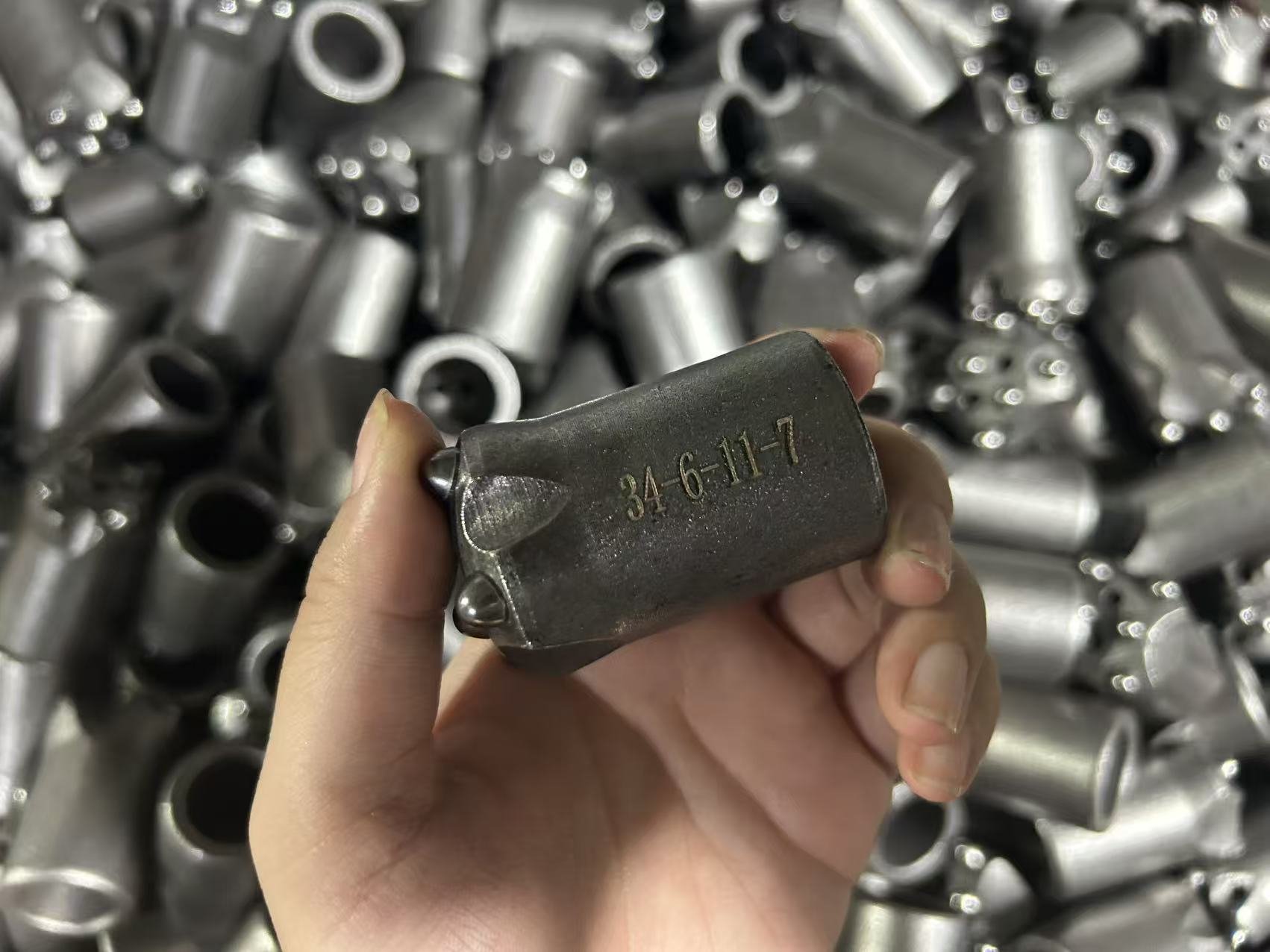
On paper, a tool can survive a drop, a splash, or a dusty day. Out here, the real test happens when it tumbles off a scaffold onto concrete, gets rained on mid-cut, or keeps running after the third bag of silica dust. That's the difference between a spec sheet and a reputation. We've watched our gear get knocked around by crews who don't have time to baby anything, and it still fires up the next morning without a hiccup.
Lab numbers don't tell you how the housing holds up when a truck door slams on it, or whether the seals still keep grit out after a thousand hours of vibration. The feedback we hear most isn't about tensile strength or IP ratings—it's from the electrician who left his drill on the back bumper and found it two blocks later, still working. That's the kind of durability that gets talked about in the parking lot, not in a brochure.
What actually matters is fewer trips to the service center and less money tied up in backups. When a tool earns its keep through a full season of abuse without flinching, the crew stops thinking about it as a piece of equipment and starts treating it like a reliable partner. That shift doesn't come from any certificate—it comes from showing up day after day, no matter what the site throws at it.
Making Tolerances Tighter in a Chinese Workshop
Walk into any well-run machine shop in the Pearl River Delta and you'll notice a quiet obsession with the micrometer. It's not just about hitting the spec on the drawing—it's about chasing the last few microns as if they were personal debts. One senior lathe operator I met kept a worn brass shim in his pocket, not because it was useful, but because it reminded him of a job where he'd held a bore diameter to within 0.004 mm over a run of two thousand pieces. He said the real trick wasn't the machine, but learning how the spindle's warmth changed the steel by mid-shift. So he'd start his day with a deliberate warm-up cycle, letting the bearings settle before measuring anything. That kind of feel can't be written into a manual.
Tightening tolerances in a Chinese workshop often comes down to the unglamorous work of process control. At a medium-sized shop in Dongguan, the owner showed me a logbook where every tool change and temperature reading went back four years. Whenever a batch drifted toward the upper limit, they'd stop and regrind the inserts rather than pushing through. The payoff wasn't just fewer rejects—it was that the client, a German automotive supplier, stopped sending their own inspector. Trust, it turns out, is built one stable 0.01 mm at a time. Some older machinists resist the data logging, saying their hands know better. But the younger ones, raised on coordinate measuring machines, see it as a way to make the shift more predictable, less dependent on who happened to be running the lathe that night.
There's also a social side to it. In many small workshops, the push for tighter tolerances came not from a manager's decree but from watching a neighboring shop land a contract that required true position within 0.02 mm. Word spreads fast in industrial parks. Soon you'll find tool cribs stocked with better boring bars, air gauges replacing old snap gauges, and a renewed respect for the humble dial indicator. It's not always about buying the fanciest CNC—sometimes it's simply replacing worn spindle belts earlier and sweeping the floor to keep grit off the slides. The result is a workshop culture where a 0.05 mm deviation feels like a personal failure, and where the difference between good enough and dead-on is measured in quiet pride rather than flashing alarms.
The Metallurgical Choices Behind Longer Bit Life
Bit failure rarely starts at the cutting edge—it begins in the grain structure. Most manufacturers settle for standard M2 high-speed steel, but the real difference comes from powder metallurgy. By atomizing molten alloy into fine particles and consolidating them under heat and pressure, you get a uniform carbide distribution that resists micro-chipping. This isn't marketing fluff; under a microscope, the difference is obvious. Fewer clustered carbides mean fewer stress risers, so the bit flexes instead of fracturing when it hits a hard spot in the wood.
Heat treatment is where many brands cut corners. A proper triple tempering cycle—not just a single hardening quench—transforms retained austenite into martensite. That leftover austenite is soft and unstable, causing edge deformation under load. By cycling the temperature three times, you stabilize the structure and squeeze out maybe 20% more usable life. It costs more, but the bit doesn't dull after a dozen holes in dense hardwood.
Coatings get all the attention, but the substrate matters more. A titanium nitride layer on poorly prepared steel is just lipstick. The real work is in the surface preparation before coating—micro-blasting to create a key, then a thin nitride diffusion zone underneath. That combination anchors the coating so it doesn't flake off at the lip, which is exactly where heat builds up fastest. When the coating stays put, the cutting edge stays cooler, and the tempered hardness underneath isn't annealed away by friction.
How We Test Every Connection Before It Ships
Every cable, port, and solder joint gets pulled, twisted, and pushed past its normal limits before it goes into a box. We don't just check for continuity on a meter and call it a day. Each batch goes through a sequence of mechanical stress tests that simulate years of daily use in the field — think repeated plug cycles, hard bends near the strain relief, and vibration runs that shake everything loose if there's even a hairline crack in the shielding.
On the electrical side, we sweep each connection with a network analyzer to catch any impedance bumps or signal reflections that would degrade performance over distance. Then we run high-current loads through power contacts while monitoring temperature rise with thermal cameras. If a connector gets hotter than our margin allows, the whole batch gets reworked, not just the failing unit. The goal isn't to pass a spec sheet — it's to leave no doubt that the connection will hold up when someone's relying on it in the middle of nowhere.
Finally, we pull random samples from every production run and cut them open. Cross-sectioning reveals voids in solder joints, cold laps in crimps, or insulation that stretched too thin during assembly. Those physical teardowns catch the things an electrical test might miss, and the results feed straight back into our tooling and process controls. Only after a batch survives all of that — stress, signal integrity, thermal load, and destructive inspection — does it get a serial number and a ship date.
Why Contractors Keep Coming Back for Our Taper Bits
It’s not the price tag that brings a crew back — it’s the moment they punch through a slab of quartzite and the bit is still asking for more. Taper bits that lose their edge after a dozen holes force extra trips to the truck and kill the rhythm on a drill pattern. Ours hold that edge long enough that the operator stops checking the clock and starts trusting the setup.
The shoulder profile and thread geometry get the credit most of the time. A bit that seats cleanly and doesn’t wobble under torque means fewer snapped rods and fewer walk-offs mid-hole. When a contractor doesn’t have to think about the consumables, they order the same part number next month without a second thought.
And when they do call to reorder, it’s usually to add more to the shelf — not to complain about a short run. That pattern shows up on job sites from foundation drilling to utility work, and it’s the reason our repeat order rate stays where it is.
FAQ
The tapered shank creates a tighter friction fit inside the drill rod socket, which reduces energy loss and prevents the bit from loosening under heavy torque. This design also makes bit changes faster underground.
Each bit body is CNC-machined before the carbide inserts are brazed, and then the finished pieces pass through a laser measuring station. Any bit outside the specified diameter or taper angle gets pulled and reworked.
They are commonly used in granite, limestone, hard sandstone, and fractured rock. The heat-treated steel body holds up well in high-impact pneumatic drilling, while the carbide grade can be matched to abrasive or broken ground conditions.
Yes. You can specify the taper degree (usually 7°, 11°, or 12°), the number and shape of carbide buttons, and the grade of tungsten carbide. This lets the bit match the rock hardness and the rig's percussion power.
Apart from dimensional checks, each batch undergoes a hardness test on the steel body and a visual inspection of the brazing joint. Some orders also include a rock drilling field test report from the factory's testing ground.
The bit body is carburized and then tempered to create a hard outer layer with a tougher core. This prevents the shank from cracking under repeated impacts while keeping the bit face wear-resistant.
Most orders range from 32 mm to 127 mm in bit diameter, with shank lengths matching standard drill rods. Smaller diameters are kept in stock, while larger or non-standard sizes are made to order.
Conclusion
At the heart of every taper connection drill bit we produce is a simple obsession: the interface between shank and socket has to feel like a single piece of metal. We don't just machine to a drawing—our shop floor runs on a mix of old-school feel and in-process measurement that catches drift before it becomes a tolerance stack. The result is a taper that seats fully, transmits torque without wobble, and comes apart cleanly when the job is done. In a Chinese workshop where tight tolerances are often talked about but rarely verified, we've made gauging a daily ritual rather than a final inspection checkbox. Every connection gets a contact-pattern check before it ships, so what leaves our floor already has proof it will hold up under a hammer's persuasion.
Durability here isn't a brochure promise—it's a metallurgical decision repeated thousands of times a month. We lean on high-carbon steel bodies with a heat treatment that prioritizes fatigue resistance over surface hardness alone, because a bit that snaps at the shank is worse than one that dulls gradually. Our test bay runs batches through cyclic loading and repeated make-and-break cycles, simulating the abuse of real rock rather than just lab conditions. Contractors come back because the bits don't surprise them: they wear predictably, reseat without galling, and keep their cutting edge long enough to finish the hole. That consistency, built from tighter tolerances, honest steel choices, and a testing culture that treats every connection as a potential failure point, is what keeps our taper bits on job sites season after season.
Contact Us
Contact Person: Elma
Email: [email protected]
Tel/WhatsApp: +86 13738628777
Website: https://www.pulankagroup.com/