
Chinese Steel Pallet Factory: Sourcing Tips for Quality and Durability You Can Trust
2026-06-12
Finding a reliable supplier for steel pallets isn't just about price—it's about ensuring every unit meets your standards for strength and longevity. With so many options flooding the market, how do you identify a Chinese factory that delivers both quality and durability you can trust? Enter Lanyuda, a name that consistently comes up in conversations about industrial-grade storage solutions. In this guide, we'll walk you through the must-know sourcing tips that separate the best from the rest, so you can make informed decisions without the guesswork.
Spotting Genuine Structural Integrity in Steel Pallets
Authentic structural integrity in steel pallets isn’t something you can judge at a glance. It goes beyond a shiny weld or thick-looking beams. You need to look at how the base and the deck connect under load, and whether the design accounts for stress points that develop over time. Pallets that rely solely on square corners and uniform joints often fail at the intersection of vertical and horizontal planes, especially when handling eccentric loads.
One practical method is to examine the continuity of welds along the main support channels. Full-penetration welds, as opposed to intermittent tack welds, distribute forces more evenly and reduce the risk of fracture. Heat-affected zones should also be minimal, because excessive heat during fabrication can weaken the steel near the joint. Tapping the structure with a small hammer can reveal irregularities—a clear, ringing sound usually indicates solid fusion, while a dull thud might suggest hidden voids or incomplete bonding.
Finally, pay attention to how the pallet reacts under dynamic conditions, not just static capacity ratings. Lift it with a fully loaded forklift and watch for any lateral sway or twisting. A well-engineered pallet will maintain its rigid plane without visible deformation, even when the load isn’t perfectly centered. Ask for documentation on finite element analysis or real-world fatigue testing; genuine structural integrity is proven in the subtle ways a pallet endures thousands of cycles without cracks forming at the corners or stringers.
How Raw Material Grades Shape Long-Term Performance
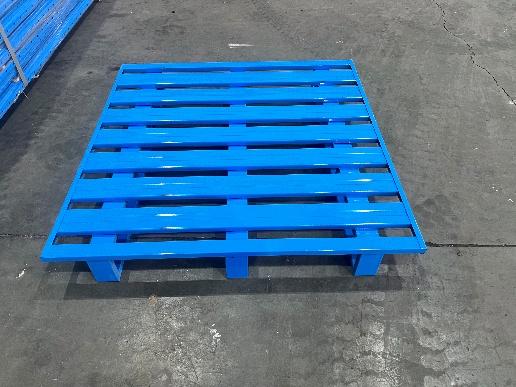
The choice of raw material grades goes far beyond initial cost savings—it quietly dictates how a product behaves over years of use. Higher-grade materials often contain fewer impurities and more precise alloying elements, which directly influence corrosion resistance, fatigue strength, and thermal stability. In contrast, lower-grade alternatives might pass early inspections but gradually reveal inconsistencies like micro-cracking or surface degradation, especially under cyclic loads or harsh environments. This slow decline can lead to unexpected downtime and replacement cycles that dwarf any upfront savings.
What makes this relationship tricky is that performance gaps rarely show up in standard lab tests. A mid-grade steel might meet all specification sheets at delivery, yet after prolonged exposure to moisture or temperature swings, its grain structure can coarsen, leading to reduced toughness. Engineers who focus only on certifications miss the story told by field data: components made from tightly controlled, high-purity inputs consistently outlast their cheaper counterparts, maintaining dimensional stability and safe operating windows far longer.
Ultimately, raw material grades act as a silent architect of product lifecycles. They influence not just how long something lasts, but how predictably it ages. For anyone managing long-term assets, investing in superior grades isn't about perfection on day one—it's about avoiding the steep performance cliffs that lower-quality inputs inevitably introduce. The real cost of a raw material isn't stamped on the invoice; it's measured in the maintenance logs and failure reports years down the line.
Welding Methods That Separate Lasting Pallets from the Rest
A pallet is only as strong as its joints. In the world of material handling, how the components are fused together matters more than you’d think. Cheap staples or nails work fine until they don’t—under load stress, vibration, or just repeated forklift bumps, those mechanical fasteners loosen up and the whole structure starts to wobble apart. This is where real welding comes in. It’s not just about joining two pieces; it’s about creating a bond that’s often stronger than the original material itself, effectively turning separate parts into a single, continuous frame.
Not all welding is equal, though. Friction welding, for example, generates heat through speed and pressure, melting plastics at the joint without any filler material. The result is a clean, homogenous seam that resists cracking and chemical exposure. Hot plate welding takes a different approach, melting the surfaces against a heated platen before pressing them together, creating a wide, durable bond zone. Then there’s ultrasonic welding, which uses high-frequency vibrations to fuse parts in seconds, perfect for precise, repeatable assemblies. Each method has its sweet spot depending on the pallet material and what kind of abuse it’s expected to take.
Investing in a well-welded pallet pays off quietly over time. Fewer repairs, less product damage, and a longer service life mean the upfront cost difference quickly disappears. Beyond the balance sheet, there’s also the day-to-day safety factor—a pallet that doesn’t splinter or collapse under load protects your crew from unexpected accidents. In an industry where downtime is expensive, the welding method hidden inside the pallet is often the reason some keep going while others end up in the scrap pile.
Surface Treatment Choices for Rust and Wear Resistance
Metals left unprotected eventually succumb to the gradual yet unforgiving forces of corrosion and friction. Whether it's a structural beam exposed to coastal air or a gear grinding under heavy loads, picking the right surface treatment can dramatically extend component life. Instead of treating this as an afterthought, those who work closely with mechanical systems understand that the coating or finishing method is as critical as the material itself. The goal is to create a barrier that stands up to harsh environments while maintaining the base metal's integrity, but not all solutions are built the same—some excel at preventing rust, others at reducing wear, and a handful manage both with careful engineering.
For rust-prone settings, zinc-rich coatings and hot-dip galvanizing often come to mind because they offer sacrificial protection: the coating corrodes first, sparing the steel beneath. Yet in places where abrasion is the bigger enemy, you might look toward hard chrome plating or thermal spray coatings with carbides or ceramics. These build a dense, hard shell that laughs off constant rubbing and impact. A less obvious but equally effective route involves phosphate conversion coatings paired with oil or wax, particularly in automotive and firearm components—they hold lubricants in a micro-crystalline structure, keeping parts slick and guarded against moisture. Each of these methods has its own sweet spot regarding substrate compatibility, budget, and environmental exposure.
Increasingly, engineers are moving toward duplex systems that combine two or more treatments to handle complex real-world conditions. Imagine a part that gets a tough nitrocarburizing treatment for wear resistance, then a sealed topcoat that blocks humidity and salt spray—it becomes remarkably resilient without needing expensive stainless alloys. The conversation around surface treatments has also shifted toward lower-VOC and chrome-free alternatives, not because they are mandated everywhere yet, but because they often improve workplace safety and simplify disposal. Choosing properly isn't about chasing a single “best” method; it's about matching the peculiar mix of threats—chemical, mechanical, or environmental—to a tailored defense that keeps your components serviceable for years longer than raw metal ever could.
Load Testing Standards Factories Should Willingly Show
Many manufacturers treat load capacity figures like trade secrets, reluctantly disclosing them only when pressed. That’s backwards. Factories that have invested in rigorous testing and quality engineering should see these standards as a badge of honor, not a liability. Willingly sharing detailed load data—static and dynamic—demonstrates confidence in the product and respect for the customer’s need to plan safely. It shifts the conversation from “just trust us” to “here’s exactly what this can handle.”
The real differentiator is how the information is presented. Dense PDFs full of caveats and legal disclaimers add friction and erode trust. Instead, leading factories now publish interactive load charts, real-world video demonstrations, and context-rich failure mode explanations that help engineers understand not just the breaking point, but the entire performance envelope. Showing the testing protocol—complete with the setup, instrumentation, and acceptance criteria—transforms a dry specification into a compelling narrative of durability.
Transparency also shortens the sales cycle. When a factory proactively offers clear, verifiable load standards, it eliminates the back-and-forth that often kills projects. Customers spend less time verifying claims and more time designing around proven capabilities. In the end, willingly showing your load testing standards isn’t just good ethics; it’s a strategic filter that attracts serious buyers and repels the ones who would nickel-and-dime over safety margins.
Reading Past the Quote to Uncover True Factory Capability
A factory's initial quote often reflects only surface-level promises—standard lead times, material specs, and unit costs. But the real story lies beyond those tidy figures. I’ve learned to treat a quote like the first chapter of a novel: it sets the stage, but the plot unfolds in the margins. When I visit a facility, I’m not just checking boxes on an audit checklist. I’m watching how workers move between stations, whether tooling is organized or scattered, and if supervisors respond to hiccups with quick fixes or root-cause analysis. These quiet signals expose whether a factory is built on process discipline or firefighting.
Digging into raw data makes the invisible visible. I ask for scrap records, not polished yield reports, and machine maintenance logs that reveal how often production halts unexpectedly. One supplier I worked with touted a 98% on-time delivery rate, but their late orders consistently clustered around one product line. The problem wasn’t capacity—it was a materials hoarding habit that starved downstream processes. That kind of bottleneck gets camouflaged in aggregate metrics, but it screams at you once you trace a single work order from start to finish.
Real capability also lives in conversations that quotes never capture. I talk to the veteran machine operator who might mention, “Oh, that part? We always flip the tolerance manually because the old fixture wanders.” It’s a small remark, but it tells me the factory’s quality hinges on individual heroics rather than robust tooling. Similarly, when I chat with packaging staff about how they handle last-minute design changes, I glimpse the emotional currency behind every shipment—whether urgency triggers collaboration or blame. These stories, pieced together, sketch a true portrait of speed, risk, and resilience that no tender document can convey.
FAQ
Focus on their production process, material sourcing, and any certifications like ISO 9001. Ask for detailed specs on steel grade and thickness, and request samples to check weld consistency and finish. Also, review their defect rate tracking and in-house testing capabilities.
Verify the load capacity ratings and ask for test reports. The design should have reinforced corners and stiffeners. The factory should use high-tensile steel and powder-coating for corrosion resistance. Request real-world case studies from similar industries.
Generally, Q235 or Q345 structural steel with hot-dip galvanizing or powder coating performs well. Hot-dip galvanizing offers superior rust protection for outdoor storage, while electrostatic powder coating provides a hard finish suitable for most warehouse environments. Ask about salt spray test hours.
Don't just rely on emailed PDFs—check certificate numbers on official databases like CNCA or ask for a video call walkthrough showing the original documents. Request ISO 9001, CE, or SGS inspection reports. Also, confirm they meet international weld standards like AWS D1.1.
Many factories start MOQs at 50–100 units for standard sizes, but custom designs may require 200–500 units. Lead times usually range from 20–45 days after drawing approval, factoring in raw material procurement and coating curing. Always build in buffer time for shipping.
Go beyond the sales pitch. Look for third-party audit reports (e.g., from TÜV or Intertek), request client references you can call, and check their export history. Even a small pre-production sample order can reveal attention to detail and communication quality.
Avoid full upfront payment. Typically, a 30% deposit to start production and 70% against the bill of lading copy is safer. Use Trade Assurance on Alibaba or a confirmed Letter of Credit for new relationships. Always confirm the factory's export license and business registration.
Conclusion
When sourcing steel pallets from a Chinese factory, the first thing to look beyond is the surface finish—structural integrity is what truly dictates how well a pallet holds up under years of heavy warehouse cycles. Honest manufacturers will openly discuss the grade of raw steel they use, because the difference between Q235 and lower-grade substitutes shows up fast in deformation, especially under edge-loaded or racked conditions. Just as important are the welds: look for full-penetration joints around the base of each block or runner, not just intermittent tack welds that look clean but crack under real stress. The best factories treat welding as a critical process with documented parameters, jigs that prevent distortion, and post-weld inspection routines that catch hairline fractures before the pallet ever leaves the shop floor.
Surface treatments like hot-dip galvanizing or powder coating are often the first thing buyers ask about, but real durability comes from knowing how those coatings bond to properly pre-treated steel. A trustworthy factory will share their salt-spray test hours without being prompted, and even better, they’ll have video of dynamic load testing at 125% of rated capacity—not just a static screenshot. When you’re reading a quote, don’t fixate on the unit price alone; push for details on the mill certificates for the steel coil, the type of welding wire used, and the thickness tolerance of the decking. A factory that answers these questions clearly isn’t just selling pallets—they’re proving they understand how their product performs in your supply chain.
Contact Us
Contact Person: Johnny
Email: [email protected]
Tel/WhatsApp: +86 18151010686
Website: https://lydstorage.com