

Distillery Equipment Company: Crafting the Perfect Setup for Your Spirits
2026-05-12
Crafting spirits is a journey that blends tradition with innovation. Whether you're dreaming of launching your own whiskey label or refining a boutique gin recipe, the equipment you choose sets the foundation for every drop. This is where DYE steps in—distillery equipment designed to turn ambition into exceptional spirits. In this guide, we explore how the right setup can transform your craft, from copper stills to fermentation precision, and why partnering with a dedicated equipment company makes all the difference.
Choosing the Heart of Your Operation: Stills Built for Character
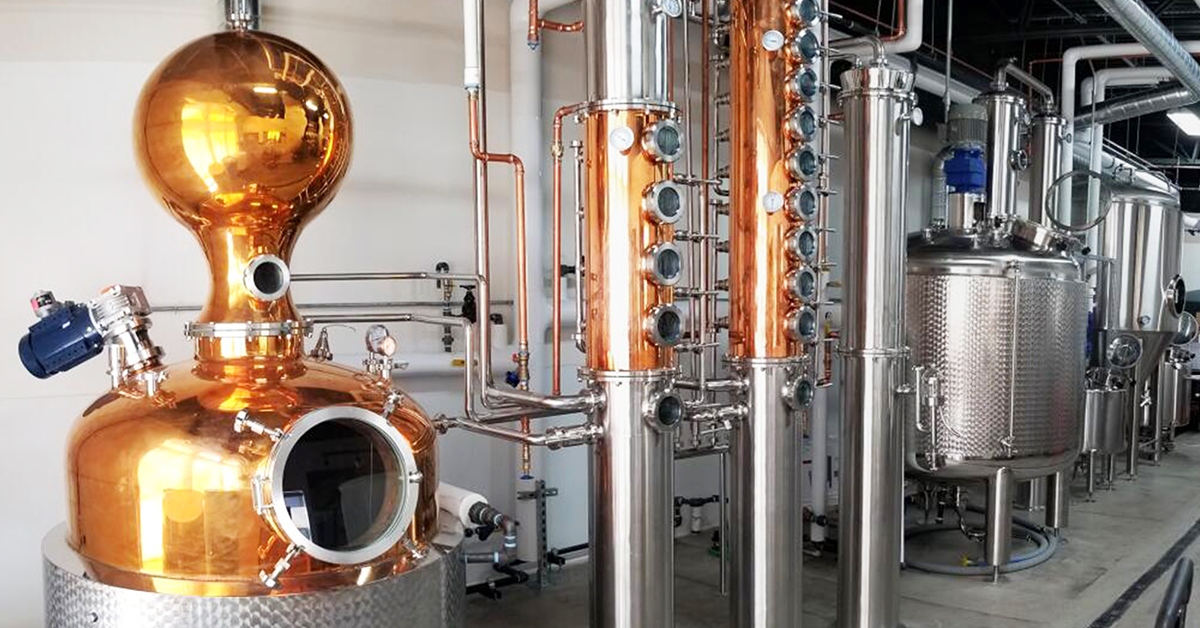
The still is far more than a hunk of metal—it's the quiet collaborator that shapes every drop you'll ever pour. A mass-produced column might churn out gallons with machine-like consistency, but it rarely leaves room for nuance. Hand-beaten copper, with its subtle dents and hammer marks, tells a different story. Those imperfections aren't flaws; they're fingerprints that influence vapor flow and sulfur binding in ways no factory spec sheet can predict. When you choose a still with real character, you're not just buying equipment. You're inviting a personality into your distillery that will leave its signature on every bottle.
Material matters, but not in the way you'd think. Copper purists swear by its ability to pull out sulfides, lending smoothness to whiskey or depth to fruit brandy. Yet the truth is more layered: the thickness of the metal, the angle of the lyne arm, even the patina that builds over years all nudge the spirit in different directions. A secondhand still with a decade of rhum agricole in its bones will behave differently than a shiny new one, and that's the point. There's a quiet magic in equipment that's already learned to dance—its character compounds with age, like a well-seasoned skillet.
Building a distillery around such a tool calls for a certain mindset. You have to be okay with unpredictability, even embrace it, because the still will have its moods. One day the heads cut comes early; the next, the heart sings longer. Commercial logic says to chase repeatability, but character refuses to be replicated. That's why small-batch makers often describe their work as conversation rather than control. The still talks, you listen, and the result is a spirit that can't be mass-marketed—because it belongs to a specific time, place, and vessel, one that holds the memory of every batch ever run through it.
Fermentation Vessels That Elevate Every Batch
Every homebrewer knows that the vessel you choose does more than just hold liquid—it shapes the entire personality of your beer, wine, or kombucha. Stainless steel conicals with tri-clamp fittings, for instance, aren't just about looking professional; they give you precise control over trub removal and harvesting yeast mid-ferment, which directly impacts clarity and flavor stability. Glass carboys, on the other hand, let you watch the yeast dance, offering a visual cue that can't be replicated by opaque plastic buckets. It's these small material and design choices that turn a decent batch into something worth sharing.
Temperature management is where a well-engineered vessel truly flexes its muscles. A double-walled fermenter with a glycol jacket doesn't just prevent off-flavors from runaway fermentation—it lets you dial in a specific profile, like holding a saison at 80°F for those peppery esters or cold-crashing an IPA to drop hop particles without oxygen ingress. Even simpler features, like an oversized lid gasket that doesn't pinch, can mean the difference between a perfectly anaerobic environment and a slow oxidation that mutes your dry-hop aroma weeks later.
The best fermenters also respect your time and effort. Quick-disconnect spigots that won't clog with hop debris, etched volume markings that survive caustic cleaning cycles, and racking arms that rotate 360° to leave sediment behind—these aren't luxury add-ons; they're practical tools that reduce oxidation risk and make packaging day feel less like a chore. When you've finally poured that bright, carbonation-perfect glass, you'll know the vessel earned its keep.
The Unseen Impact of Material on Spirit Personality
Most people never stop to consider how the physical elements we surround ourselves with quietly mold the intangible self. A creaky wooden floor, the chill of concrete walls, the softness of worn linen—these aren't just backdrops. They seep into our daily rhythms and shape an internal landscape, influencing whether we feel grounded, restless, or strangely at home in our own skin. Over years, such sensory undercurrents can rewrite emotional defaults, leaving a mark far deeper than surface aesthetics.
Take clothing, for example. A stiff, synthetic blouse doesn’t just irritate the skin; it can foster a subtle, persistent discomfort that colors your mood and shortens your patience. Compare that to a well-fitted cotton shirt, which seems to breathe with you and quietly encourages a more open, relaxed posture. These choices stack up, not as fashion statements, but as quiet collaborators in the slow sculpting of a person’s spirit—how they carry themselves, how they respond to strangers, even how they face their own reflection.
Even beyond what we wear, the textures we choose for our living spaces—rough-hewn pottery, smooth glass, splintered wood—communicate something wordless. A room filled with sharp edges and cold surfaces can subtly reinforce a brittle, guarded personality, while one that invites touch with warm, tactile materials often nurtures a more approachable, resilient inner self. The connection may be silent, but it is constant, proving that the material world doesn’t just reflect who we are; it’s quietly, tirelessly helping to decide who we become.
Designing a Distillery Flow That Feels Effortless
A distillery layout often becomes a silent instructor—guiding grain from mill to mash tun to still without a hitch. We began by mapping the subtle bends and drops that gravity could handle, saving pumps for moments where height worked against us. The result is a sequence that sidesteps unnecessary lifts and cluttered corners, letting the raw ingredients glide forward almost on instinct.
We paid equal attention to what happens between the tanks. Hose connections were tucked into reachable nooks, valve handles placed where a distiller’s hand naturally rests during a walk-through, and cleanup stations positioned so hose-down runoff travels a predictable, drain-friendly path. Every inch reduces friction—no backtracking, no awkward stretches.
The quiet surprise is how this effortlessness extends beyond the equipment. When the mash cook and distillation timelines don’t collide, and spent grain removal doesn’t require a morning wrestling match, the crew settles into a rhythm. That rhythm is what transforms a good batch into a reliably great one, day after day.
From Hobby to Heritage: Scaling Without Compromise
What began as a solitary pursuit in a cluttered garage gradually steeped itself into a collective identity, not through relentless marketing but through the quiet magnetism of authenticity. The transition from hobby to heritage is rarely linear; it demands a dogged protection of the original spark while allowing it to be held by more hands.
Scaling, without shattering the soul of a craft, means saying no more often than yes. It's a deliberate dance between preservation and progress—refusing to outsource the very elements that make the work irreplaceable, even when short-term gains beckon. Every decision is filtered through the lens of legacy: Will this matter in thirty years, or is it just noise?
In the end, heritage isn't an accident of longevity. It's earned through a thousand invisible acts of care that never make it into headlines, the kind of stewardship that turns a personal whim into something that belongs to others without ever losing its roots.
A Setup That Grows With Your Craft
When I first started filming, my gear was bare-bones: a borrowed DSLR, a single prime lens, and a DIY diffusion panel cut from a shower curtain. That scrappy rig taught me more about light and composition than any high-end kit ever could—precisely because it demanded creativity over convenience. As my skills sharpened, I upgraded piece by piece, not by chasing trends, but by listening to the friction in my workflow. A cage here, a monitor there, a faster lens when I hit the limits of my f/4. The beauty of intentional growth is that each addition earned its place, solving a real problem rather than just filling a shelf.
The real secret is investing in a core system that doesn't punish you for starting small. Think cages with multiple mounting points, lens adapters that unlock vintage glass, and stabilizers that handle payloads far beyond your current body. Beyond the physical gear, your editing template and backup routine should scale too—proxy workflows, node-based color grades you can save as presets, and an archive system that doesn't become a digital junk drawer. When the equipment and processes feel like a conversation rather than a checklist, you’ll find that upgrades become natural, almost effortless expansions rather than costly overhauls.
FAQ
We design each system around the specific spirit you're creating, not the other way around. From copper pot stills for whiskey to column setups for vodka, our focus is on how materials, heat source, and flow path affect flavor. Our team includes former distillers who understand that subtle choices in lyne arm angle or plate design can make or break a batch.
Yes, we have a modular line that lets you add capacity without scrapping your initial investment. You can start with a 150-liter hybrid still and later integrate additional columns, a larger mash tun, or an inline infusion system. The control panels are designed to scale too, so you’re not forced into a complete rebuild when demand grows.
We handle everything from site prep to the first test run. Our engineers will visit your facility, plan plumbing and ventilation, and train your team on operation and safety. Even if you're in a remote location, we’ve got a network of certified technicians who can manage the setup. Typically, a basic system takes 3-5 days to be fully operational.
Absolutely. We’ve recreated 18th-century copper pot stills for rum distilleries and traditional direct-fire alembics for brandy. Our craftsmen use period-appropriate techniques, but we can also incorporate modern temperature controls and safety features without altering the appearance. One recent project involved hand-hammering a 200-liter still based on a 1920s cognac design.
Every system comes with a 2-year warranty and unlimited remote diagnostics. We stock common replacement parts and gaskets in regional hubs for quick shipping. Beyond that, our consulting service can help you tweak recipes and processes as you scale. Some clients call us monthly just to talk about tweaking their distillation protocols for seasonal ingredients.
We have a dedicated range for small-batch producers, starting at 50 liters, with no compromise on craftsmanship. These often include features like CIP (Clean-in-Place) and integrated spirit safes that you’d normally see on bigger rigs. We’ve found that nanodistilleries need the same precision as large plants—sometimes more, because a single flawed batch can be more damaging to a smaller business.
Copper is the gold standard for most product lines because of its heat conductivity and sulfur-binding properties, but we also build in stainless steel for neutral spirits or hybrid setups with copper columns and stainless boilers. All our copper is food-grade and sourced from European mills, and we offer interior tin or silver linings if a client wants them for specific flavor profiles.
Lead time depends on complexity, but standard systems usually ship in 6-8 weeks. Custom builds can take up to 14 weeks, especially if they involve intricate handwork or specialized component fabrication. We keep clients updated with biweekly build reports and photos, so you’re never in the dark. Rush orders are possible with an added 20% surcharge.
Conclusion
Every sip of a well-crafted spirit tells the story of its making, and that narrative begins with the equipment you choose. At the heart lies the still—more than just a vessel, it’s the crucible where botanicals and fermented wash transform into something with soul. Whether it’s a copper pot still that layers warmth and complexity into a single malt, or a column still that chases precision for a crisp vodka, the material and design imprint a fingerprint on every drop. Copper, for instance, doesn’t just conduct heat; it quietly removes sulfides, softening the spirit’s edges in ways stainless steel never could. That unseen chemistry extends to fermentation vessels too, where shape, size, and surface become silent partners in the dance of yeast, influencing esters and phenols that shape aroma and mouthfeel long before distillation begins.
But individual components alone don’t make a distillery—it’s the quiet choreography of how they connect. Thoughtful layout turns a maze of pipes and tanks into a workspace where mashing, fermenting, and distilling flow with the ease of a familiar rhythm. Scaling from a hobbyist’s garage to a heritage brand shouldn’t mean sacrificing that sense of craft. The right setup grows with ambition: modular systems that add capacity without losing character, vessels designed to be replicated, not replaced. This isn’t about buying equipment; it’s about building a foundation that honors where you started while embracing where you’re headed—a living, breathing setup that evolves as your spirits do, batch by batch, year after year.
Contact Us
Contact Person: Ada Xu
Email: [email protected]
Tel/WhatsApp: 0577-86806088
Website: https://www.dayuwz.com/