

Export Laser Safety Glasses: Key Considerations for Global Markets
2026-05-20
Expanding your laser safety glasses into global markets isn't just about shipping products—it's a puzzle of standards, certifications, and regional preferences that can blindside even seasoned exporters. From EN 207 to FDA requirements, one overlooked detail can stall your entire shipment. That's where LASERPAIR changes the game, but before you place your next order, there are some hard-earned insights you'll want to see. Ready to cut through the red tape?
Navigating Global Safety Standards for Laser Eyewear
Selecting the right laser safety glasses often feels like deciphering a multilingual map. The standards aren't universal; instead, they branch into distinct regulatory frameworks that reflect regional approaches to risk. In the United States, the ANSI Z136 series sets the benchmark, demanding that eyewear be marked with optical density and wavelength specifics. Meanwhile, Europe relies on EN 207 and EN 208, which go a step further by certifying the entire frame and filter assembly against direct and diffused radiation under stated maximum power exposure conditions. Without grasping these foundational differences, even well-intentioned buyers end up with protection that looks compliant on paper but falls short in the lab or on the factory floor.
The complexity deepens when products claim “global compliance” yet only address surface-level labeling. True alignment means understanding how each standard tests and rates eyewear—whether it's the L-scale numbers in India's IS 14624, the alignment with IEC 60825 in many Asian markets, or the strict third-party certification required for CE-marked products in the EU. A pair of glasses that meets EN 207 must pass a penetration test with a continuous wave laser at a specified power, whereas ANSI glasses are rated primarily by the optical density of the filter alone. This nuance catches many off guard, especially when purchasing for multinational operations where a single laser might be used across borders.
Practical navigation requires a shift from chasing labels to mapping actual usage environments. Start by identifying the laser's wavelength, power, and beam characteristics, then cross-reference these against the specific test conditions outlined in the target country’s standard. For instance, a facility using femtosecond pulsed lasers will need eyewear tested to withstand those pulse durations—something not all generic “laser safety glasses” can guarantee. Engage with manufacturers who provide detailed spec sheets showing test reports against the applicable EN, ANSI, or local variants, and don’t hesitate to request clarification on how the frame and side-shields factor into the certification. In a landscape where a millisecond lapse in protection can have permanent consequences, the effort spent understanding these global nuances isn't just administrative diligence—it's the backbone of genuine optical safety.
Regional Certification Demands: More Than Just CE and ANSI
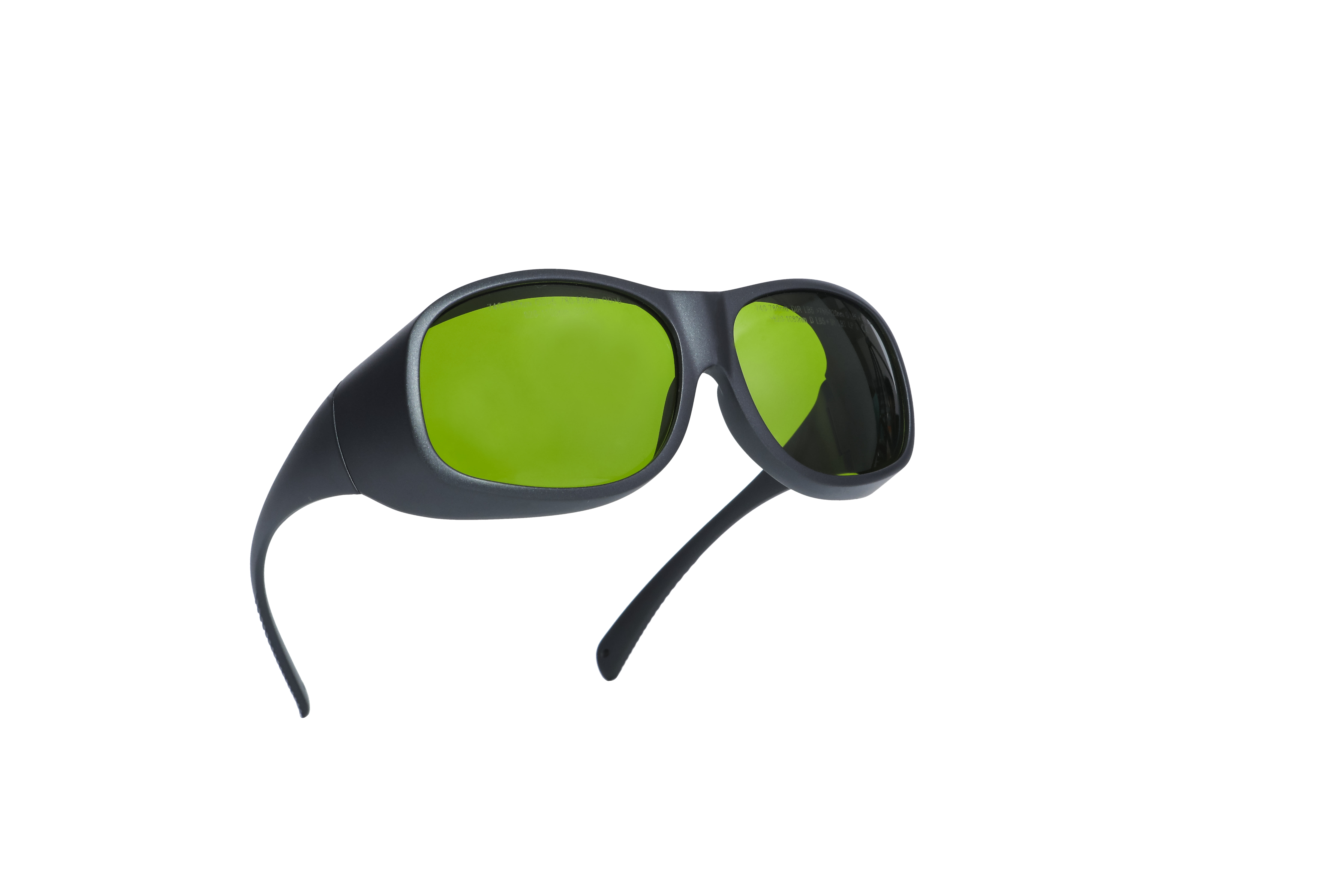
When expanding into new markets, many manufacturers fixate on the well-known CE marking for Europe or ANSI standards for the U.S., only to discover a labyrinth of additional regional requirements. The reality is that a product compliant with one region might still face barriers elsewhere due to subtle but critical variations in safety, environmental, or electromagnetic compatibility rules. Overlooking these can lead to costly delays, redesigns, or outright market exclusion—a lesson often learned the hard way.
Take Latin America, for instance, where certifications like INMETRO in Brazil or NOM in Mexico are mandatory and demand localized testing, sometimes with in-country audits. In Asia, China’s CCC mark goes beyond the scope of typical EU directives, requiring factory inspections and Chinese-language documentation. Even within Europe, the CE mark alone isn’t always enough; specific sectors, such as telecom or medical devices, may need additional regulatory approval from bodies like the BSI or TÜV. Meanwhile, Australia’s RCM and Saudi Arabia’s SASO marks often surprise those who assume global standards are harmonized.
Navigating this patchwork demands a proactive strategy. Early engagement with local certification partners, building compliance into the design phase, and maintaining a flexible documentation system can turn regional hurdles into a competitive moat. The key is to stop treating these requirements as mere checkboxes and instead integrate them into the product lifecycle—because in today’s interconnected world, a CE or ANSI badge is just the starting line.
Cultural Factors in Protective Eyewear Adoption
In many workplaces, the decision to wear protective eyewear is shaped less by official safety policies and more by unspoken cultural norms. When a team collectively views safety gear as a sign of professionalism and competence, adoption becomes second nature. Conversely, in environments where eye protection is seen as an unnecessary burden or a mark of inexperience, even the most advanced equipment tends to gather dust. This silent peer pressure can override individual judgment, making safety culture the real gatekeeper of compliance.
Generational attitudes also play a quiet but powerful role. Younger workers may arrive with habits formed in an era of heightened risk awareness, while older employees might rely on decades of personal experience—sometimes believing that their seasoned instincts make protective gear redundant. Bridging this divide requires more than top-down mandates; it demands storytelling and mentorship that reframe eyewear not as a constraint, but as a shared tool that protects collective wellbeing and preserves the ability to work another day.
Outside the workplace, community perceptions ripple inward. In regions where eye injuries are common in daily life—from agricultural work to home repairs—protective eyewear is more likely to be accepted as a practical necessity. Where such risks are less visible, safety glasses can feel foreign or exaggerated. Successful adoption strategies recognize these deeper cultural currents, designing awareness campaigns that connect eye protection to local values, family responsibilities, and the simple dignity of staying injury-free.
Custom Solutions for Niche Industrial Applications
There’s no off-the-shelf answer when your operation lives in the margins of mainstream manufacturing. The real work often begins with a phone call that starts, ‘I’m not sure this can even be done,’ followed by a rough sketch on a napkin. We’ve built our reputation on saying yes to those problems—designing temperature control units for vacuum chambers that extract botanical oils, or crafting fluid delivery manifolds that handle abrasive slurries in semiconductor polishing. These aren’t tweaks to existing catalog items; they’re ground-up builds shaped around the exact rhythm of a single production line.
What makes a niche solution work isn’t just technical competence—it’s the willingness to learn a client’s process until it feels like our own. Take the bakery equipment manufacturer who needed a hot oil system that could cycle between three different viscosities without scorching. Standard heaters would have cooked the fluid unevenly. Our team spent two days in their facility watching dough mix and rise, then delivered a low-watt-density immersion bundle with infinite turndown capability. The result wasn’t just a heater; it was a thermal rhythm matched to their mixing schedule, eliminating degradation and cutting energy waste by a third.
Behind every specialized industrial need is a set of constraints that textbooks never anticipated: explosive atmospheres, washdown cleanroom protocols, or weight limits that demand exotic alloys. We keep a lean engineering bench that pivots fast—no layers of gatekeepers between the person designing the coil and the person bending the tube. This flat structure means a prototype for a catalyst reactor heater or a mobile asphalt tester can ship in weeks, not months. And when the application evolves, the design evolves with it, without the drama of retooling an entire production portfolio.
Supply Chain Resilience: From Production to Global Distribution
Building a supply chain that can absorb shocks starts long before goods ever reach a shipping container. It’s about mapping every node—raw material sources, tier-2 and tier-3 suppliers, manufacturing hubs—and understanding where the fragility lives. When a single region accounts for 80% of a critical component, that’s not a sourcing strategy; it’s a ticking clock. Diversification isn’t just about having a backup supplier in another country. It means qualifying alternative materials, pre-vetting logistics partners, and running regular stress tests that simulate real-world disruptions—port closures, geopolitical flare-ups, sudden demand spikes. The goal is to create optionality so that when one path constricts, another is already warm and ready.
Production resilience demands more than redundant capacity. It requires visibility into the daily pulse of factory floors and the ability to shift tooling or reallocate manpower within hours, not weeks. Companies that do this well invest in digital twins of their production lines, allowing them to model changeovers without stopping output. They also cultivate relationships with contract manufacturers that can seamlessly absorb overflow, blurring the line between in-house and outsourced. But it’s the softer side that often gets overlooked: the workforce. Cross-training operators, building trust with unions, and ensuring that tribal knowledge isn’t locked inside a single veteran’s mind—these things prevent a local labor strike from becoming a continental stockout.
Global distribution is where the rubber meets the road, and resilience here hinges on network design, not just carrier contracts. Too many companies optimize for lowest cost per unit shipped and end up with a brittle, single-port dependency. A resilient network intentionally routes critical stock through multiple gateways, blending air, ocean, and even rail in unconventional corridors. It also embraces dynamic re-routing technology that reads port congestion data and weather patterns in real time, pushing inventory toward the path of least resistance. Beyond hardware, it’s about information equity—giving customers and downstream partners honest, early warnings when a shipment goes awry. That transparency can turn a supply disruption from a relationship breaker into a proof point of reliability.
Educating Markets on Laser Hazard Classification
Laser hazard classification isn't just a label on a device—it's the foundation of safe use across industries. Yet, many buyers and operators still treat it as a secondary detail, assuming a Class 4 laser is simply "more powerful" without understanding the real risks. Bridging this gap requires more than a generic warning label; it demands clear, scenario-based communication that ties each class to actual consequences, like retinal injury thresholds or combustion risks in specific environments.
Training materials that lean on abstract definitions often fail to stick. Instead, interactive guides comparing class boundaries through real-world footage of beam interactions—cutting, engraving, or even accidental reflections—can drive the point home faster than any spec sheet. For instance, demonstrating how a Class 3B beam visible against a dark background still poses a diffuse reflection hazard shifts the mindset from "invisible danger" to practical vigilance.
Market education also means translating legalese and optical physics into operational checklists people actually use. Short video snippets showing exactly where ODs (optical densities) matter, or poster campaigns in service centers that map laser classes to mandatory PPE levels, turn compliance into habit. When users see a direct link between classification and their daily tasks, they stop memorizing numbers and start internalizing safety.
FAQ
It depends on the destination, but most markets expect compliance with EN 207 in Europe or ANSI Z136 in the U.S. Some countries also mandate local testing, so always verify with the importer.
Europe follows EN 207/208 focusing on wavelength and protection levels, whereas the U.S. uses ANSI Z136 which emphasizes optical density. Asia often blends both, with Japan adopting JIS standards that are similar to EN.
Labels must be in the local language and include protection parameters, manufacturer details, and regulatory marks. A shipment can be rejected simply because the warning text isn’t in the required tongue.
Yes. Beyond impact protection, some countries demand tamper-evident seals or sterile packaging if the glasses are branded for medical or cleanroom use. Humidity controls might be needed for long sea voyages.
A valid certificate of origin is essential. If the product qualifies under rules like USMCA or EU trade pacts, using the correct HS code and documentation can significantly lower duties.
Buyers often expect a local warranty support channel, replacement parts availability, and clear instructions in the local language. Without these, distributors may hesitate to commit.
Conclusion
Expanding into international markets with laser safety glasses demands a multifaceted approach that goes well beyond basic product compliance. Manufacturers must navigate a labyrinth of regional safety standards—while CE marking and ANSI Z136 are foundational, markets like China, Brazil, and South Korea enforce their own certification schemes, often requiring localized testing and documentation. Equally important is understanding cultural nuances in protective eyewear adoption; in some regions, comfort and aesthetic design significantly influence worker compliance, whereas in others, rigorous safety education is the primary driver. This makes market-specific education on laser hazard classification essential, empowering users to match eyewear optical density to actual laser wavelengths and power levels.
Beyond standards and culture, building a resilient supply chain is critical to meeting fluctuating global demand without compromising delivery timelines, especially given recent disruptions in global shipping. This necessitates not just diversified logistics but also close collaboration with local distributors to navigate customs and regulatory hurdles efficiently. Meanwhile, the drive toward specialized applications—from ultrafast femtosecond lasers in ophthalmology to high-energy industrial cutting—pushes manufacturers to offer tailored protection, blending advanced materials with ergonomic designs. By integrating certification expertise, cultural adaptation, supply chain resilience, and precision-engineered custom solutions, exporters can secure a competitive edge and foster long-term trust in the global laser safety market.
Contact Us
Contact Person: Jenny
Email: [email protected]
Tel/WhatsApp: +86 13537713281
Website: https://www.laserpair-safety.com/