

Food Extruder Manufacturer Insights: Revolutionizing Snack and Pet Food Production
2026-05-21
In today's fast-paced snack and pet food industries, innovation is the key to staying ahead. Food extrusion technology has quietly revolutionized production lines, enabling manufacturers to craft everything from crispy snacks to nutritious pet kibble with unmatched efficiency and consistency. At the heart of this transformation is MINGDE, a leader in extrusion machinery that combines precision engineering with deep industry insights. But what makes modern extruders so indispensable, and how are they reshaping the future of food production? Let’s dive into the world of advanced extrusion and explore the trends driving the next wave of change.
Rethinking Texture: How New Extruder Designs Are Changing Snack Time
Crispy, crunchy, airy—texture is just as important as taste when it comes to snacking. For decades, extruder design was largely about throughput and consistency, but a quiet revolution is underway. Engineers are reimagining the fundamentals, tweaking screw geometry and die configurations to manipulate starch gelatinization and protein denaturation in ways that were once considered impossible. The result? Snacks that shatter differently on the palate, dissolving in a cascade of flavor rather than simply breaking apart.
One of the most exciting breakthroughs lies in modular barrel sections that allow for rapid pressure and temperature shifts mid-extrusion. Instead of a steady, predictable cook, ingredients are now subjected to a kind of thermal choreography—quick blasts of superheated steam followed by controlled cooling zones. This not only preserves delicate aromatics but creates micro-foamed matrices that feel almost creamy on the tongue, even without fat. Nutritionists are taking note, too: these techniques can reduce the need for binders and texturizers, opening the door to cleaner labels and whole-food inclusions like quinoa or sprouted legumes.
Texture innovation goes beyond mouthfeel—it’s reshaping the entire snack experience. Square, curvaceous, and multi-layered pieces now emerge from dies that incorporate 3D-printed elements, allowing for geometries that control crack propagation. Biting into a star-shaped puff gives a different acoustic feedback than a thin, rippled chip, and brands are starting to weaponize that sound. Paired with real-time viscosity monitoring and AI-driven adjustments, these new extruders turn snack production into a blend of science and craft, where each batch is fine-tuned for a signature crunch that can’t be replicated elsewhere.
The Pet Food Shift: Why Extrusion Quality Matters More Than Ever
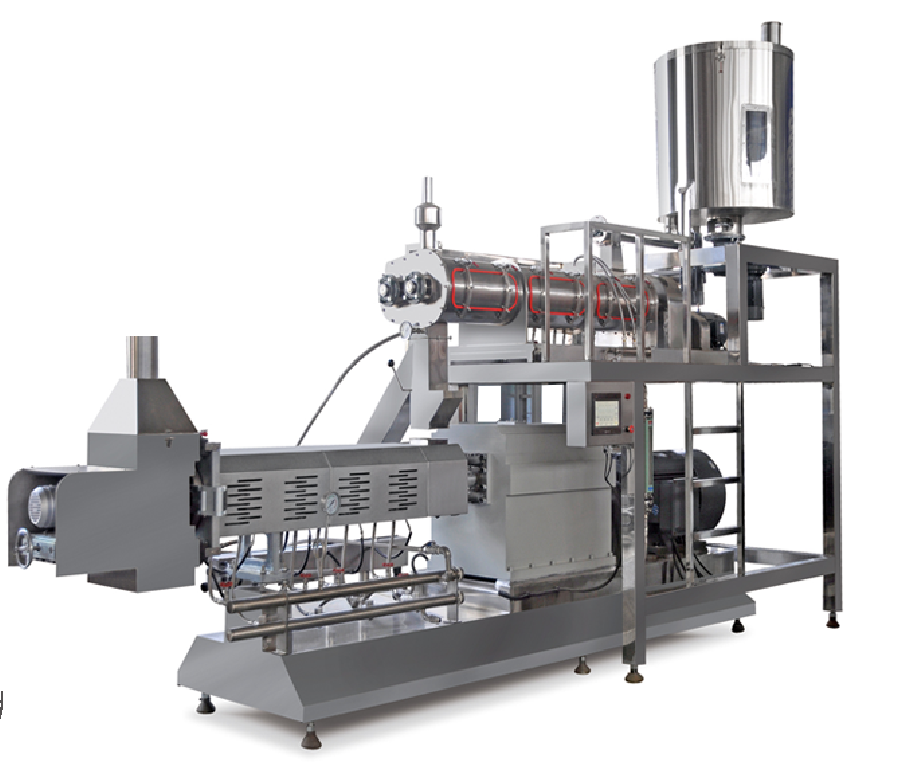
Pet food manufacturing is undergoing a quiet but decisive transformation. Owners now scrutinize ingredient lists with the same care they apply to their own meals, pushing for recipes that promise digestibility, nutrient retention, and minimal processing. This shift places extrusion—the heart of most kibble production—under a microscope. It’s no longer enough to simply bind ingredients into uniform shapes; the process must preserve delicate vitamins, ensure starches are properly cooked for easy digestion, and prevent the formation of anti-nutritional factors that can arise under poor control.
When extrusion parameters drift—temperature fluctuations, inconsistent moisture, or incorrect shear—the consequences ripple outward. Overcooked starches lose their nutritional edge, fats oxidize into rancidity, and proteins denature in ways that undercut palatability. Manufacturers who once operated on “good enough” now face a reality where a single off-spec batch can erode consumer trust overnight. Premium brands differentiate themselves by mastering the thermal-mechanical process, carefully calibrating screw speed, die design, and preconditioning to protect the functional value of every ingredient.
Beyond immediate product quality, extrusion precision shapes the broader landscape of pet health. Delicate bioactive compounds—probiotics, enzymes, omega-3s—survive only within narrow processing windows, demanding equipment that can sustain gentle yet effective cooking. As the market moves toward functional foods and tailored nutrition, the ability to consistently deliver those benefits through extrusion becomes a defining advantage. In an era where a food recall can spread globally in minutes, the link between careful extrusion and lasting brand reputation has never been tighter.
Inside the Machine: Key Innovations Driving Modern Extruders
Peek inside a modern extruder and you'll find a world where precision engineering meets adaptive intelligence. Gone are the days of fixed screw geometries churning out uniform melt; today’s systems employ modular screw designs that can be reconfigured on the fly to optimize mixing, degassing, or sheer intensity, depending on the polymer’s temperament. This flexibility, often managed by real-time viscosity sensors and closed-loop control algorithms, lets a single machine hop between materials and outputs without skipping a beat—a quiet revolution that’s making smaller, smarter production runs not just possible, but profitable.
Energy consciousness has also wormed its way into the extruder’s core. Direct-drive motors now sidestep the clunky gearboxes of yesterday, converting over 95% of input power directly into screw torque while cutting maintenance headaches. Intelligent thermal management goes a step further: zoned heating and cooling loops, paired with predictive software, shave every excess degree and watt, often recovering waste heat for pre-drying stock or warming plant floors. It’s a lean approach that turns the extruder from a thermal hog into a model of industrial thrift.
Perhaps the most transformative shift is the machine’s newfound ability to listen and learn. Integrated sensor arrays continuously map temperature, pressure, and melt homogeneity, feeding data into machine-learning models that adjust parameters in microseconds—catching instabilities before they ripple downstream. This sensory consciousness not only boosts yield and consistency but also empowers a new generation of operators to troubleshoot with diagnostic clarity, transforming what was once an art of touch and sound into a science of actionable insight.
From Concept to Crunch: Rapid Prototyping with Advanced Extrusion
Turning an idea into a physical prototype used to mean long lead times and expensive tooling. Advanced extrusion flips that script entirely. With direct digital manufacturing workflows, you can go from a CAD model to a functional extruded part in hours, not weeks. The process sidesteps traditional molding constraints, letting you iterate on the fly—adjusting wall thicknesses, material blends, or cross-sectional geometries without waiting for new tooling. This speed becomes a superpower when you need to test form, fit, and function under real-world conditions before committing to volume production.
Material versatility is where advanced extrusion really shines. Modern systems handle everything from rigid engineering thermoplastics to flexible TPUs and even filled compounds that mimic wood or metal. You can prototype a gasket in a rubber-like material in the morning and switch to a high-temperature nylon blend by afternoon, all on the same machine. The ability to fine-tune material properties—density, flexibility, thermal resistance—directly during prototyping means you’re not just testing shape; you’re validating how the part will actually perform. It collapses the gap between concept and end-use reality, giving your team tangible, stress-testable samples faster than ever.
There’s an underappreciated collaboration boost here as well. Because extrusion prototypes are actual production-grade parts, they speak a language everyone understands—from the mechanical engineer to the marketing stakeholder. You can pass around a robust, functional sample in a design review, not just a fragile 3D print or a screen rendering. This invites more grounded feedback earlier, catching ergonomic snags or assembly mismatches before they become costly downstream fixes. In fast-moving development cycles, that kind of immediate, cross-discipline clarity turns rapid prototyping from a nice-to-have into a strategic advantage.
Sustainability Meets Snack Production: Greener Extrusion Methods
As snack manufacturers confront growing pressure to minimize their environmental impact, extrusion—the workhorse behind many puffed snacks, cereals, and protein bars—is getting a long‑overdue sustainability makeover. Traditional hot‑extrusion processes can be energy‑intensive, relying on high temperatures and lengthy drying stages that inflate both carbon emissions and operating costs. Today, forward‑thinking producers are re‑engineering this core process with a focus on efficiency and waste reduction, without sacrificing the textures and shapes consumers love.
Greener extrusion methods take many forms, from ultra‑efficient screw designs that reduce friction and energy consumption, to closed‑loop water systems that recycle steam and cooling water back into the process. Some lines now integrate renewable energy sources directly, coupling extruders with on‑site solar or biogas generation. Even the choice of raw materials is shifting—companies are experimenting with low‑moisture blends that require less drying, and incorporating upcycled ingredients like spent grain or vegetable pulp, turning would‑be waste into nutritious snack bases.
The ripple effects of these upgrades are striking. A single optimized extrusion line can slash energy use by up to 30 percent while dramatically cutting water consumption—savings that directly boost the bottom line. Beyond the factory gates, brands that adopt greener processes are finding a receptive audience among eco‑conscious shoppers, proving that sustainability and profitability can truly go hand in hand. It’s a quiet revolution in snack production, one that’s reshaping the industry’s environmental footprint from the inside out.
Navigating Market Trends: What’s Next for Food Extrusion Technology
The food extrusion sector is quietly undergoing a transformation, pushed forward not by headline-grabbing fads but by sustained pressure on manufacturers to deliver better nutritional profiles without sacrificing texture or cost. We’re seeing a shift toward processes that can handle alternative proteins in their native, less-refined forms—think whole pulse flours or wet biomass from fermentation—which introduces rheological challenges that traditional single-screw setups were never designed to solve. This is forcing equipment designers to rethink barrel geometry, screw configurations, and thermal control in ways that make the technology more adaptable to ingredient variability, moving away from rigid, recipe-specific hardware toward modular, sensor-rich platforms.
Another quiet but significant evolution lies in the data layer. Modern extrusion lines are accumulating process data at unprecedented granularity, yet the real unlock isn’t just dashboards or predictive maintenance—it’s the ability to correlate real-time rheological signals with end-product quality in a closed-loop fashion. We’re inching toward true autonomous optimization where the machine self-adjusts shear, moisture, and temperature profiles mid-run to maintain target characteristics, despite swings in raw material composition. Pair this with the growing interest in localized micro-manufacturing, and you begin to see extrusion’s next act: compact, highly intelligent systems that enable distributed production of textured proteins and fortified staples, bringing resilience to supply chains that are currently too long and brittle.
FAQ
They enable precise control over texture, shape, and density, allowing manufacturers to create everything from airy puffs to dense protein bars with consistent quality and minimal waste.
Advanced extrusion allows for tailored kibble shapes and inclusion of fresh meats or functional ingredients, improving palatability and nutritional uptake for pets while scaling production efficiently.
Look for real-time moisture and temperature sensors, interchangeable die heads for fast product changeovers, and energy recovery systems that cut utility costs by up to 30%.
High-temperature, short-time processing minimizes nutrient loss compared to traditional cooking, and co-extrusion can embed heat-sensitive vitamins or probiotics into the core of a product.
You gain access to recipe development support, pilot-scale test runs before full commitment, and after-sale technical training, which often turns into a long-term innovation partnership.
Absolutely. By adjusting screw configuration, barrel temperature profiles, and die design, you can mimic fried textures, create multi-layered bites, or produce soft-moist treats that stay fresh longer.
Many now design machines for water recirculation, use low-energy motors, and enable upcycling of byproducts like vegetable pulp into snack pellets, aligning with circular economy goals.
We see growing demand for plant-based jerky alternatives, insect protein integration, and smart factory connectivity that uses AI to auto-adjust extrusion parameters on the fly.
Conclusion
The landscape of snack and pet food manufacturing is undergoing a profound transformation, driven by leaps in extruder design that rewrite the rules of texture, nutrition, and efficiency. No longer confined to producing simple puffs or uniform kibble, modern extruders give manufacturers the power to engineer mouthfeel with surgical precision—layered crispiness giving way to airy centers, or chewy bites that mimic artisanal quality, all emerging from a single pass through the barrel. This multisensory nuance isn't just a novelty; it influences how consumers perceive freshness and satisfaction, turning a casual snack into a craving. In pet food, the stakes are even higher. Pet owners now scrutinize labels as closely as their own meals, expecting kibble that supports dental health, promotes easy digestion, and delivers consistent palatability. Advanced extrusion systems achieve this by precisely controlling density, porosity, and shape, ensuring every piece contributes to the animal's well-being rather than just filling a bowl. Beneath these achievements lies a suite of technological leaps: self-optimizing dies that adjust in real time to ingredient variations, screw configurations that can pivot between high-starch recipes and high-protein formulations without disassembly, and integrated sensors that monitor everything from melt viscosity to moisture content. The result is a production floor where waste plummets, energy use is trimmed, and one extruder can act as a flexible research kitchen as much as a mass-production workhorse.
Equally transformative is how innovation reaches the market. Gone are the days of lengthy trial-and-error prototyping that chewed up months and raw materials. Today's extrusion lines plug directly into virtual simulation platforms where R&D teams test ingredient reactions, crunch profiles, and nutritional targets in software before a single batch runs. Small-scale trials then validate these models, slashing lead times and letting companies react to fads—be it functional protein puffs or novel insect-based pet treats—with unprecedented agility. This speed coexists with a deepening commitment to sustainability, which has shifted from marketing rhetoric to a core engineering requirement. Extruders now operate with closed-loop water systems, recover heat from barrel cooling to preheat incoming materials, and handle fibers and by-products that once clogged traditional machinery, turning what was waste into value. Cleaner runs that demand fewer chemical agents and shorter rinse cycles further reduce environmental fingerprints. Looking forward, extrusion technology is charting a course toward truly adaptive manufacturing: digital twins will simulate entire factory flows, machine learning will predict wear before it halts production, and modular extruder heads could eventually churn out personalized snacks or breed-specific kibble on demand. In a market where the only constant is change, these capabilities do more than keep a manufacturer relevant—they redefine what it means to be a food producer in an age where every crunch and every nutrient counts.
Contact Us
Contact Person: LILY SUN
Email: [email protected]
Tel/WhatsApp: 0086-13969103791
Website: https://www.snackfoodmachinery.com/