

Forged Steel Globe Valve ODM Solutions Built for Demanding Industrial Systems
2026-11-17
Industrial valve sourcing often forces a choice between catalog compromises and costly custom engineering. CRXV approaches forged steel globe valves differently, aligning ODM manufacturing with the pressure, temperature, and flow-control realities of demanding systems. This post looks at how that focus changes valve selection for engineers who cannot afford generic answers.
What Real Thermal Cycling Does to a Stock Globe Valve
On paper, a stock globe valve handles rated temperature swings without much fuss. Put one through repeated real-world thermal cycling, though, and the first thing that shows up is usually a change in seat load. The body, bonnet, and disc expand and contract at slightly different rates because they rarely reach the same temperature at the same time. That uneven movement works against the bolted joint and the seating surfaces, causing the tight shutoff you had at commissioning to fade into a slow weep long before the valve reaches any published fatigue limit.
The damage rarely announces itself. It starts as tiny stress risers around the seat ring, the stem packing area, or the body-bonnet flange. Each cycle tugs on those spots until surface oxide layers crack and moisture gets a foothold. Over time, a stock globe valve may develop a polished-looking wear track on the disc or a faint galvanic etching where the seat meets the body. Operators sometimes mistake the resulting stem leakage for a packing adjustment problem, when the real issue is that thermal growth is changing the alignment between the stem, disc, and seat every time the temperature shifts.
Eventually, the failure modes become harder to ignore. A valve that still strokes fine cold may bind or chatter when hot because internal clearances have closed up. In severe cases, the body-bonnet gasket relaxes after enough cycles and allows process fluid to escape at the flange. None of this happens in a single dramatic event. It is the accumulated effect of dozens or hundreds of cycles, each one nibbling away at the original geometry until the stock valve no longer behaves like the same piece of equipment that passed its factory test.
ODM Forging Starts From Your Line Spec, Not Our Inventory
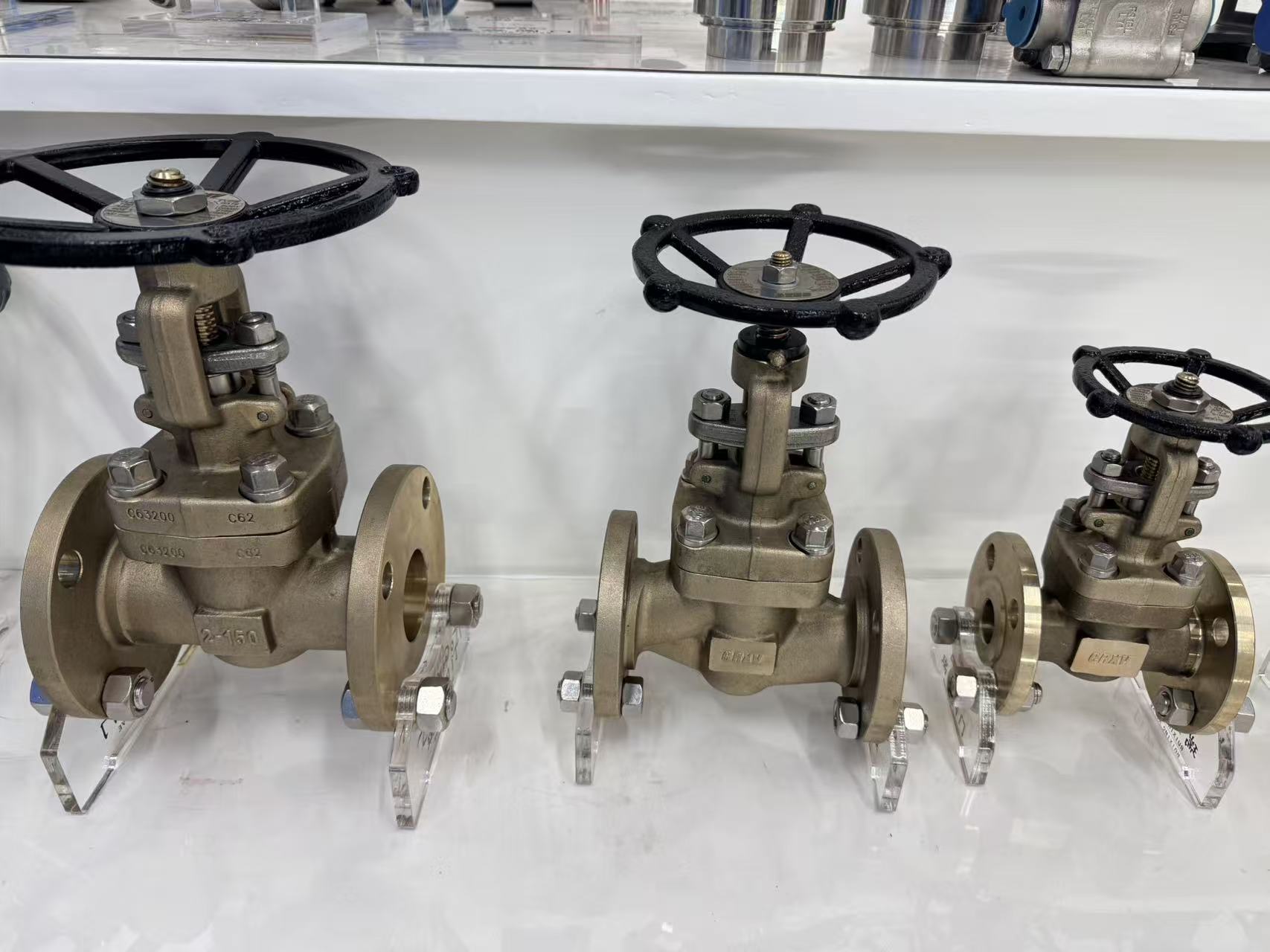
Most forging suppliers start the conversation by showing what they already have sitting on a shelf. That approach misses half the information that determines whether a part will actually work in your line. We start with your cycle time, loading method, die clamping points, and the tolerances your downstream machining can accept. Those details shape the forging more than any pre-made catalog item ever could.
When we review your line spec, we look for constraints that should drive the part design. Press tonnage, temperature window, how the part is gripped after trimming, and where flash can or cannot be tolerated are not afterthoughts. They decide draft angles, material distribution, corner radii, and whether a forging needs secondary locating features to sit stable in your fixture.
The result is a forging that is developed around your production reality. It may not be the cheapest item pulled from inventory, but it usually reduces the time spent re-clamping, adjusting tooling, or reworking parts that were never quite right. In practice, that means the forgings arrive closer to line-ready and your team spends less time solving problems that should have been designed out earlier.
Choosing Materials That Outlast the Piping, Not Just the Warranty
Most warranties protect against manufacturing defects, which rarely show up before the pipe itself has been decommissioned. What actually matters is how the material behaves at year eight, twelve, or twenty, when thermal cycling, chemical exposure, and internal pressure have done their quiet work. A gasket that leaks or a valve body that cracks just after the warranty expires still forces a full shutdown, and the replacement cost often dwarfs any initial savings from choosing a cheaper option.
Look instead at creep rupture data, fatigue resistance under fluctuating loads, and compatibility with trace contaminants that never appear on a standard datasheet. Some fluoropolymers and high-nickel alloys, for instance, survive conditions that make commodity grades brittle within a few years. The goal is not to meet a five-year guarantee but to match the expected service life of the surrounding piping, including any planned capacity expansions or feedstock changes.
In practice, this means asking suppliers for long-term aging test results rather than just warranty certificates. A material that slightly exceeds the spec on paper can still fail early if it reacts with a process additive or loses ductility after repeated steam-out cycles. Choose the option that keeps the line running without unscheduled interventions, because the true cost of a material is measured over the entire life of the piping, not the length of a legal document.
Small Tolerance Shifts That Become Big Leaks After a Year
Small tolerance shifts rarely announce themselves. A gasket compressed one extra millimeter, a bearing clearance widened by a few microns, a seal seated just slightly off-axis—none of these register as urgent during initial assembly. But over twelve months of thermal cycling, vibration, and routine loading, that initial forgiveness becomes a compounding liability. The gap allows microscopic abrasive particles to migrate, the slightly loose fastener begins to fret, and the material that once absorbed the mismatch now fatigues. By year end, the tiny leak is no longer a weep; it has cut a path through seals, corroded mating surfaces, and turned a minor adjustment into a forced shutdown.
The real danger sits inside calibration drift and wear normalization. Operators and maintenance teams adapt to what they see every day. A small pressure drop across a filter housing or a slightly lower hydraulic flow gets accepted as the new baseline because nothing failed catastrophically. Yet each unnoticed shift pushes the system closer to a threshold where one more thermal event or one more cold start crosses from tolerable degradation into structural failure. Leaks that begin as occasional moisture at a fitting become steady drips, and those drips create corrosion patterns that widen the same clearance even further. It is a feedback loop that rewards early ignorance and punishes delayed inspection.
Prevention depends on treating baseline measurements as contracts rather than suggestions. Torque verification after fifty hours, dimensional checks after seasonal temperature changes, and recording the exact position of a pressure regulator at commissioning all seem tedious compared to the pressure of production. But those records create a boundary line. When a fitting moves two millimeters beyond its original mark or a shaft seal requires ten percent more preload to stay dry, the data exposes the drift before it becomes a leak path. A year of small shifts is not an unpredictable failure—it is the sum of choices to ignore what was already measurable.
Maintenance Access Designed for the Crew, Not for the CAD Render
In a CAD model, a maintenance corridor can look clean, logical, and almost effortless. Rotate the view, zoom into the valve cluster, and everything appears reachable. But once the render meets reality, the picture changes. A technician may have to snake an arm past a cable tray, brace a knee against a sharp bracket, or work blind behind a heat exchanger while wearing gloves thick enough to blunt every bit of fingertip feedback. The render does not show knuckle clearance, tool swing radius, or the awkward half-turn needed to reach a drain plug that looked perfectly placed on screen.
Designing access for the crew means walking the actual path a person will take, not the path a camera takes. That often means sitting on the deck, reaching overhead, or working from a crouch for several minutes. It means leaving room to remove a filter housing without first unbolting three unrelated components. It means placing frequently serviced items where they can be seen and touched without a mirror, a flashlight, and a second person guiding from outside. Small choices matter: a hinged panel that opens the right direction, a step that does not become a tripping hazard, a grab point that works when gloves are wet. These details rarely make a render look more impressive, but they change whether a routine job takes twenty minutes or two hours.
The best access arrangements are rarely the most symmetrical. They are shaped by the way bodies move, tools fit, and fatigue builds. A well-designed maintenance pocket may look unremarkable in a drawing, yet it spares someone from lying on a hot deck or squeezing between a pump and a bulkhead. That is the difference between access drawn for presentation and access built for the people who will actually be inside the machine.
From First Article to Final Delivery, Keeping the Batch Honest
A batch starts clean only if the first article checks out against every critical dimension, material callout, and surface finish note. That initial sign-off gets treated as a promise, not a formality, because everything downstream inherits whatever slipped through at setup. When a subtle tool offset or a slightly different coolant concentration shows up later, the whole run can drift before anyone notices the deviation from that approved reference piece.
Between first article and final delivery, the batch gets checked at intervals that match the risk of each operation rather than a fixed calendar. Short runs with unstable features get more frequent sampling; long, stable runs still get a hard look at tool changeovers, insert swaps, and shift handoffs. The point is to catch drift while it is still an adjustment, not a sorting nightmare at the dock.
Final delivery does not mean a quick glance at the top tray. The same characteristics that mattered at first article get rechecked on the last pieces, and any trace of variance triggers a full review of the in-process data. If the history shows a steady creep toward a tolerance limit, the batch gets held even if every individual measurement passed. That is how honesty works in a batch: the record has to match the parts, from the first setup to the last box sealed.
FAQ
The forged body has a finer, more uniform grain structure and avoids the porosity that can occur in castings. That translates into better resistance to thermal cycling, pressure shock, and stress cracking over years of service in superheated steam, hot oil, and boiler feedwater lines.
Yes. Face-to-face dimensions, flange drilling, butt weld ends, socket weld ends, and pressure class ratings can be matched to the installation. We also accommodate non-standard trim materials when the process fluid or operating temperature demands something outside the default specification.
They show up most often in power generation, refining, chemical processing, offshore platforms, and steam distribution systems. Anywhere operators need tight shutoff, throttling control, and dependable performance at pressures above Class 600 or in high-temperature loops, forged construction tends to be the default choice.
Each valve is traced back to its heat number. We provide material test reports, pressure test records, dimensional inspection sheets, and PMI results as required. If the project calls for third-party witness testing or additional NDE, that can be arranged before shipment.
We offer Stellite or other hardfacing on the disc and seat, live-loaded packing, graphite or PTFE sealing systems, and bellows seal designs for toxic or high-temperature fluids. The goal is to match the sealing package to the actual pressure, temperature, and leak-rate requirements rather than forcing a standard configuration.
We keep the entry threshold practical. Smaller batches and prototype orders are accepted when the design is new or the operating conditions are unusual. Once the first article is approved, the same tooling and process controls are used for repeat production runs.
It usually starts with a review of the service conditions and existing drawings. We then generate engineering drawings for approval, source the forged body and bar stock, machine the components, assemble, test, and document the valves. Any required customer branding or marking is applied before final packing and shipment.
Standard shell strength and seat leakage tests follow API 598. Depending on the order, we also run fugitive emission testing, cryogenic or high-temperature validation, ultrasonic or dye penetrant inspection, and full dimensional layout on the finished valve.
Conclusion
Stock globe valves rarely hold up once a system starts swinging between operating and ambient temperatures. Repeated thermal cycles pull at the body-bonnet joint, loosen stem packing, and expose tiny machining inconsistencies that were invisible on day one. An ODM approach changes that starting point: instead of adapting an off-the-shelf casting to a spec it was never meant to meet, the forging is shaped around the actual line conditions, pressure class, end connections, and service fluid. Material selection follows the same logic, favoring alloys that survive long after the adjacent piping has been replaced, not just through a warranty period. The result is a valve that does not need constant retorquing or early packing replacement when the plant pushes temperatures up and down.
Small tolerance shifts matter more than most spec sheets admit. A few microns of drift in the seat pocket or stem bore can become a visible leak after a year of hard cycling. That is why maintenance access is designed for the crew that has to work in the field, with clear wrench clearance and repairable internals rather than a clean CAD model. From first article through final delivery, batch traceability and dimensional checks keep every valve honest, so the unit installed in the plant matches the one that passed qualification. That continuity is what prevents a well-made prototype from turning into a field failure.
Contact Us
Contact Person: TIM
Email: [email protected]
Tel/WhatsApp: 8615857807381
Website: https://www.crxv.com/en/