

Intelligent Electric Wheelchairs from China: Smart Mobility Solutions Redefining Independence
2026-07-22
Picture this: a wheelchair that doesn't just move you from point A to point B, but thinks, adapts, and frees you. The new wave of intelligent electric wheelchairs out of China is turning that vision into reality, merging smart tech with genuine human need. At the heart of this shift is the Freedomchair, a design that challenges everything you thought a mobility aid could be. It's not about assistance—it's about redefining independence on your own terms. In this post, we'll unpack what makes these Chinese innovations so compelling and how Freedomchair is setting a new standard. Get ready to see mobility in a whole new light.
Engineering Independence: China's Next-Gen Wheelchairs
For millions of people with mobility challenges, a wheelchair is far more than a tool—it's a daily companion. China's next-generation designs are rethinking this bond from the ground up. Rather than treating the chair as a static frame on wheels, engineers are weaving in smart sensors and adaptive support systems that respond to shifts in posture, terrain, and fatigue. The aim is to create a device that moves in harmony with the user, reducing the cumulative strain that can lead to long-term injuries.
Materials are getting a radical upgrade, too. Ultra-light alloys and carbon fiber composites—long common in aerospace but rare in assistive devices—are making chairs that can be lifted with one hand. This isn't just about convenience; it's about lowering the barriers between the user and spontaneous life. Meanwhile, solid-state batteries are being integrated to power assistive motors quietly for a full day, without the bulk that once forced compromises between range and maneuverability.
Perhaps the most quiet transformation is in the control systems. Instead of a generic joystick that treats every user identically, new models learn individual patterns. A subtle lean forward might signal “go,” while a glance toward a doorway could activate navigation. These aren't gimmicks—they emerge from collaboration between rehabilitation specialists and hardware hackers in Shenzhen, who are proving that high-tech independence needn't come with a high price tag. The result is a generation of wheelchairs that feels less like medical equipment and more like a natural extension of the body.
Beyond Basic Movement: AI-Driven Personal Transport
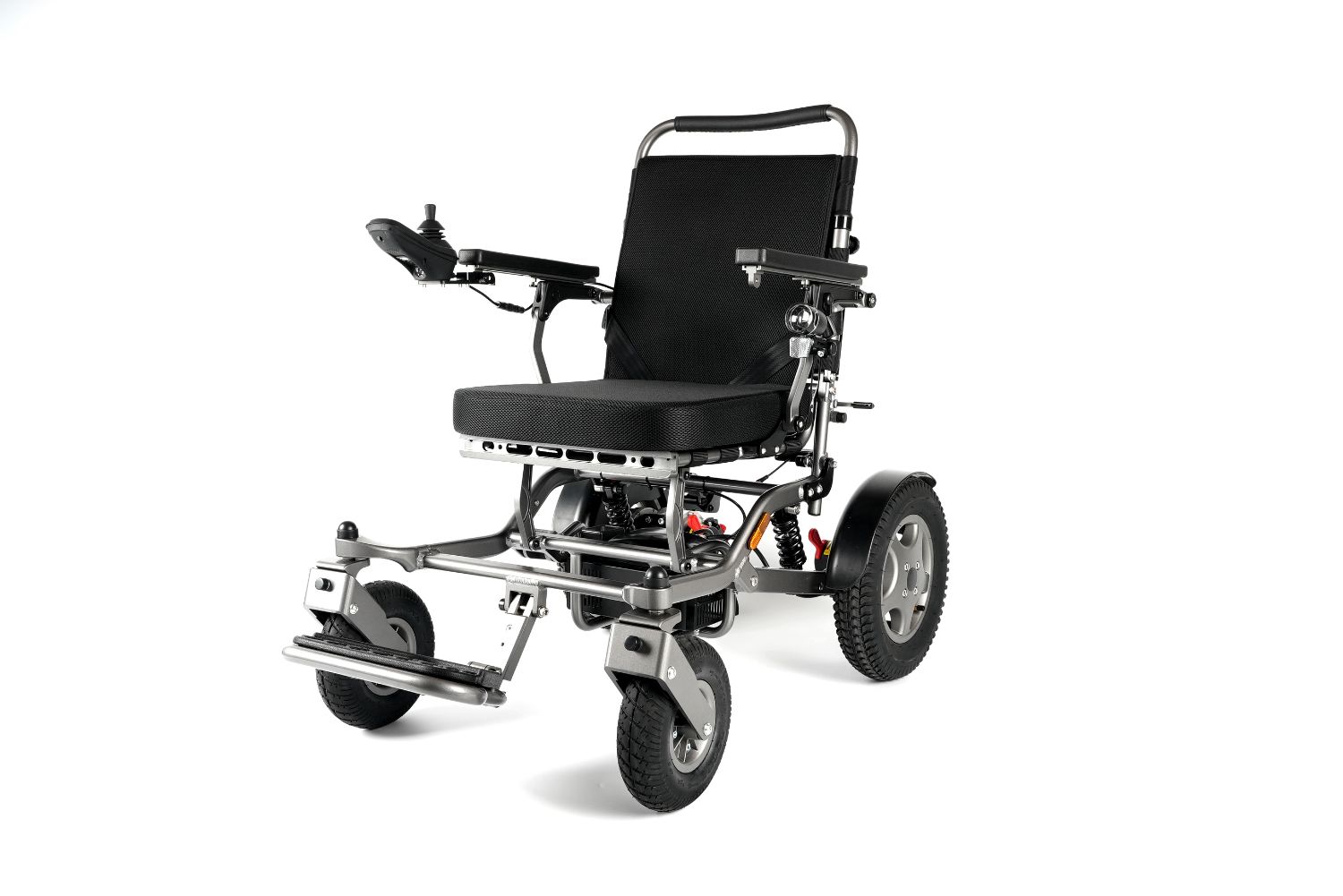
AI-driven personal transport is stepping beyond simple point-A-to-point-B functionality, weaving contextual awareness and predictive intelligence into every ride. Instead of just reacting to steering inputs, these vehicles read the environment—interpreting subtle cues like a pedestrian’s hesitation at a crosswalk or a cyclist’s hand signal—and adjust behavior proactively. This shifts the experience from operating a machine to collaborating with one, making mobility feel less like a command-response sequence and more like a conversation.
The real differentiator lies in how these systems learn individual patterns without ever becoming intrusive. By analyzing daily routines, preferred routes, and even ergonomic comfort, the vehicle quietly tailors everything from suspension stiffness to cabin temperature before the journey even begins. It might suggest an alternative route not because of traffic, but because it knows you’ve been stressed and could benefit from a greener, more scenic drive. Such personalization blurs the line between transport and companion.
Safety, too, is being redefined. Rather than relying on rigid rule-based programming, AI-driven platforms apply nuanced judgment—recognizing, for instance, that a child chasing a ball into the street demands a different response than a stray plastic bag. This isn’t just about avoiding collisions; it’s about understanding intent and context in a way that mirrors human intuition, but with far greater consistency. When the vehicle can anticipate rather than simply react, personal transport becomes not just smart, but genuinely perceptive.
Navigating Life with Intelligent Precision
Precision isn't about rigid planning—it's about clarity. Imagine your morning routine: a simple decision to prep your bag the night before already removes friction. Multiply those small wins. Instead of vague goals, define outcomes so vividly that your brain treats them as solved puzzles, and watch your daily path straighten.
Consider the art of saying no. Not blunt rejection, but a careful redirection of energy. When you decline a mediocre opportunity, you're saying yes to something deeper. That deliberate act shapes a life where your time aligns with your values, not with default noise. It's not about doing less—it's about doing what actually moves the needle.
Intelligent navigation also means building a personal feedback loop. After a week, reflect: which moments felt like friction, and which flowed? Adjust one pattern. Then another. Over months, these micro-corrections compound into an existence that feels less like drifting and more like guiding your own ship—with a gentle but steady hand.
Redefining Freedom: Chinese Innovations in Assistive Tech
In a quiet workshop on the outskirts of Shenzhen, a young engineer tests a bionic hand that responds to muscle signals with near-natural fluidity. It is not just a prosthetic—it is a statement. Across China, a surge of grassroots invention and ambitious policy is reshaping what it means to live with a disability. From AI-powered wheelchairs that navigate crowded streets independently to affordable cochlear implants developed through homegrown semiconductor breakthroughs, assistive technology here is shedding its clinical skin. These tools are becoming as personal and adaptable as the smartphones people carry every day, merging seamlessly into daily life rather than marking their users as different.
What sets this wave apart is its focus on dignity through design. Instead of bulky medical devices that broadcast vulnerability, Chinese startups are crafting sleek, stylish aids that people want to wear. One Beijing-based team has created smart glasses that not only describe the visual world to blind users but also allow them to “read” the emotions on a friend’s face. Another group in Hangzhou is refining exoskeletons so lightweight they can be hidden under a trench coat. These inventions grow from an ethos that freedom isn’t just physical mobility—it’s the confidence to move through the world on your own terms, without being stared at or pitied.
Perhaps the most profound shift is happening in the realm of communication. For millions facing severe speech or motor impairments, eye-tracking systems and brain-computer interfaces are unlocking doors long thought sealed. A pilot program in Shanghai lets people with ALS compose messages, control smart homes, and even play music using only their gaze or thoughts. The technology doesn’t just restore a voice; it returns a sense of agency. And because these solutions are being built within China’s massive, competitive tech ecosystem, costs are plummeting—making life-altering freedom accessible not just to the wealthy few, but to grandmothers in rural villages and children in underfunded schools. The new definition of freedom, it turns out, is not about erasing limits but about building the ingenious bridges that let everyone cross them.
From Passive to Proactive: Self-Driving Wheelchairs
Traditional wheelchairs demand constant manual input, transforming a simple journey down a hallway into a test of endurance and attention. For many users, this creates a passive reliance on caregivers or forces them to navigate the world with exhausting vigilance. Self-driving wheelchairs flip this dynamic by embedding sensor arrays and intelligent mapping systems that handle the micro-decisions of movement—steering clear of obstacles, adjusting speed around corners, and even finding the smoothest path across uneven terrain. The shift is not just technological but deeply personal, turning the chair from a tool requiring constant command into a partner that actively supports mobility.
What truly redefines the experience is the integration of environmental awareness with predictive learning. Instead of waiting for instructions, these chairs can recognize familiar rooms, anticipate a user’s routines, and suggest destinations based on time of day or past behavior. For instance, a chair might start moving toward the kitchen mid-morning without being told, or gently guide itself away from a newly detected spill before the user even notices. This proactive layer removes the cognitive burden of navigation, allowing the individual to focus on conversations, work, or simply enjoying the ride. It’s a seamless fusion where the wheelchair becomes an extension of intent rather than a container for the body.
Beyond convenience, this evolution speaks to a broader rethinking of accessibility technology. By shifting from reactive control to proactive assistance, these wheelchairs address the subtle erosion of confidence that often accompanies mobility loss. Users report feeling less like passengers in their own lives and more like directors of their movement. The underlying message is powerful: technology should not just compensate for limitations but actively contribute to a sense of independence and spontaneity. In the quiet, steady hum of a self-navigating chair, there is a declaration that mobility is not about waiting to be pushed—it’s about moving through the world on one’s own terms.
Connected Comfort: The Future of Personalized Mobility
The concept of mobility is being redefined by the seamless integration of connectivity and comfort. No longer just a means of transport, vehicles are evolving into personalized sanctuaries that anticipate your needs. From the moment you step inside, the car adjusts the seat, mirrors, temperature, and even the ambient lighting to your exact preferences, synced automatically from your digital profile. This isn't science fiction—it's the reality of connected vehicles that learn and adapt, making every journey uniquely yours.
Behind this transformation lies a sophisticated network of sensors, AI, and real-time data. Your vehicle communicates with your smart home, your calendar, and even your wearable devices to create a truly integrated experience. Imagine your car warming up the cabin on a cold morning because it knows your schedule, or suggesting a playlist that matches your current mood based on biometric feedback. This level of personalization goes beyond luxury—it reduces stress, enhances safety, and turns travel into a moment of well-being.
As we look ahead, the fusion of autonomous driving and connected comfort will unlock even more possibilities. The cabin will become a mobile living space where you can work, rest, or entertain without compromise. Seats that massage during long trips, windows that tint automatically for privacy, and AI companions that manage your day—all while the vehicle navigates effortlessly. The future of mobility is about creating an environment that feels less like a machine and more like a natural extension of your life, where every detail is tuned to you.
FAQ
These chairs incorporate advanced sensors, AI-driven navigation, and real-time environmental mapping. They can autonomously avoid obstacles, plan the safest path, and even respond to voice commands. Unlike basic electric wheelchairs, they actively assist the user rather than just responding to joystick inputs.
By enabling hands-free control options like eye-tracking, head gestures, or smartphone apps, they give users greater control without relying on constant caregiver support. The ability to navigate crowded spaces, cross thresholds, and adjust seating positions autonomously allows individuals to manage daily routines more spontaneously.
Multiple layers of protection are standard: anti-tip wheels, automatic braking when sensors detect sudden inclines or edges, emergency stop systems, and fall-detection alerts that can notify family members. Some models also feature weather-resistant designs and robust frames tested for stability on various terrains.
Absolutely. Many Chinese manufacturers design them with robust suspension, all-terrain wheels, and powerful motors to handle grass, gravel, and uneven sidewalks. GPS integration and long-range batteries make them practical for outdoor excursions, while compact turning radii keep them maneuverable indoors.
Through machine learning, the wheelchair can adapt to individual driving patterns and physical capabilities over time. Customizable seating, pressure relief systems, and adjustable control sensitivity ensure comfort. Some chairs also support IoT integration, allowing users to control smart home devices directly from the wheelchair interface.
Chinese companies have scaled production significantly while integrating cutting-edge robotics and AI at accessible price points. The country's robust electronics supply chain and talent in autonomous driving technology have accelerated innovations like LiDAR integration and cloud-based fleet management for mobility devices.
Conclusion
China's intelligent electric wheelchairs are reshaping the concept of independent living by embedding advanced AI and autonomous navigation into everyday mobility aids. Far from being simple motorized chairs, these next-gen devices leverage sensor fusion, simultaneous localization and mapping, and obstacle avoidance to turn passive users into proactive navigators. Obstacle detection and real-time route planning mean users can glide through crowded streets, tight doorways, and dynamic indoor spaces with a newfound sense of security. The integration of health monitoring and personalized ergonomics further elevates them from basic movement tools to holistic personal transport systems that learn and adapt to individual needs, physically redefining what independence looks like for millions.
Beyond mere transportation, these wheelchairs cultivate connected comfort through smart home integration, voice commands, and wireless updates that keep them at the cutting edge. Users can summon their wheelchair remotely, adjust seating for optimal pressure relief, or monitor battery health via a mobile app, blending digital convenience with physical freedom. This paradigm shift—from passive reliance to proactive, self-directed living—offers a glimpse into a future where assistive tech doesn't just compensate for lost ability but actively expands human capability. By merging Chinese engineering ingenuity with a deep understanding of user experience, these solutions are not just smart mobility aids; they are a quiet revolution in dignity, autonomy, and liberation from the constraints of traditional disability.
Contact Us
Contact Person: Calvin Fan
Email: [email protected]
Tel/WhatsApp: 8618913265607
Website: www.freedom-chair.com