

ODM Kraft Paper Box Solutions for Sustainable Product Packaging
2026-10-10
ODM kraft paper box solutions for sustainable product packaging aren't a compromise—they're an upgrade your customers can feel. At Kuaijie Carton, we skip the generic templates and build boxes that fit your product, your brand, and your carbon budget.
From Raw Fiber to Finished Carton: Inside Our ODM Workflow
Every carton begins as raw fiber, but the journey from loose pulp to a rigid, print-ready box is far from linear. We start by testing fiber blends for burst strength and edge crush resistance, rejecting batches that fall short even before they reach the corrugator. That early filter saves time later, because a weak sheet can't be rescued by clever design. Once the right mix is locked, the single-face and double-back stations run at controlled temperatures and speeds—our operators watch glue lines under magnification rather than trusting default settings.
The ODM stage is where most suppliers stumble. A client may bring a sketch or just a rough idea of internal dimensions and stacking requirements. We translate that into board grade, flute profile, and panel scoring positions, then cut a short run of white samples for drop tests and compression trials. Adjustments happen here—perhaps a 0.5 mm change in crease depth or a shift from B-flute to E-flute for sharper print on retail shelves. Nothing moves to mass production until the sample survives a simulated shipping cycle with actual product weight inside.
Finishing is more than ink on paper. Our flexo and digital lines handle fine text, halftones, and varnish spots without losing registration on recycled board. After printing, rotary die-cutting and folder-gluer operations run in sequence, but each carton gets a final manual check at random intervals. The result is a box that doesn't just protect its contents—it arrives flat, erects square, and holds up through humidity changes and rough handling. That consistency is what makes the ODM workflow worth the extra steps.
Why Thicker Kraft Doesn't Always Mean Stronger
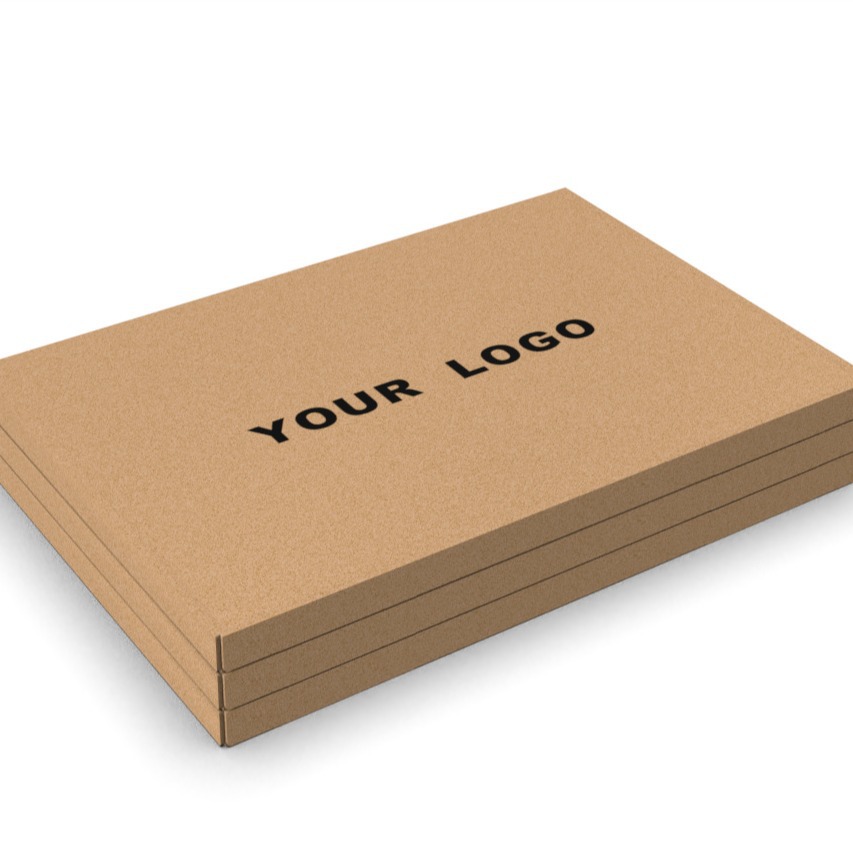
It’s easy to assume that a thicker sheet of kraft paper will automatically hold up better under stress. After all, more material usually feels sturdier in your hands. But thickness alone is only one small part of the story. The way the paper is made, the quality of the fibers, and how tightly those fibers are packed together often matter far more than the raw caliper measurement.
Think of it like baking bread: two loaves can be the same size, but one might collapse under its own weight because the gluten structure is weak. Kraft paper works the same way. A thick sheet made from short, recycled fibers or produced with uneven fiber distribution can tear or burst easily, while a thinner sheet made from long, well-bonded virgin fibers can resist far more force. Density and fiber bonding strength are the real indicators of performance, not just how much paper is stacked up.
For anyone choosing kraft paper for packaging or shipping, this means looking beyond the spec sheet. A heavier basis weight doesn’t guarantee puncture resistance or tear strength. Testing a sample, checking the fiber source, and asking about the manufacturing process will give you a much clearer picture of how the paper will actually perform when it matters most.
The Unboxing Moment as a Quiet Brand Statement
The unboxing moment asks nothing of the person opening it. No flashing lights, no oversized logo, no plastic film stretched tight over every surface. Instead, there is a pause: the lid lifts with a faint resistance, a sheet of textured paper folds back, and the object inside sits in a hollow carved precisely to its shape. This is design as a lowered voice.
Quiet statements rely on restraint. The weight of the box, the absence of unnecessary tape, the single card printed with a short sentence rather than a paragraph of marketing promises—these details register before the product itself is even held. A brand that chooses this path trusts the customer to notice. It does not insist that the moment is special; it simply allows the moment to become special through touch, scent, and the slow reveal of the product.
In that brief, unscripted interval between opening and owning, the brand says more than any campaign could. It says: we considered the space around the object, not just the object. That consideration lingers long after the packaging is folded away, attaching itself to the memory of the product in a way that loud wrapping never manages.
Balancing Print Coverage with Recyclability
Achieving high print coverage on packaging often means laying down more ink, which can interfere with the recycling stream. The challenge lies in finding that sweet spot where the design remains visually striking without compromising the material's ability to be reprocessed. Too much ink or certain pigment types can contaminate the pulp, lower the quality of recycled fibers, or even make the substrate unrecyclable in some facilities.
One practical approach is to rethink ink formulations and print techniques. Water-based and bio-based inks, for example, tend to break down more easily during de-inking processes compared to UV-cured or metallic inks. Similarly, using halftone patterns or reducing solid ink areas can cut overall coverage while preserving the perceived color intensity. Designers can also explore negative space as a bold visual element, letting the raw material show through and reducing ink load without sacrificing brand impact.
Ultimately, balancing print coverage with recyclability demands collaboration between designers, printers, and recycling experts. Small adjustments—like switching to lighter coatings, avoiding full-bleed heavy solids, or testing designs against real recycling protocols—can make a measurable difference. The goal is not to eliminate print coverage entirely but to make every printed square inch count, ensuring the package remains both eye-catching on the shelf and welcome in the recycling bin.
Sizing for Real Shipping Conditions, Not Just Product Fit
A box that snugly holds a product on the shelf often falls apart on a truck. Real-world transit punishes packaging with vibration, sudden drops, and long hours of stacked weight. Sizing decisions need to start with how the parcel will actually travel, not just how the item sits inside it. That means accounting for suspension space, cushioning zones, and the way corrugated board weakens after exposure to humidity or repeated handling.
Load shifts during transport are a primary driver of damage, yet many sizing charts ignore lateral movement entirely. Fit should be measured under dynamic conditions, where contents can slide, rotate, or press against the walls. A slightly larger box with purpose-built void fill often outperforms a tighter “perfect fit” because it allows the product to ride out impacts instead of absorbing them directly. The goal is to design for the journey, not just the initial handoff.
Stacking pressure from pallets and conveyor belts adds another variable. A carton sized without considering top-load compression may crush even if the product itself is untouched. Evaluating real shipping conditions means testing with realistic drop heights, humidity cycles, and prolonged static loads. It moves the conversation from “does it fit?” to “does it survive the worst leg of the route?” Only then can sizing choices truly protect what’s inside.
Material Sourcing Without the Usual Green Guessing
Most procurement teams still pick materials based on a supplier's word or a recycled-content percentage that nobody verifies. That is the old guessing game, and it fails far too often. We start from a different place: every material claim gets traced back to physical evidence. If a polymer says it is 80% post-consumer waste, we want the batch logs, the sorting facility data, and the mass balance records before it reaches our desk.
The process leans heavily on lifecycle assessment tools, but not the generic ones that spit out a single number. We use supplier-specific datasets and require third-party audits at the pellet or yarn stage. For a recent cotton project, we tracked bales through a gin and spinner, checking water use and pesticide inputs at each stop. That level of detail sounds tedious, yet it replaces assumptions with numbers nobody can dismiss in a meeting.
The result is a sourcing strategy that feels less like marketing and more like engineering. Designers and product developers get a clear view of trade-offs: lower carbon might mean higher water stress, or a bio-based option might carry hidden land-use costs. When the data is solid, the choices become easier, and the final material selection actually matches what the sustainability report will say.
FAQ
Kraft paper usually skips the bleaching process, so it retains more natural fiber strength and uses fewer harsh chemicals. With ODM, you can also shape the box to fit your product exactly, which reduces filler material and cuts down on shipping weight.
They can handle far more than many buyers assume. Using corrugated kraft inserts, double-wall panels, or molded pulp trays gives solid protection for glass, ceramics, and small electronics without relying on plastic foam or bubble wrap.
Yes, if you choose food-grade kraft liners and water-based coatings. You need to state whether the food is dry, oily, or frozen so the supplier can match the right barrier. Many bakeries and specialty food brands use kraft boxes with compostable inner bags.
Nearly everything can be adjusted: dimensions, printing method, window shape, interior dividers, handle cutouts, and the type of kraft paper itself. That level of control means the box fits the product snugly and carries your branding without extra marketing layers.
FSC or PEFC certification confirms the paper comes from responsibly managed forests. If the box claims to be compostable, look for EN 13432 or ASTM D6400. Also ask about water-based inks and adhesives, since those affect how easily the box can be recycled.
Not always. The raw material is often affordable, but the final cost depends on order quantity, structural complexity, and special finishes. In many cases, lighter shipping weight and fewer inner fillers offset any slight increase in material price.
Skip glossy plastic lamination, switch to paper tape, print with soy or water-based inks, and design a single box style that works across several product sizes. Those practical choices often reduce waste more than changing the paper itself.
Conclusion
Our ODM kraft paper box approach starts long before the first fold, tracing each batch of fiber back to mills that document actual water use and chemical recovery rather than just stamping a leaf icon on the spec sheet. That transparency carries through the cutting and creasing stages, where we tune flute profiles and board combinations to the product’s real journey—because a thicker wall rarely survives a drop test if the fluting is crushed or the score lines are placed for showroom shelves instead of courier handling. We’ve moved away from treating strength as a single number on a datasheet; instead, we measure how the box behaves after humidity cycles, vibration, and side-impact compression, then adjust the ODM build until the carton protects without defaulting to overbuilt, material-hungry layers.
The same discipline applies to the surface and the moment the customer lifts the lid. A kraft box doesn’t need full-coverage ink to feel intentional—restrained print areas, water-based flexo, and uncoated zones preserve the recyclability that buyers increasingly check for, while the quiet texture of the substrate does more for brand recall than a glossy wrap ever could. We also size packaging to the shipping lane, not just the product’s footprint, adding or removing void space based on actual carrier data so the box isn’t rattling inside a larger carton or fighting the tape line. The result is an ODM solution where sustainability isn’t a marketing layer bolted on at the end; it’s baked into the fiber choice, the crease geometry, the ink coverage, and the dimensional logic, so the unboxing feels honest and the box goes back into the paper stream without any guesswork.
Contact Us
Contact Person: Tan Xiang
Email: [email protected]
Tel/WhatsApp: 8613798906863
Website: https://www.dgkjzx.com