

OEM Skiing Socks Factory: Your Guide to Custom Ski Sock Manufacturing
2026-07-11
Every skier knows that the right socks can make or break a day on the mountain. But for brands, creating those perfect custom ski socks starts with finding a manufacturing partner who truly understands performance, fit, and durability. Fuli Socks isn't just another OEM factory—we're specialists who turn technical specs into socks that keep feet warm, dry, and blister-free. Ready to learn what sets a top-tier ski sock producer apart? This guide walks you through the essentials.
Why Partner with a Specialized Ski Sock Manufacturer?
Partnering with a specialized ski sock manufacturer means tapping into deep product knowledge that generic mills simply can’t replicate. These experts live and breathe the demands of alpine sports—understanding pressure points in ski boots, thermal mapping across the foot, and the precise yarn blends that balance warmth with moisture management. Instead of adapting a generic athletic sock design, you’re collaborating with a team that has likely spent years refining cushioning zones, seamless toe closures, and graduated compression specifically for downhill performance. The result is a product that feels purpose-built for the slopes, not an afterthought.
Specialized partners also offer flexibility that helps your brand stand out in a crowded market. They excel at bespoke development—whether you need a custom merino-terylene ratio, a unique knit-in logo, or a sock optimized for backcountry touring versus resort carving. Their supply chains are typically agile, allowing for smaller minimums and faster turnarounds without sacrificing the technical specs serious skiers demand. This agility lets you iterate quickly, test new concepts, and respond to emerging trends without being locked into mass-market production constraints.
Finally, a dedicated ski sock manufacturer brings credibility to your brand. Their track record of serving top-tier athletes or specialty retailers signals a commitment to performance and durability. They are often early adopters of sustainable practices—like recycled nylon or waterless dyeing—because their niche customers value both ethics and function. By aligning with such a partner, you borrow that authenticity, making it easier to justify premium pricing and build loyalty among discerning winter sports enthusiasts who can feel the difference in every turn.
Materials That Make a Difference on the Slopes
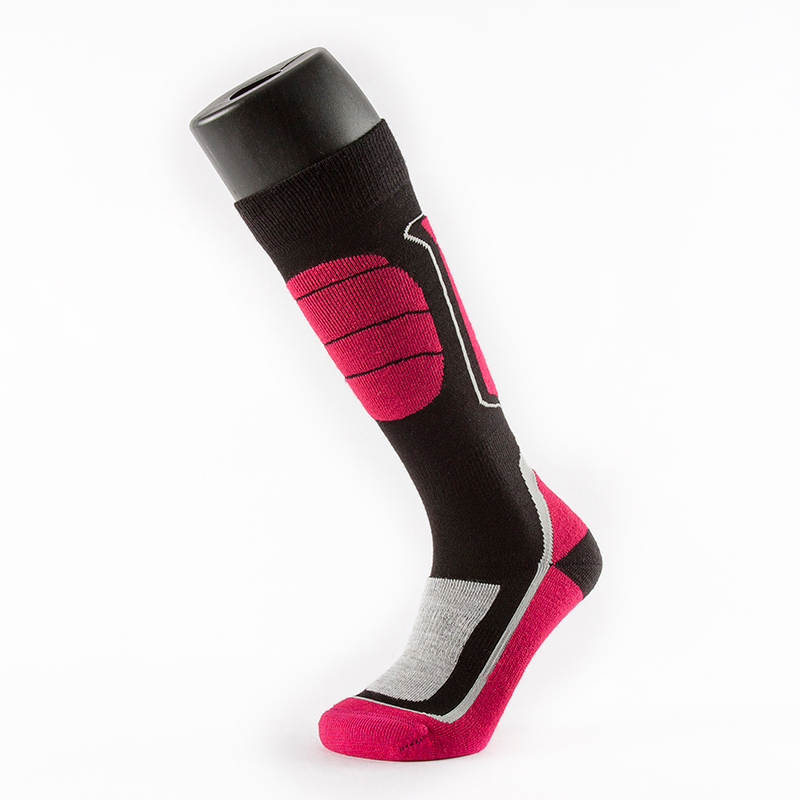
Modern ski and snowboard construction is quietly transforming time on the mountain, and it all starts with the blend of wood, carbon, and advanced polymers hidden beneath the topsheet. A well-chosen core—often a mix of poplar, ash, or bamboo—delivers the right flex and rebound, while strategic carbon stringers let designers fine-tune torsional stiffness without adding weight. This means you get a board or ski that holds an edge on hardpack yet remains playful enough for afternoon tree runs. The real magic happens where the rubber meets the snow: sintered bases, infused with graphite or other high‐molecular‐weight additives, hold wax longer and shrug off abrasions from icy patches, making those end‐of‐day runs feel as fast as the first.
Outerwear has been reimagined, too, moving beyond basic waterproof-breathable membranes into fabrics that actively manage moisture and temperature. Look closely at a high-end shell and you’ll find multi-layered laminates with hydrophobic nano-coatings that force water to bead up and roll off, yet the fabric still lets sweat vapor escape when you’re working hard on a steep traverse. Some brands are even weaving in thermal‐regulating fibers that store excess body heat and release it back when you pause on the chairlift. Add seamless seam taping and laser-cut vents, and you get a jacket that works with your body’s microclimate rather than fighting it, keeping you dry from both outside precipitation and inside perspiration.
Then there’s the quiet revolution happening inside your boot. Liners now often feature heat‐moldable foams that set precisely to the contours of your foot, while thin yet stiff carbon‐reinforced cuffs transmit every thought directly to the edge. Even mid‐layers benefit: merino wool blended with recycled polyester gives insulation that stays warm when damp and doesn’t get clammy during a bootpack up a ridge. These materials aren’t just technical checkboxes—they change how you ski and board. A lighter setup reduces fatigue, a more tactile boot improves balance, and breathable layers keep your head in the game when conditions turn sour. It’s the difference between fighting your gear and forgetting it’s even there.
From Concept to Slope: The Custom Design Journey
Every custom board starts as a conversation—a tangle of ideas, references, and half-formed desires. We listen closely, picking up on the subtle details: the way you describe your riding style, the terrain you chase, the feelings you want underfoot. Early sketches translate those words into tentative lines, a first draft that’s part engineering and part gut instinct. There’s no standard menu here; each line on the paper is a direct response to who you are as a rider.
From those scribbles, we move into prototyping—a phase that’s equal parts science lab and artist’s studio. Materials are chosen not for flash but for purpose: a core that loads energy differently, a sidecut that brews its own kind of arc, a flex pattern that mirrors your preferred tempo. Testing means riding imperfect versions, noting where they sing and where they fall mute, then tweaking until the board speaks your language. Mistakes happen often, but they’re never wasted—each one sharpens the final shape.
The moment the finished board touches snow is never just a moment. It’s the convergence of countless small decisions, late-night revisions, and a stubborn belief that gear should feel like an extension of the body. When everything aligns—the turn initiation you imagined, the edge hold you needed, the float you didn’t know was possible—you realize this wasn’t about creating a product. It was about capturing a way of moving down the mountain and making it tangible. That’s the journey, and it’s different for every single rider.
Precision Crafting: Inside the Production Line
Inside the production line, every movement is timed to the millisecond. Robotic arms glide with a fluidity that seems almost human, yet their repeatability is unmatched. Sensors scattered along the conveyor belt feed real-time data to a central brain, which adjusts torque, temperature, and pressure on the fly. It’s not just assembly; it’s a carefully choreographed dance where each component finds its exact partner without hesitation.
What sets this line apart is the obsessive attention to micro-tolerances. A laser scanner checks the alignment of a casing with sub-micron accuracy, rejecting anything that drifts beyond the allowed deviation. Workers in cleanroom suits move like surgeons, their tools connected to digital manifests that update with each action. The result isn’t just a product—it’s a testament to what happens when human expertise and machine precision merge seamlessly.
Walk further down the line, and you’ll see the testing stations where products are subjected to conditions far harsher than they’ll ever face in the real world. Rapid temperature swings, salt spray, and vibration tables shake out any latent weaknesses. Only the units that pass these gauntlets get the stamp of approval, while the rest are cycled back for analysis—a closed loop that constantly refines the process itself.
Uncompromising Quality Checks for Extreme Conditions
When a product is designed to face the harshest environments, every check must go beyond the expected. Our testing doesn’t stop at simulated chambers—it ventures into real-world extremes, from the salt-laden air of coastal cliffs to the bone-dry heat of desert basins. Components are pushed until they crack, seals are stressed until they whisper leaks, and materials are aged under UV bombardments that mimic decades of exposure in months. This isn’t about ticking boxes; it’s about waking up the hidden flaws before they wake up in the field.
We’ve built a culture where no anomaly is too small to investigate. A slight color shift in a polymer after thermal cycling, a microscopic fissure in a weld under cryogenic shock—these aren’t dismissed as cosmetic. They’re dissected under electron microscopes and cross-sectioned for root cause analysis. Every prototype that survives our gauntlet earns its place not because it passed a test, but because it endured a deliberate, almost obsessive search for its breaking point. The result is gear that doesn’t just survive extreme conditions—it owns them.
Building a Seamless Collaboration from Start to Finish
Great collaboration doesn't happen by accident—it's designed into every phase of the project. From the very first conversation, we prioritize open channels and shared understanding. Instead of rigid handoffs, our process encourages overlapping dialogue where ideas are exchanged freely, helping to surface hidden assumptions and align everyone before a single line of code is written. This early investment in clarity becomes the foundation that prevents costly rework down the road.
As the work progresses, we rely on lightweight, regular checkpoints rather than heavy formal reviews. These touchpoints aren't about micromanaging; they're opportunities to adapt based on what we've learned together. Changes are discussed openly, with the original goals serving as a compass rather than a constraint. By building trust and maintaining a steady rhythm of communication, the team naturally resolves friction points before they become bottlenecks.
When it's time to deliver, the collaboration carries through to the final handover. Documentation and knowledge sharing are woven into the daily workflow, not treated as separate tasks. This means the finished outcome isn't just a polished deliverable—it comes with the context and shared ownership that allow the next phase of work to begin at full speed, with everyone already on the same page.
FAQ
Everything starts with your concept. Instead of picking from a catalog, you define the yarn blend, cushioning zones, compression levels, and even the exact shade of blue. We then engineer the sock to match your brand's fit and performance standards, not the other way around.
We've spent years testing fiber combinations in real Alpine conditions. Merino wool blends handle moisture and temperature regulation brilliantly, while strategic nylon reinforcement prevents blowouts. We'll guide you through the pros and cons of each option, including recycled and biodegradable yarns if sustainability matters to your market.
Yes, by smart engineering. We often suggest variable cushioning — putting extra padding only under the heel and shin where it's actually needed — instead of a full-terry construction that eats up material costs. Small changes like that maintain high perceived value without inflating the bill of materials.
That's half our work. Send us your sketches, mood boards, or even a competitor's sock you'd like to improve upon. Our in-house design team will translate it into technical specs, 3D renderings, and a sample-ready pattern, catching potential issues with stretch recovery or seam placement early.
We've patented a flat-knit intarsia method that embeds logos directly into the sock body during knitting, eliminating bulky embroidery or itchy interior labels. The result is a smooth, stretchable logo that won't peel or cause pressure points inside tight ski boots.
You'll see an initial sample in about 15-18 days. After tweaks and approval, bulk production wraps in 25-35 days. We always buffer a week for shipping, so most brands are holding sellable inventory within 7-8 weeks of our first conversation — faster if you're not reinventing the wheel.
We're OEKO-TEX Standard 100 certified, which means every component has been tested for harmful substances. Many of our production lines also meet GOTS and GRS standards when you choose organic or recycled materials. We can supply full documentation for your compliance files.
That would trigger our Quality Guarantee. Every shipment is inspected against a sealed master sample before dispatch, and we videotape the final audit. If a deviation slips through, we reproduce the order at our cost and ship by air. In twelve years, this has happened twice.
Conclusion
Teaming up with a specialized OEM ski sock factory means leaning on deep expertise in winter sports gear. It’s not just about knitting socks—it’s about knowing which merino wool blends trap heat without bulk, how reinforced heel and toe zones prevent blisters during aggressive carving, and why flatlock seams eliminate pressure points inside stiff boots. You’re tapping into a production line calibrated for precision: automated machines paired with hand-finished details, from graduated compression zones that boost circulation to moisture-wicking panels that keep feet dry on long runs. Every stage, from yarn spinning to final packaging, reflects a single-minded focus on slope-ready performance.
The real advantage lies in how the journey unfolds. A good factory walks you through a streamlined custom process—translating your sketches into tech sheets, selecting from insulating synthetics or hydrophobic natural fibers, then prototyping a few samples for real-world testing. Rigorous quality checks simulate brutal cold, wet conditions, and repeated wear, so you’re not gambling on comfort when it matters most. Throughout, communication stays tight: dedicated project managers, transparent timelines, and flexible MOQs that work for both boutique brands and large retailers. Ultimately, it’s a partnership built on reliability, delivering socks that feel like a natural extension of the skier’s foot, right from the first chairlift to the last run.
Contact Us
Contact Person: Ryan Li
Email: [email protected]
Tel/WhatsApp: +86 13757342500
Website: https://www.fulisocks.com/