
Professional Enterprise Drone Simulator: The Ultimate Training Platform for Enterprise UAV Teams
2026-10-22
When your enterprise UAV team trains with real aircraft, one wrong move means broken hardware, regulatory headaches, and grounded missions. That's exactly why forward-thinking operators are turning to a professional drone simulator built for the demands of enterprise flight. SRIZFLY isn't just another drone game—it's the ultimate training platform that mirrors real-world physics, fleet workflows, and mission scenarios before your pilots ever leave the ground. In this post, we'll explore how simulation is reshaping enterprise drone training and why your team can't afford to ignore it.
Mission Rehearsals That Mirror Real-World Flight Challenges
Pilots stepping into a full-motion simulator aren't just logging hours—they're thrown into storms that behave unpredictably, system failures that cascade at the worst moments, and airspace crowded with unexpected traffic. These rehearsals reproduce the sensory overload of actual emergencies, from engine vibrations rattling the cockpit to radio chatter layered with static and urgency.
What sets modern mission rehearsals apart is their insistence on consequence. A wrong fuel calculation doesn't end with a debrief slide; it forces an emergency landing on a shortened runway with crosswinds that shift every few seconds. Instructors can inject mechanical gremlins mid-scenario, forcing crews to re-plan routes while managing passenger anxiety and dwindling reserves.
The result is a training environment where complacency dies quickly. By mirroring the messy, unpredictable nature of real flight—rather than a sanitized checklist—these rehearsals build muscle memory for split-second judgment calls that no textbook can teach.
Multi-Drone Coordination Without the Risk of Mid-Air Collisions
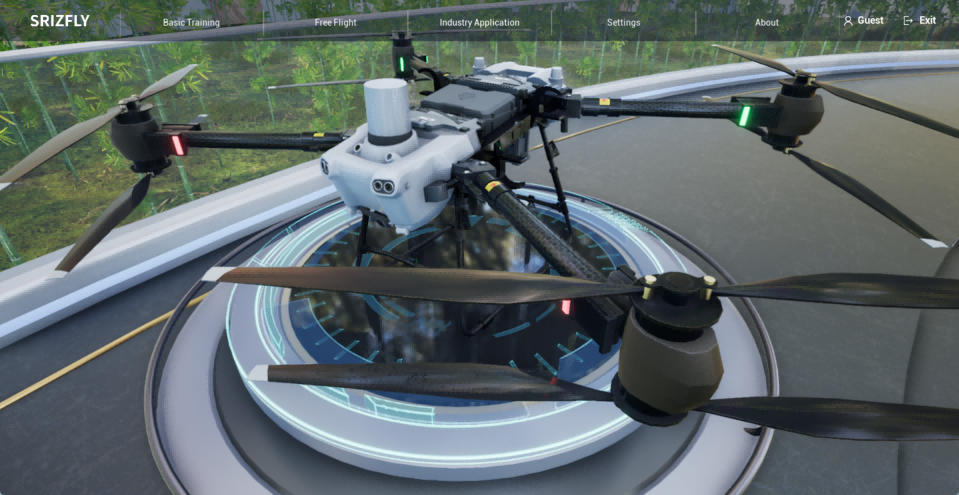
Coordinating multiple drones in the same airspace without collisions hinges on a mix of onboard sensors and short-range communication. Each aircraft constantly broadcasts its position, velocity, and planned trajectory, while listening for the same data from nearby units. Rather than relying on a single ground station to choreograph every move, the drones negotiate with each other in real time. When two flight paths intersect, onboard algorithms compare priority levels, timing, and available maneuvering room, then assign one drone to climb, descend, or veer slightly while the other holds its course. This peer-to-peer approach removes the delay of routing decisions through a distant operator and keeps the system responsive even if one link drops.
The real safeguard against mid-air collisions is layered redundancy. Optical cameras and lidar detect obstacles that never appear in shared flight plans, such as birds, power lines, or a drone that has lost its GPS lock. If a conflict is detected, the avoidance maneuver is calculated in milliseconds and executed within the drone’s physical limits, with a buffer zone that grows in turbulent wind or poor visibility. Many coordination systems also use virtual geofences around each aircraft, which act like invisible bubbles. When two bubbles overlap, both drones automatically reduce speed and re-plan their routes. By combining cooperative data exchange with independent sensing, the swarm can maintain tight formations or share narrow corridors while preserving enough separation to guarantee that no two airframes occupy the same space at the same time.
A Cost-Effective Way to Train Pilots on Equipment They Already Use
Instead of renting time in a multimillion-dollar full-motion simulator or dedicating an aircraft solely to training flights, operators can turn the cockpit itself into a classroom. Many modern flight decks already carry the screens, sensors, and software needed to run realistic scenario-based drills while the aircraft is safely on the ground. By building short, repeatable exercises into the existing avionics suite, a training department can cover abnormal procedures, system failures, and checklist flows without paying for extra hardware or ferry time.
This approach shifts the cost from expensive facilities to the crew's own familiarity with the real controls. Because pilots are already using the exact buttons, knobs, and display layouts they will touch in flight, the muscle memory carries over more directly than it would on a generic desktop trainer. Instructors can load failures or degraded modes through the same interface used for maintenance and preflight checks, then debrief on the spot. No travel to a training center means fewer schedule disruptions and more frequent, shorter sessions that fit between revenue flights.
The savings add up quickly, especially for smaller operators or those with mixed fleets. Instead of budgeting for simulator slot fees, hotel nights, and per diem, a company can reinvest that money into better scenario libraries, instructor time, or recurrent evaluations. And because the training happens on equipment the pilots already trust, the transition from drill to real-world response feels less like a test and more like a normal part of the job.
How Telemetry Data Turns Every Session Into a Coaching Opportunity
The moment a runner's cadence drops on a hill repeat, the coach sees it on the tablet and calls out an adjustment before the next rep. That's the difference telemetry makes—not waiting for video review or a post-session debrief. Real-time heart rate, power output, and movement metrics turn each drill into a live feedback loop, so corrections happen while the athlete still feels the effort.
Over weeks, the data stacks up into patterns that even the athlete misses. A swimmer's stroke rate might creep up as fatigue sets in, or a cyclist's torque balance shifts after a hard block. Spotting those trends early lets a coach tweak the plan before a bad habit locks in. The session stops being just another workout and becomes a targeted coaching intervention.
Athletes also start reading their own numbers and asking better questions. When they can see that their split times correlate with breathing rate or ground contact time, they buy into the training logic. The coach isn't just telling them to push harder—they're showing them exactly where the next second per lap is hiding. That shared understanding turns every practice into a two-way conversation, not a one-way order.
From Line-of-Sight to BVLOS Training in a Single Platform
Most drone training setups force a painful choice: either you get a basic visual-line-of-sight simulator that feels like a toy, or you pay extra for a separate BVLOS module that never quite integrates with the rest of your workflow. That gap isn't just inconvenient—it actively slows down skill progression. When a pilot has to switch tools, re-learn menus, and mentally reset between sessions, the transition from watching the aircraft to trusting onboard sensors becomes a hurdle rather than a natural step.
A single-platform approach changes that calculus. Instead of bolting on BVLOS as an afterthought, the training environment treats both modes as part of one continuous learning curve. You start with line-of-sight drills to build muscle memory for orientation and throttle control, then the same interface gradually introduces beyond-visual-line-of-sight scenarios—signal loss handling, latency compensation, and reliance on telemetry and camera feeds. Because the physics, weather modeling, and failure injection stay consistent across both modes, you're not learning two separate systems; you're expanding one mental model.
That continuity matters more than most instructors admit. The real challenge of BVLOS isn't just flying far away—it's relearning trust. In line-of-sight, your eyes are the primary sensor. In BVLOS, the data link becomes your eyes, and that shift demands practice under controlled, repeatable conditions. A platform that lets you toggle between visual and instrument-like flying within the same scenario, without logging out or swapping software, builds a deeper kind of confidence. It's not about gamifying the transition; it's about making the transition feel like a normal part of the flight, not a special event that only advanced pilots attempt.
Team-Based Scenarios That Uncover Gaps Before They Become Incidents
When a team walks through a realistic scenario together, the gaps that usually stay hidden in day-to-day routines have a way of surfacing quickly. One person might assume the backup process has been tested, while another knows it hasn't been touched in months. These simulations don't need to be elaborate—a simple tabletop exercise where each member describes their first five actions during a system failure can reveal mismatched expectations, missing documentation, or an over-reliance on a single person who happens to be on vacation that week. The value isn't in predicting every possible failure, but in exposing the silent assumptions that would otherwise turn a minor hiccup into a full-blown incident.
Effective team scenarios push beyond technical checklists and into the messy middle of collaboration. Instead of asking "does the failover work?", a sharper question is "who makes the call to trigger it, and what happens if that person disagrees with the on-call engineer?" When you run these drills regularly, patterns emerge: the same communication bottleneck, the same unclear ownership of a critical dashboard, the same tendency to skip the post-mortem because everyone's too busy fixing the immediate problem. Naming those patterns in a low-stakes setting gives teams the chance to fix the process before a real outage forces them to.
One overlooked benefit is how these scenarios build a shared mental model under pressure. People learn who has deep knowledge in which area, who tends to freeze, and who asks the clarifying question that unlocks the whole room. That familiarity translates directly into faster, calmer responses when the stakes are real. A team that has already argued about rollback strategies in a fake incident won't waste precious minutes doing it during an actual one—they'll move straight to the decision they already rehearsed, because the gap was found and closed weeks earlier.
FAQ
It includes fleet-wide administration, role-based access, and compliance reporting that hobbyist tools simply don't offer. Every flight session ties back to team objectives, not just stick time.
The platform runs on a central server with low-latency streaming, so instructors in one office can observe and coach pilots in another in real time. Session recordings are synced automatically for later review.
Yes, teams can import CAD files, satellite imagery, or 3D scans of their actual job sites and build missions with specific hazards, no-fly zones, and weather profiles. This means practice happens in a digital twin of the real world.
The dashboard tracks reaction time, control smoothness, battery management, and mission completion accuracy. It also flags recurring errors like unstable hovering or late landing checks.
The physics engine models turbulent air, sensor noise, and partial system failures such as a single motor losing thrust. Pilots learn to recover from these events without risking real equipment.
It offers APIs for common fleet management systems and can import flight logs from DJI, Autel, and other major brands. Teams can also plug in their own controller hardware for a familiar feel.
Large accounts get a dedicated onboarding engineer, custom training curricula, and priority fixes for any issues. Quarterly reviews are included to adjust the simulator to changing operational needs.
Conclusion
The Professional Enterprise Drone Simulator doesn't just teach stick movements; it builds the judgment that keeps missions from falling apart. Instead of waiting for a real emergency, teams can rehearse flights that copy the exact conditions they'll face on the job—weather, obstacles, signal interference. Multi-drone exercises let several pilots operate in the same virtual airspace without the threat of mid-air collisions, so coordination becomes second nature before anyone leaves the ground. This is not a generic arcade flight game. It runs on the same control interfaces and software your crews already use, which means every hour spent training transfers directly to the hardware sitting in your equipment room. Budget-wise, that's a massive reduction in crash repairs, battery cycles, and downtime.
The real value shows up after the flight. Telemetry data captures every input, hesitation, and deviation, turning each session into a one-on-one coaching conversation. Instructors can pull up a specific moment—say, a sharp altitude drop during a gust—and show a pilot exactly what to change. From line-of-sight basics to beyond visual line-of-sight missions, the simulator scales naturally without switching tools. Team-based scenarios go further: they put a full crew under pressure, revealing communication gaps and decision bottlenecks that would otherwise surface during a live operation. That early visibility is what separates a well-trained team from one that learns by expensive mistakes. The platform ends up being less about simulation and more about operational readiness.
Contact Us
Contact Person: Niles Liu
Email: [email protected]
Tel/WhatsApp: 8619945009803
Website: https://srizfly.com/