

Professional Inkjet Marking Systems: Precision and Efficiency for Modern Industries
2026-08-10
In today's fast-paced manufacturing landscape, precision and efficiency aren't just goals—they're necessities. Inkjet marking has quietly become the backbone of product traceability, from barcodes on packaging to expiry dates on pharmaceuticals. Yet, not all systems are created equal. Enter Danmajet, a name redefining what professional inkjet technology can achieve. In this post, we'll explore how the right marking system transforms production lines and why modern industries are turning to solutions that combine speed, accuracy, and adaptability.
The Art of Precision: How Inkjet Marking Transforms Production Lines
Inkjet marking brings a level of accuracy that redefines what's possible on the factory floor. Unlike older methods that rely on contact or stencils, modern systems direct microscopic droplets with such precision that even curved, textured, or heat-sensitive surfaces can be printed without a second thought. This isn't just about clarity—it's about consistency across millions of units, ensuring every batch code, logo, or barcode lands in exactly the same spot, time after time.
Beyond placement, the technology adapts in real time to line speeds and material shifts, striking a balance between permanence and flexibility. Drinks cans whizzing past at high velocity receive crisp date codes; pharmaceutical blister packs get traceable data that withstands sterilization. The real transformation lies in how this precision eliminates manual checks and rework, turning what was once a bottleneck into a seamless, automated flow that keeps production humming with minimal oversight.
Speed Meets Accuracy: Meeting High-Volume Demands
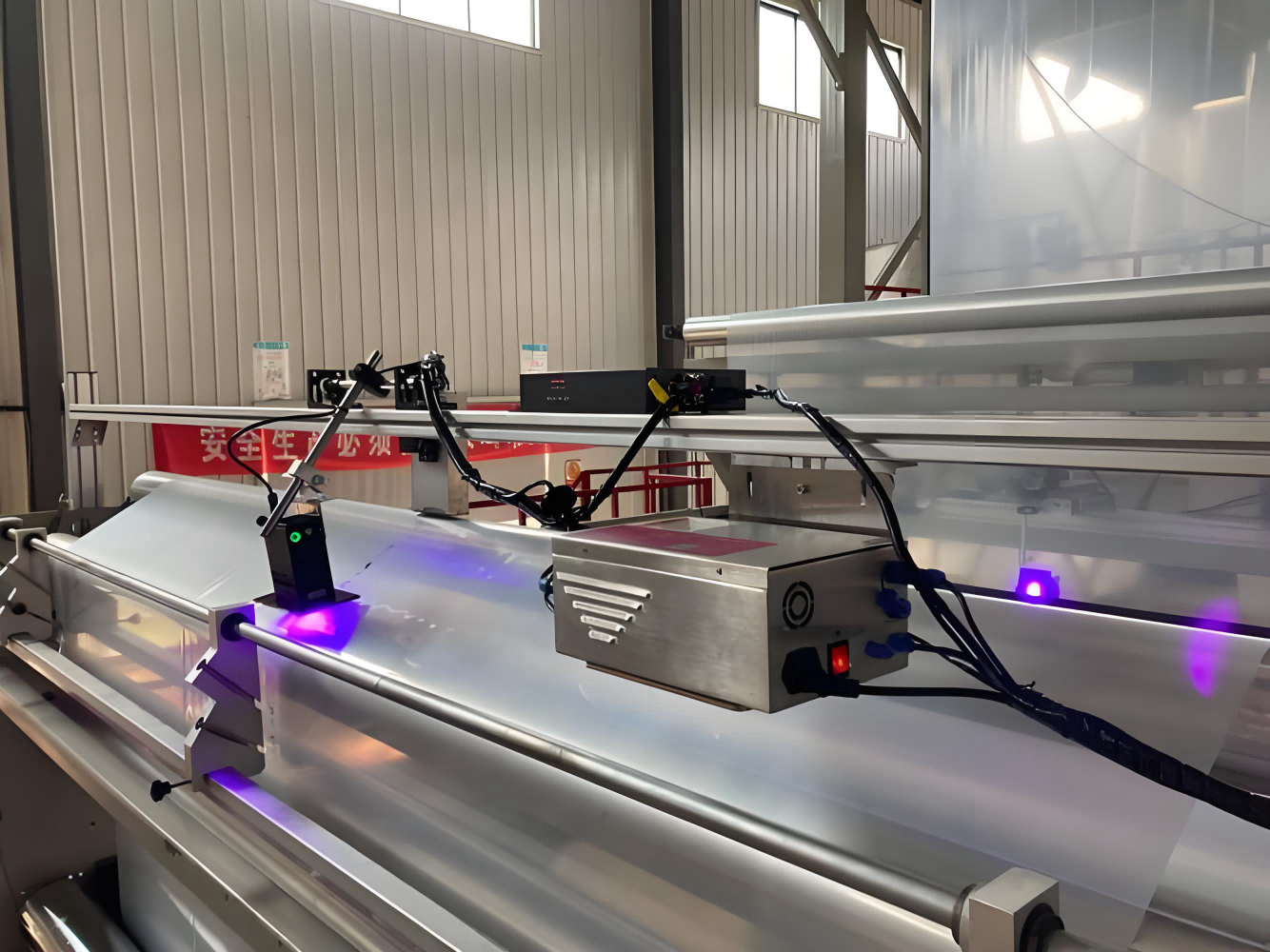
Handling a surge in workload without compromising precision is a challenge that separates exceptional systems from the ordinary. The real test lies in maintaining razor-sharp output even when the pressure mounts and deadlines tighten. It's not just about processing faster — it's about weaving reliability into every step, so that speed feels effortless and results remain flawless.
True efficiency emerges when automated workflows work in concert with intelligent oversight, catching the tiny details that often get lost in the rush. This balance isn't achieved through shortcuts but through a design philosophy where every process is scrutinized for waste and refined for consistency. The outcome is a rhythm that feels natural: high cadence without the chaos, accuracy without the lag.
In scenarios where volume spikes are routine and stakes are high, having a framework that digests complexity and delivers clarity becomes a strategic advantage. It means teams can push boundaries, knowing the foundation holds steady. The quiet confidence of getting it right, again and again, at any scale, is what transforms pressure into performance.
Smart Integration: Inkjet Systems in Industry 4.0
The fusion of inkjet technology with Industry 4.0 frameworks is quietly reshaping production floors. Gone are the days when printers were standalone boxes churning out markings in isolation. Now, they act as intelligent nodes within a connected ecosystem, exchanging real-time data with ERP systems, quality control sensors, and predictive maintenance platforms. This shift allows manufacturers to adapt on the fly—changing batch codes, serial numbers, or even full-color graphics without pausing the line. The result is a level of agility that traditional labeling or pad printing simply cannot match, especially when every second of downtime carries a hefty price tag.
What makes this integration truly powerful is the way it closes the loop between physical production and digital oversight. A smart inkjet printer doesn’t just deposit ink; it monitors nozzle health, ink viscosity, and environmental conditions, feeding all that information back into a central dashboard. If a print head begins to show slight deviations, the system can trigger a preemptive purge or alert a technician before a defective code ever appears. This predictive capability slashes waste and rework, while also providing a detailed audit trail for regulated industries. The data generated becomes a valuable asset in itself, helping operations teams fine-tune processes over time.
Beyond mere efficiency gains, these connected systems open doors to mass customization and traceability that were once unthinkable. Food packaging can carry unique QR codes linked to a specific batch’s origin story, pharmaceutical cartons can embed tamper-evident marks verified by downstream cameras, and automotive components can bear lifetime identification that withstands extreme conditions. The inkjet system morphs into a bridge between the tangible product and its digital twin, enabling everything from supply chain transparency to personalized marketing. Ultimately, the smart integration of inkjet systems isn’t just about keeping pace with Industry 4.0—it’s about turning the marking step into a strategic advantage.
Beyond the Surface: Versatile Materials and Substrates
The materials and substrates at the heart of modern design do far more than provide a surface. They shape user experience, influence durability, and open up possibilities that go well beyond traditional applications. From flexible polymers to engineered wood composites, the choice of a substrate can turn a simple object into a responsive, adaptive, or even self-healing product. This deeper role challenges designers to think about materiality not as a final layer but as an active component of the whole.
Versatile materials like high-performance ceramics, nano-coated metals, and recycled bioplastics have transformed what we can expect from surfaces. They resist scratches, control temperature, inhibit bacterial growth, or harvest ambient energy. Meanwhile, substrates are no longer just passive backings—they can stretch, bend, or integrate seamlessly with electronics. The fusion of function and aesthetics means that a tabletop might double as a wireless charger, or a wall panel could filter indoor air without compromising its appeal.
The real breakthrough lies in how these materials and substrates work together. Adhesion technologies and multi-layer constructions allow incompatible substances to bond, creating composite systems that outperform single materials. By looking beyond the visible surface, manufacturers can embed sensors, thermal regulators, or light-diffusing layers directly into grain, fiber, or resin matrices. The result is an ecosystem where every element contributes to performance, and the boundary between material and machine starts to blur.
Fluid Dynamics: The Science Behind Flawless Prints
At the heart of every precise print lies the invisible choreography of fluid motion. When ink or polymer melts are forced through microscopic nozzles, their behavior is governed by viscosity, surface tension, and shear rates—variables that must be tuned to near perfection. Even a slight instability can cause droplet breakup or ligament stretching, turning a crisp line into a chaotic splatter. Engineers obsess over dimensionless numbers like the Reynolds and Weber numbers, balancing inertia against viscous and surface forces, to ensure each droplet lands exactly where intended, every single time.
Temperature and pressure don't just affect the fluid inside the printhead; they redefine it. A subtle shift can thin a liquid enough to flow smoothly, but push too far and the carrier evaporates mid-flight, leaving behind dried particles that clog the nozzle. This delicate thermal dance is mastered through computational models that simulate jetting and spreading, predicting outcomes before a single layer is deposited. The result is a silent command over chaos—where fluid dynamics transforms raw material into mirror-smooth surfaces and hair-fine details.
On the substrate, the story continues. Drop impact triggers a rapid sequence of spreading, recoiling, and wetting, all dictated by the fluid's rheology and the surface energy of the receiving material. If conditions aren't right, you get pinholes, coffee rings, or uneven coatings. But when the science aligns, the film forms with geometric fidelity, building layer after layer into a flawless three-dimensional structure. It’s not just printing—it’s precision fluid engineering, executed at the scale of picoliters.
Streamlining Operations: From Setup to Maintenance
Streamlining operations starts with a frictionless setup process. Instead of bogging users down with complex configurations, modern tools emphasize guided onboarding, pre-configured workflows, and intuitive defaults that get teams running without weeks of training. This means less time deciphering manuals and more time delivering value. Clear, visually engaging setup assistants and real-time feedback loops ensure that even non-technical users can configure systems confidently, reducing the initial friction that often stalls adoption.
Once operational, the focus shifts to maintaining momentum with minimal manual overhead. Automated routine tasks — like data backups, performance monitoring, and update scheduling — free up human resources for strategic work. Smart alerts flag issues before they escalate, while easy-to-navigate dashboards put critical metrics at your team’s fingertips. This blend of automation and visibility keeps operations smooth without a dedicated crew constantly watching the dials.
The long game is about sustaining efficiency as needs evolve. Rigid systems crumble under changing demands, so build for adaptability: modular components, APIs that talk to other tools, and regular feedback-driven refinements. When maintenance is proactive rather than reactive, teams spend less time fighting fires and more time innovating. It’s that seamless continuum — from a painless first log-in to ongoing, agile maintenance — that separates sleek operations from constant firefighting.
FAQ
Their ability to deliver crisp, permanent codes at rapid speeds without compromising quality helps manufacturers keep pace with demanding throughput targets while reducing downtime.
Advanced printhead technology and specially formulated inks allow these systems to adapt to almost any substrate, ensuring adhesion and legibility even on challenging contours or glossy surfaces.
Absolutely. Most systems offer straightforward connectivity via standard protocols, enabling real-time code changes, centralized control, and seamless integration with ERP or MES platforms.
Regular cleaning of the printhead and fluid lines, along with using genuine inks and solvents, dramatically extends service life. Many units now feature self-cleaning cycles that simplify daily care.
Yes, several manufacturers provide low-migration, odorless inks that comply with EU and FDA guidelines, ensuring safe direct or indirect contact with consumable goods.
Inkjet often wins on initial investment and versatility, while maintenance and consumable costs remain competitive, especially for operations that require frequent batch changes or multi-line printing.
The learning curve is surprisingly gentle; most vendors provide intuitive touchscreen interfaces and on-site training, so operators can manage message selection and basic troubleshooting within hours.
Newer models emphasize reduced ink and solvent consumption, longer service intervals, and cartridges designed for easy recycling, all of which help minimize environmental footprint without sacrificing code durability.
Conclusion
Professional inkjet marking systems have reshaped modern production lines by merging pinpoint accuracy with remarkable speed. The art of precision lies in their ability to deposit microscopic droplets with exact placement, transforming ordinary manufacturing workflows into seamless, automated processes. This level of control ensures crisp, legible codes, logos, and graphics on products moving at high speeds, directly addressing the demands of high-volume environments without sacrificing quality. Smart integration further elevates these systems, embedding them within Industry 4.0 frameworks where real-time data, remote monitoring, and adaptive controls minimize downtime and maximize throughput. The result is a connected, intelligent marking station that learns and adjusts on the fly, making industrial printing not just a final step but an integral part of the smart factory ecosystem.
Versatility is another cornerstone, as modern inkjet markers effortlessly handle an array of materials and substrates—from porous cardboard and textured plastics to glossy metals and curved glass. This adaptability relies on advanced fluid dynamics, where ink formulations and droplet ejection are fine-tuned to deliver flawless adhesion and durability on any surface. Streamlined operations come from intuitive interfaces and automated maintenance routines, drastically cutting setup times and reducing manual interventions. Combined, these elements create a holistic solution where science meets practicality, empowering manufacturers to achieve consistent, high-quality marking while optimizing overall equipment effectiveness and responding agilely to evolving production needs.
Contact Us
Contact Person: Jacky
Email: [email protected]
Tel/WhatsApp: 086 15000607053
Website: https://www.danmajet.com