

PVDF PPGI Company Guide: How to Source High-Performance Coated Steel
2026-11-02
Finding PVDF PPGI that actually survives coastal salt spray, desert UV, or industrial fallout isn't about picking the highest price on a spec sheet. It’s about knowing which coating systems, substrate grades, and cure schedules separate decade-proof steel from a fading liability. In this guide, we break down what sourcing teams often miss—and why LANYUN's approach to high-performance coated steel keeps engineers and buyers from learning the hard way.
Decoding PVDF Chemistry for Real-World Durability
At its core, PVDF owes its outdoor staying power to the carbon-fluorine bond, but the relationship is far from linear. The repeating -CF2-CH2- units pack into semicrystalline domains that resist swelling and hydrolysis, yet the exact crystalline form matters more than many datasheets admit. The nonpolar alpha phase offers the best barrier properties, while the polar beta phase—often induced by stretching or high-voltage poling—changes mechanical and dielectric behavior in ways that can either extend or shorten service life depending on the load profile. Head-to-head and tail-to-tail monomer additions, which arise during polymerization, create weak points where thermal or oxidative attack tends to start long before the bulk polymer shows signs of distress.
Field failures rarely replay clean laboratory aging tests. Under combined UV, moisture, and thermal cycling, PVDF can develop microcracks at spherulite boundaries, especially when low molecular weight fractions migrate to the surface and act as stress concentrators. Alkaline cleaning agents or concentrated hypochlorite solutions trigger dehydrofluorination, stripping HF and leaving behind conjugated double bonds that discolor the surface from white to brown. That color shift is not just cosmetic; it marks a loss of fluorine content and a measurable drop in elongation at break. Impurities left from synthesis—such as residual initiator fragments or metal ions—accelerate these pathways by catalyzing radical formation.
Copolymerization with hexafluoropropylene or chlorotrifluoroethylene deliberately disrupts crystallinity, trading a portion of chemical resistance for the flexibility needed in wire jacketing and flexible tubing. The resulting chain architecture alters how solvents penetrate and how cracks propagate under dynamic loads. Real-world durability, therefore, is less about selecting the highest possible fluorine content and more about matching molecular weight distribution, comonomer ratio, and thermal stabilizers to the specific exposure. A PVDF grade that survives a decade in a desert photovoltaic backsheet can fail within months inside a chemical plant duct if its defect population and stabilization package were optimized for UV rather than acid gas.
What Separates Premium PPGI from Basic Panels
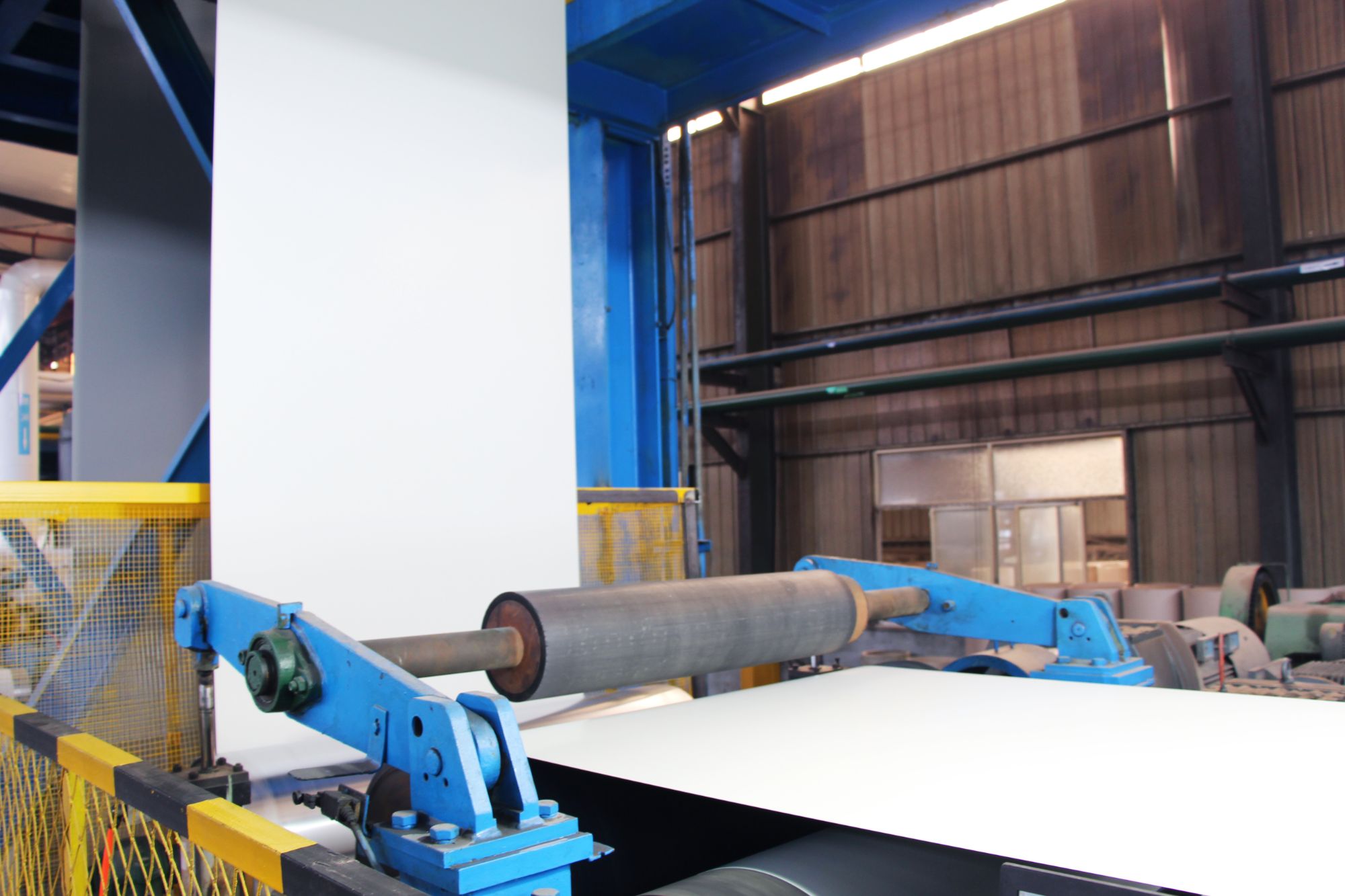
Premium PPGI starts with the steel itself. Mills use cleaner, more uniform galvanized substrate with tightly controlled zinc weight and surface profile, so the paint has something solid to grab onto. Basic panels often come from mixed coils, where slight variations in zinc thickness or residual oil from rolling can lead to uneven coating adhesion and early edge rust.
The coating system is another dividing line. Premium lines typically lay down a primer, a color coat, and a protective back coat, using resins like PVDF or high-grade SMP that hold up against UV and industrial fallout. Basic products usually rely on a single polyester topcoat that loses gloss within a few years and starts chalking in direct sun. Film thickness, color consistency, and bend resistance are checked coil by coil, not just sampled.
You notice the difference after installation. Premium panels keep their color and finish through thousands of wet-dry cycles without fading or blistering, while budget panels show their age early at cut edges and fastener points. That comes down to edge protection and passivation treatments behind the paint, which are often skipped or minimized on low-cost coils.
Supplier Vetting Beyond the Paperwork
Most supplier assessment programs stop at collecting certificates, tax forms, and a copy of the business license. Those documents tell you a company exists, but they say almost nothing about how it actually behaves when a deadline slips, a shipment goes missing, or an auditor asks to see the warehouse floor. Real vetting means watching how a supplier handles the small frictions: whether they proactively flag a delay or quietly hope you won't notice, whether they push back on unreasonable pressure with a clear technical explanation or just agree to everything, and whether their own subcontractors are treated as partners or as disposable capacity.
One practical approach is to embed unannounced, low-stakes tests into routine transactions. Ask for a partial rework of a non-critical order and see whether the response is defensive or solution-oriented. Request a raw material traceability report on a component you already approved. Send a new contact person into the relationship and observe whether the supplier volunteers past problem history or waits to be cornered. These conversations rarely show up in a pre-audit checklist, yet they reveal the difference between a supplier who manages documents and one who manages risk.
Beyond behavior, look at the physical signs that never make it into a compliance folder. Walk the line during a normal shift, not a scheduled tour. Notice whether safety guards are actually mounted or just leaned against a wall. Check the maintenance log for dates that overlap with public holidays. Ask the line supervisor how often they receive calibration reminders from their own quality team. Paperwork can be copied from a template; the cadence of daily operations cannot.
Testing Protocols That Expose Hidden Weaknesses
Most test suites are designed to confirm what already works. They run the happy path, check a few edge cases, and then everyone moves on. But the weaknesses that actually cause failures in production rarely show up under those conditions. They hide in timing collisions, resource exhaustion, malformed inputs that are almost valid, and interactions between components that were never meant to run together. A testing protocol that exposes these hidden weaknesses has to be deliberately adversarial: it must assume the system is broken somewhere and actively hunt for the proof.
One practical approach is to build chaos into the test harness itself. Instead of fixed delays and predictable sequences, inject random jitter into network calls, reorder asynchronous events, and occasionally kill a dependency mid-request. Another layer involves mutation testing: take the existing codebase, introduce small intentional faults, and verify that the test suite actually catches them. If a mutation sails through without a single failure, the tests are merely decorative. Pair that with property-based testing, where you define invariants instead of concrete examples, and the framework will generate thousands of bizarre inputs that a hand-written test would never imagine.
The value of such protocols isn't just finding bugs today. It's the slow shift in engineering culture. When a team regularly sees their tests catch a race condition or a memory leak that no one predicted, they stop treating tests as a checkbox and start treating them as a forensic tool. Hidden weaknesses stop being hidden because the protocol is built to drag them into the light, week after week.
Cost Drivers You Can’t Afford to Ignore
Most budget reviews zero in on headline expenses, but the quiet leaks often do the real damage. Rework from unclear specs, machine idling between shifts, and rush-order freight charges rarely show up on a single line item. They hide across departments. Once you trace a product's full path from receiving dock to customer invoice, these small frictions compound into margin erosion that no pricing adjustment can outrun.
Another overlooked pressure comes from supplier concentration. When two vendors control a critical input, their annual price increases tend to move in lockstep, leaving procurement with little room to negotiate. Add in volatile energy surcharges and inconsistent batch yields, and your cost per unit can swing far more than quarterly reports suggest. The fix starts with measuring consumption at the point of use, not in aggregate spreadsheets.
Finally, workforce turnover acts as a silent multiplier. Every departure triggers recruitment fees, overtime to cover gaps, and a temporary drop in output quality that often leads to scrap or customer credits. These costs are real but rarely attributed to the right budget owner. Building simple feedback loops between line supervisors and finance can surface these drivers before they become structural.
Matching Coatings to Climate and Application
In coastal Florida, the humid, salt-laden air attacks conventional exterior paints within a couple of years, so contractors lean on 100% acrylic formulas with high mildew resistance. Move inland to Arizona, and the same coating would chalk and fade under relentless UV exposure; here, UV-stable pigments and flexible binders that handle extreme thermal swings become the priority. The takeaway: a coating that thrives in one climate can fail embarrassingly in another, so you match the resin system—not just the color—to the local weather patterns.
Application matters just as much. A warehouse floor in a food-processing plant needs a moisture-cured urethane that shrugs off thermal shock from hot washdowns, while a homeowner repainting a shaded porch can get away with a standard exterior latex. Even within the same building, the coating for a south-facing metal door differs from what you’d use on a sheltered soffit. The smarter approach is to treat climate and application as two sides of the same coin—testing candidate products on-site for a full season before committing to a full repaint.
FAQ
PVDF-coated PPGI is pre-painted steel that uses a polyvinylidene fluoride topcoat, typically with 70% PVDF resin content. This coating system resists UV degradation, chemical exposure, and chalking far longer than conventional polyester finishes. It's often chosen for exterior cladding, roofing, and architectural panels where color stability and gloss retention matter over 20–30 years.
Standard polyester is cheaper but starts fading and chalking within 5–7 years outdoors. SMP sits in the middle. PVDF holds color and gloss significantly longer because the carbon-fluorine bond is extremely stable. For coastal or high-UV environments, PVDF is usually the safest long-term choice despite the higher upfront cost.
Look beyond the datasheet. Ask for third-party test reports showing actual PVDF resin content, coating thickness, and accelerated weathering results. Review the supplier's lamination and curing process. Visit the production line if possible, or request unedited videos. Also confirm they use certified primer and pretreatment systems rather than cutting corners on cleaning or passivation.
Request a Fourier-transform infrared spectroscopy (FTIR) report or equivalent chemical analysis. The fingerprint of PVDF resin is distinct. Another practical check is the methyl ethyl ketone (MEK) rub test; PVDF coatings withstand more double rubs without softening than polyester. Also ask for a written warranty covering film integrity and color fade for at least 15–20 years.
Yes. So-called PVDF coatings may contain 50% or 70% PVDF resin blended with acrylic. The 70% version offers notably better weatherability. Some suppliers market 50% blends as PVDF for cost reduction. Always confirm the exact resin percentage and the type of acrylic or other modifiers used, because this affects long-term performance.
A total dry film thickness of 25–35 microns on the top side is common, with a 5–10 micron primer underneath. For coastal or industrial areas, specify a chromate-free or corrosion-inhibiting primer and a backside coating of at least 10–15 microns. The pretreatment layer, often chrome or chrome-free conversion coating, is just as important as the topcoat.
Buyers often focus only on price per ton and ignore coating specification details. They may accept a vague 'PVDF' label without resin content proof. Others skip third-party inspection and end up with inconsistent film thickness or poor adhesion. Another mistake is not clarifying packaging and shipping protection; coil edges and surfaces can be damaged by moisture or strapping during long transit.
High-visibility architectural facades, airports, stadiums, coastal buildings, and any project where repainting is difficult or disruptive. If the structure is meant to look clean and retain its original color for two decades or more, the premium is usually worth it. For temporary structures or low-cost warehouses, a polyester or SMP system may be more economical.
Conclusion
Sourcing high-performance PVDF PPGI coated steel requires more than matching a color swatch. The chemistry behind PVDF coatings determines how well panels resist chalking, fading, and corrosion over decades. Premium products use 70% PVDF resin systems with carefully selected inorganic pigments and precise film thickness control. Basic panels often cut corners with lower resin content or cheaper pigments, which shows up as premature gloss loss or edge creep. When vetting suppliers, don't rely on ISO certificates alone. Walk the production floor, check how they handle substrate cleaning, pretreatment, and curing temperatures. Ask for batch-to-batch color consistency data and request references from projects in similar climates. A supplier's willingness to share failure case studies often reveals more than polished brochures.
Hidden weaknesses surface only through rigorous testing. Specify QUV-A or QUV-B accelerated weathering, neutral salt spray for corrosion resistance, and mechanical tests like impact, bend, and pencil hardness. Real-world performance also hinges on matching the coating system to the environment. Coastal sites demand excellent barrier properties and resistance to salt-laden air, while high-UV desert climates require superior fade resistance and thermal stability. Cost drivers extend beyond raw material prices: coating thickness, substrate gauge, and warranty terms all influence lifecycle value. A cheaper upfront panel that needs recoating in a decade is rarely economical. By balancing chemical understanding, supplier transparency, and climate-specific testing, procurement teams can secure coated steel that performs without constant maintenance.
Contact Us
Contact Person: Nia
Email: [email protected]
Tel/WhatsApp: +86 18954360337
Website: https://www.sdppgi.com