

Red Light Therapy Supplier Questions to Ask Before You Order
2026-08-15
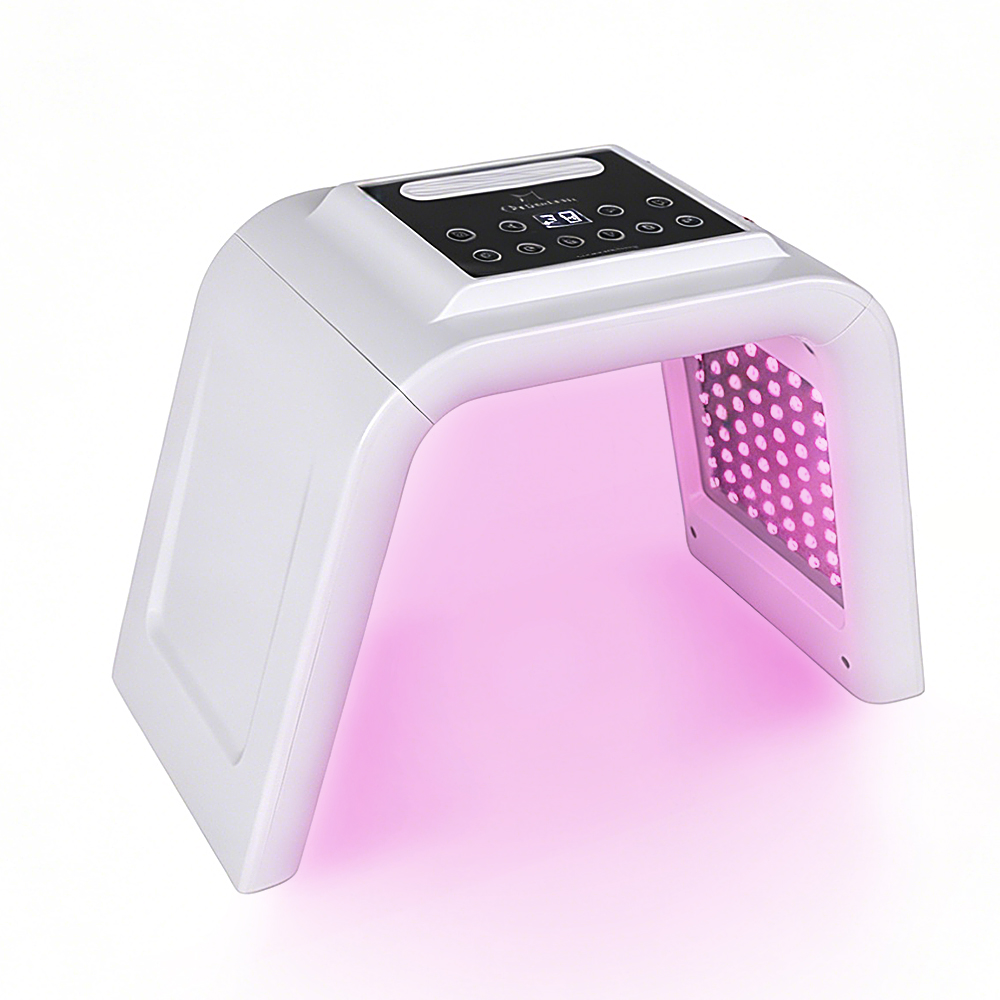
Ordering red light therapy devices from the wrong supplier can drain your budget and leave you with a device that underdelivers. Too many buyers focus on price or marketing claims, only to discover missing wavelengths, weak irradiance, or zero after-sales support once the package arrives. Before you commit to any order, you need a clear set of questions that separate reliable partners from risky ones. At Omeina, we believe transparency is the baseline—not the exception. This guide walks you through the supplier questions that matter most, so you can buy with confidence instead of crossed fingers.
Ask for a Spectrometer Reading, Not a Marketing Brochure
When comparing materials or light sources, glossy brochures rarely tell the whole story. They show you the peak performance under ideal conditions, not what happens in your actual setup. A spectrometer reading strips away the adjectives and gives you the raw spectral distribution.
Ask your supplier for the actual spectral data file, not just a chart with smoothed curves. Look at the full width at half maximum, the presence of secondary peaks, or the drop-off at certain wavelengths. Those details matter more than the color temperature printed on the box.
If a vendor hesitates to share the raw data, treat that as a warning sign. A real measurement takes minutes and costs nothing to export. The ones who proudly hand over the CSV are usually the ones whose products perform as claimed.
Can They Share the 510(k) Number Instead of Just Saying 'FDA Cleared'?
Yes, a manufacturer can share the 510(k) number once the FDA has cleared the device, and doing so adds a layer of specificity that the generic phrase 'FDA cleared' lacks. The number ties the claim to an actual submission and lets anyone verify the clearance in the FDA's public database. However, simply posting the number doesn't replace the need to describe the device accurately—the clearance applies only to the exact indications and technological characteristics reviewed in that specific submission.
Some companies hesitate to publish the 510(k) number because they worry it might invite scrutiny or confuse customers who don't know how to look it up. In practice, sharing the number is more transparent and often builds trust, especially with clinical buyers or procurement teams who want to confirm that a device is not being marketed off-label. Just make sure the number is clearly associated with the correct product name and model, and avoid suggesting that the number itself is an endorsement of superiority.
That said, there's no regulatory requirement to display the 510(k) number in marketing materials—stating 'FDA cleared' is sufficient as long as it's truthful. Sharing the number is a choice, not a legal duty, and it works best when paired with a plain-language explanation of what the clearance means for the specific device. If you do share it, treat the number as a reference point rather than a badge of broader approval.
What's Their Policy When a Panel Arrives With Dead LEDs?
Most reputable suppliers don't treat dead LEDs as a minor cosmetic issue. Their policy typically starts with a defined dead-pixel or dead-LED threshold: if a panel arrives with more than a certain number of unlit diodes within a specified zone, it qualifies for an immediate replacement or refund without debate. Ask for that threshold before you pay, because vague language like "acceptable industry standards" can leave you holding a panel with a distracting dark spot.
The best policies also cover shipping costs for defective-on-arrival units. Some vendors will cross-ship a replacement the same day you report the issue, while others require you to return the faulty panel first and wait for inspection. If a brand insists on inspection before sending a new unit, find out how long that process takes and whether they provide a prepaid return label. A 48-hour DOA window with free return shipping is a sign of a confident supplier; a 7-day delay with you paying freight is not.
Look closely at the warranty carve-outs. Some policies exclude dead LEDs that appear after installation or only cover clusters of three or more adjacent dead diodes. Others prorate the refund based on panel age. The strongest guarantee is one that treats any dead LED visible at normal viewing distance as a defect for at least the first 30 days, with clear steps for photo documentation and no restocking fee on the replacement.
How Many of Their Reviews Come From Verified Buyers?
When scrolling through customer feedback, a quick way to gauge authenticity is to check how many reviewers actually bought the product. Verified purchase labels aren't perfect, but they do filter out a lot of noise from people who just have an opinion without any firsthand experience. Some brands show a high number of unverified reviews, which can happen for legitimate reasons — like customers who purchased in-store or received the item as a gift — but a large gap between total reviews and verified ones might make you pause.
In practice, a healthy ratio often means at least 70-80% of reviews come from verified buyers. That doesn't automatically mean the remaining unverified feedback is fake, but it does suggest the company is collecting feedback from actual customers rather than relying on incentivized or bulk submissions. If you see a product with hundreds of five-star reviews and only a handful are marked as verified purchases, it's worth digging a little deeper before hitting the buy button.
On the flip side, some smaller niche retailers might have fewer total reviews but nearly all of them verified, simply because their customer base is small and engaged. That can actually be more trustworthy than a mountain of mixed feedback. The key isn't just the percentage, though — it's whether the verified reviews sound like real people describing real usage, not canned phrases repeated over and over.
Do They Offer a Trial Period That Actually Includes Return Shipping?
Many brands advertise a generous sleep trial—100 nights, 120 nights, even longer—but the real question is what happens if you decide to send it back. If the fine print says you're responsible for return shipping, that "free trial" can quickly become a costly mistake. For a heavy mattress, return freight can run into hundreds of dollars, which essentially traps you into keeping a product you don't love. A trial period only counts as truly risk-free when the brand absorbs that cost without hesitation.
The difference becomes painfully clear only when you're already disenchanted. Some companies will arrange a pickup and cover every cent of return logistics; others will send you a label but quietly deduct a restocking fee or leave you to negotiate with a freight carrier. That surprise can turn a straightforward return into a week of phone calls and frustration. It's worth checking the exact language before you buy—look for phrases like "free returns," "we pay return shipping," or "no restocking fees." If it's missing, ask directly.
A brand that openly includes return shipping in its trial period is making a statement: they trust their product enough to risk the round-trip cost. That's a level of confidence you rarely find from companies that bury the return policy in dense terms. When you're comparing options, weigh this factor heavily—it's a reliable signal of how the company will treat you after the sale, not just before it.
Will They Explain the Difference Between Irradiance and Energy Density?
It's a fair question to ask before diving into any technical discussion about light measurement. Irradiance tells you how much power hits a surface at any given moment—think of it as the intensity of sunlight on your skin right now. Energy density, on the other hand, accumulates that power over time, giving you a total dose. If a source doesn't clarify this distinction early on, you might end up comparing a quick flash to a slow bake without realizing it.
A good explainer will use concrete examples to make the split obvious. For instance, a camera flash delivers extremely high irradiance for a fraction of a second, but the total energy density might be far less than standing under a desk lamp for an hour. Pay attention to whether they walk through such a scenario—if they gloss over the units or swap the terms loosely, the explanation probably won't help you make accurate practical decisions.
Ultimately, the difference matters most when you're sizing equipment, estimating exposure limits, or comparing light sources in real-world conditions. You want someone who not only defines both terms but also shows how they interact in a single measurement scenario. If they can tie it back to something like solar panel testing or phototherapy dosing, then you know they're not just reciting textbook definitions.
FAQ
Many brands list 660nm and 850nm, but the real output can drift. Ask for a measured spectral graph from a spectrometer, not a marketing graphic. If they hesitate, that's a red flag.
Some suppliers quote solar-like figures at the LED surface, which is useless for your skin. Request irradiance at 6, 12, and 18 inches. A solid panel should still deliver at least 30-50 mW/cm² at a comfortable distance.
Cheap unbranded diodes degrade fast. Look for names like LG, Osram, or Seoul Semiconductor. Expect at least 50,000 hours with minimal light loss, and ask for the LM-80 test data if possible.
Don't settle for a CE sticker alone. Ask for FCC compliance, RoHS, and ideally IEC 62471 photobiological safety testing. Reputable suppliers will share certificates without making you chase them.
Red light therapy isn't one-size-fits-all. A trustworthy supplier offers at least a 30-day trial with a no-restocking-fee return. If they only accept returns for defects, consider looking elsewhere.
Fan noise can ruin a relaxing session. Ask for the decibel rating at full power and how the heatsink is designed. A panel that stays cool without sounding like a hair dryer is worth paying extra for.
Many warranties only cover the shell, not the LEDs or power supply. Clarify if the controller, drivers, and individual diodes are included. A three-year warranty on all components is a good baseline.
Testimonials on a website mean little. Ask for references you can contact or independent video reviews with real usage. If they can't provide any, that's a sign the product hasn't been in real hands long.
Conclusion
Before you order from any red light therapy supplier, push past the glossy product shots and ask for actual spectrometer readings. A reputable seller won't hesitate to show you the spectral output graph, because irradiance claims without measurement are just guesses. That same pressure applies to clearance claims: if they say 'FDA cleared,' ask for the 510(k) number and verify it in the database—not all panels meet the same standards. Then get specific about durability. Dead LEDs happen, especially with cheaper arrays, so find out whether their warranty covers individual diode replacement or if you're stuck shipping the whole unit back on your own dime.
Reviews can be curated, so ask how many come from verified buyers rather than incentivized posts or free-product campaigns. A trustworthy seller won't dodge that question. Also look for a trial period that includes return shipping—otherwise you're paying to test their product. Finally, ask them to explain the difference between irradiance (power density at the surface, usually mW/cm²) and energy density or dose (J/cm² over time). If the rep stumbles or feeds you a canned response, that's a red flag. The best suppliers treat you like someone who can understand the science, not someone who just wants a fancy light.
Contact Us
Contact Person: Tina Liu
Email: [email protected]
Tel/WhatsApp: 8618681405932
Website: https://www.omeinabeauty.com/