

Rescue and Firefighting Boat Supplier for Reliable Marine Emergency Response
2026-11-02
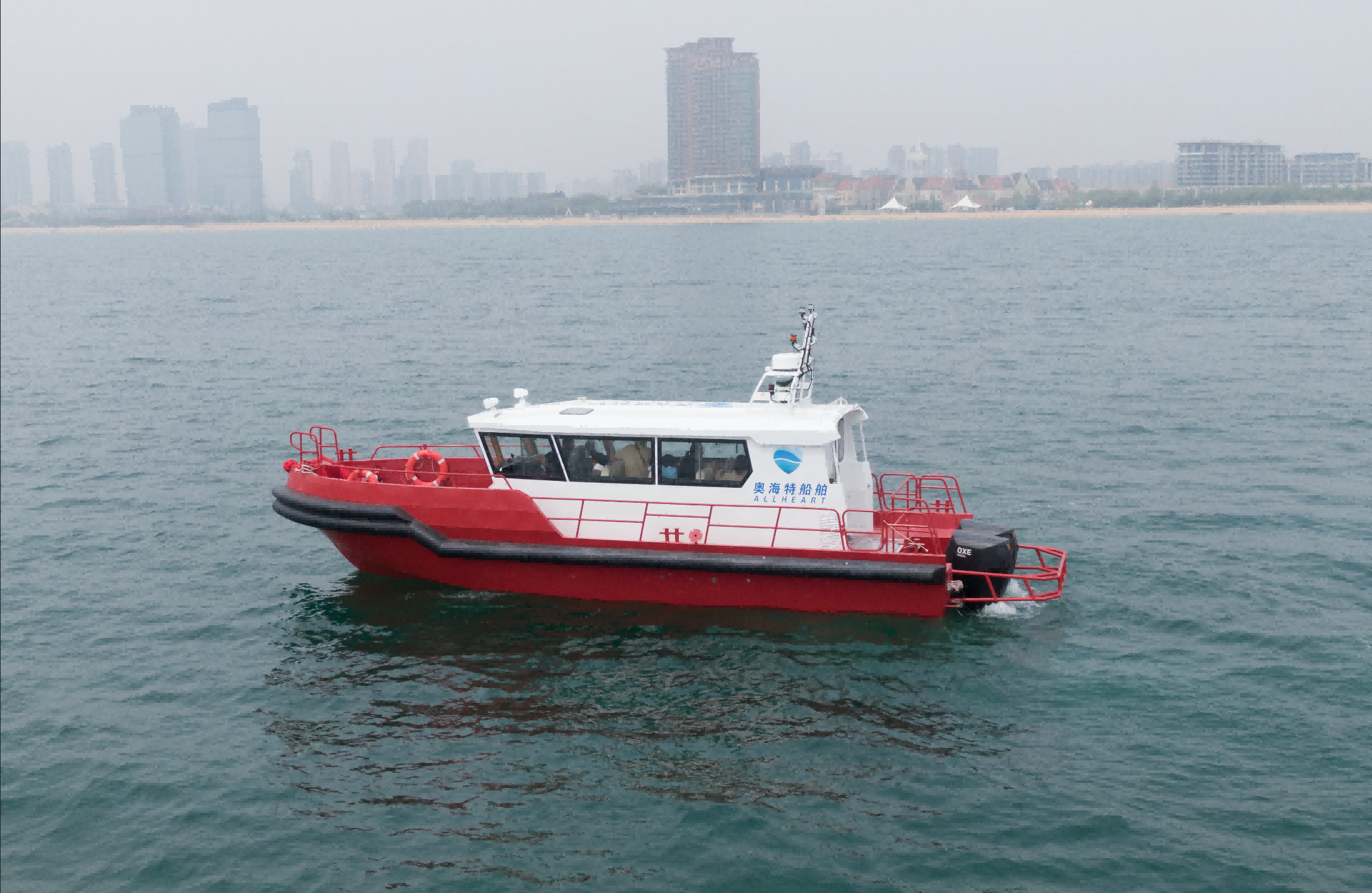
When a fire breaks out at sea or a vessel goes down in rough water, every second counts. That’s the reality driving Allheart, a rescue and firefighting boat supplier built for reliable marine emergency response. No two emergencies look the same—harbor fires, offshore collisions, flood rescues—so the vessels we’ll explore here are designed around one idea: getting crews there fast and keeping them effective when it matters most. From hull strength to pump capacity and onboard fire suppression, this guide breaks down what actually makes a rescue boat dependable under pressure. If you’re tasked with protecting lives and assets on the water, you already know the margin for error is thin. Let’s look at how the right supplier changes that equation.
The First Minutes That Decide a Rescue
In any rescue, the clock doesn’t wait. Before gear is fully unpacked or radio protocol is repeated, the scene itself is already making demands. Those first minutes expose whether a team has drilled enough to move without thinking—or whether hesitation will cost more than seconds.
A responder reads the environment in fragments: a faint voice under rubble, the tilt of a vehicle, the smell of leaking fuel. Each observation feeds a rapid, messy calculation about where to place the first ladder, who gets the first hand, and what can be left for later. It’s less a checklist than a kind of loaded instinct.
What happens in that opening stretch often sets the emotional and physical tempo for everything after. Teams that have rehearsed transitions—arriving, scanning, assigning roles, acting—can slip into a rhythm. Those that pause too long to confirm what they already see may never catch up, because a rescue’s earliest minutes are the ones that most often determine its outcome.
Pumps, Monitors, and the Pressure to Perform
The hum of the infusion pump becomes a metronome for the nursing shift, each beep marking another task in an endless queue. Monitors flash numbers that demand interpretation, not just observation—a systolic dip, an oxygen saturation wavering at the edge of concern. The pressure isn't a single dramatic moment; it's the steady accumulation of small decisions, each one carrying weight that no algorithm can fully shoulder.
Clinicians learn to read the room through the glass of the central station, where waveforms trace their jagged stories. A pump alarm at 3 a.m. doesn't merely signal an occlusion; it pulls a nurse from one bedside to another, forcing a recalibration of priorities. The monitor becomes both ally and adversary, its green lines offering reassurance one minute and demanding action the next. This is the quiet architecture of vigilance—not heroics, but the practiced tension between attention and overload.
What often goes unspoken is how the equipment shapes the caregiver's body and mind. The slight hunch over a pump keypad, the reflexive glance at a telemetry screen mid-conversation, the way a nurse's ears tune to distinguish urgent beeps from routine chimes. Pressure to perform isn't about a test or a deadline; it's the knowledge that between the machine's logic and the patient's fragile physiology, there is only a human middle space—and that space is where the real work happens.
Hull Designs That Absorb the Sea's Punishment
Instead of fighting the ocean with brute rigidity, modern hulls are shaped to shed wave energy before it becomes a structural problem. A wave-piercing bow with a fine entry angle slices through the crest rather than slamming into it, while a flared topside deflects spray outward and keeps the deck drier. Aft, deep-V sections soften the ride when the hull drops into a trough, converting vertical impact into lateral displacement that the hull can manage without shuddering.
Materials matter just as much as geometry. Composite laminates with varying fiber orientation allow the hull skin to flex a few millimeters under load, absorbing peak pressures before they reach the frames. Some builders integrate elastomeric coatings or air-lubricated chines that reduce friction and dampen vibration, turning a punishing sea state into a low-frequency rumble rather than a series of jarring hits.
The real trick is tuning the natural frequency of the panel spans so they don't resonate with wave impacts. Naval architects stagger stiffener spacing and vary plate thickness to spread stress concentrations, which prevents fatigue cracks at hard points like bulkhead intersections. That's why a well-designed hull doesn't just survive a gale; it feels settled in it, with the sea's punishment absorbed rather than resisted point-blank.
Crew Safety Starts Before the Alarm Sounds
The quiet hum of a vessel at night can lull even seasoned hands into false confidence. But crew safety is not built in the seconds after a fire alarm or a hull breach—it is laid down weeks earlier in the way gear is stowed, drills are run, and fatigue is managed.
On many ships, the difference between a close call and a casualty comes from small, unglamorous choices. A lifeboat davit that gets greased every Friday, a muster list updated after every crew change, a junior deckhand who knows exactly where the nearest EEBD is without looking. These habits don't show up in formal reports until something goes wrong, and then they show up as survival.
Pre-alarm safety also means reading the room—watching for the subtle signs that a crew is stretched too thin. When rest hours get shaved and paperwork piles up, people start cutting corners without realizing it. A master who intervenes early, before the first alarm ever sounds, is doing more for his crew than any emergency response plan ever could.
Custom Builds for Ports, Rivers, and Offshore
Every coastline, river mouth, and offshore site brings its own set of currents, depths, and weather patterns—so building a vessel that handles them well means starting from a blank page, not a catalog. Custom designs here focus on shallow-draft hulls for shifting sandbars, reinforced bows for dock work, and engine placements that keep maintenance simple when the nearest shipyard is a day away. It’s less about flashy features and more about making sure the boat doesn’t fight the water it works in.
For port operations, maneuverability matters more than top speed. Tight turning circles, side thrusters placed where they won’t snag lines, and deck layouts that let a crew move cargo without tripping over deck fittings—these come from talking to the people who run the boats daily. River work adds another layer: debris strikes, variable water levels, and long hours at low RPM. The right custom build accounts for those by using thicker plating in high-wear areas and cooling systems that don’t clog when silt kicks up.
Offshore, the focus shifts to sea-keeping and crew endurance. A hull that slams less in a head sea means fewer injuries and longer productive windows. Custom builds here often include motion-dampening features, redundant bilge systems, and layouts that let a small crew operate safely for weeks without resupply. None of this is standard—it’s the result of measuring real routes, loadouts, and repair capabilities before the first plate is cut.
Support That Keeps Fleets Ready Year-Round
When a truck sits idle, every hour drains revenue and disrupts schedules. Our support network is built to prevent that downtime before it starts, with regional parts hubs that stock the components fleets actually need, not just the fast movers. From brake systems and suspension parts to electrical connectors and HVAC units, inventory is aligned with real-world failure patterns across different climates and duty cycles.
Technicians answer calls with direct access to vehicle history and diagnostic data, so the first fix is usually the right one. Mobile service vans are dispatched with the right tools and parts on board, covering highway breakdowns and yard repairs with the same urgency. For fleets running mixed-nameplates, our cross-reference database removes guesswork and keeps older models viable instead of forcing premature replacements.
Training doesn't stop after installation. We run seasonal readiness checks, share maintenance bulletins tied to actual fleet telemetry, and adjust local stocking levels as routes or loads change. That ongoing loop keeps trucks in service through heat waves, salt seasons, and everything in between, without the usual scramble for scarce parts.
FAQ
The lineup spans from compact 8-meter RIBs designed for rapid coastal interception to 24-meter steel-hulled workboats capable of sustained offshore firefighting. Each hull type is selected based on the operating environment—whether that means a shallow-draft estuary or open-ocean conditions with heavy swell.
We focus on redundancy in critical systems: twin propulsion units, independent bilge and fire pumps, and battery banks that are isolated from the main electrical bus. Sea trials include deliberate failure drills, like shutting down one engine while running fire monitors at full pressure, to confirm the boat still maneuvers and fights a fire safely.
Depending on the mission profile, we fit remote-controlled water/foam monitors, a dedicated fire pump with a separate seawater intake, foam proportioning tanks, and a deluge system to protect the deck. On larger boats, a crash pump can be deployed over the side to draft water from the sea while the main pump is servicing monitors.
Yes. We regularly modify deck layouts for stretcher access, dive platforms, or a rescue davit. One recent build for a harbor authority included a fold-down bow ramp for recovering conscious casualties directly from the water, which cut retrieval time by nearly half compared to a ladder-only setup.
That depends on the coverage area. For port duty, a top speed of 25–30 knots and a range of 150 nautical miles is usually sufficient. For offshore platforms or extended coastlines, we recommend a semi-displacement hull that can sustain 18–20 knots in rough seas while carrying 2,000 liters of foam and a crew of six.
Each build goes through dock trials, a 12-hour endurance run, and a live fire drill where the crew must knock down a controlled fuel fire within a set time. We also simulate a fouled sea chest and a failed monitor valve to verify that backup systems engage without manual intervention.
We include a two-day familiarization program on board the actual vessel, covering pump operations, monitor patterns, and emergency procedures. After delivery, we keep a technical team on call and maintain a parts inventory for wear items like impellers, seals, and foam proportioning valves.
Marine-grade aluminum for the hull and superstructure avoids corrosion while keeping weight low. For areas exposed to heat, we use stainless steel piping and bronze sea chests; deck fittings are 316L stainless. Anti-slip coatings are applied in all working zones, and all electrical connections are sealed to IP67 or better.
Conclusion
When an emergency breaks out on the water, the first minutes shape everything. A rescue boat that responds slowly or hesitates under load can turn a manageable incident into a disaster. That's why every design decision we make starts with rapid, ungloved deployment. Pumps need to hit full pressure without sputtering, monitors must hold a steady stream even when the vessel rolls, and hulls have to take repeated impacts from rough seas without cracking or slowing the crew down. We work with port authorities, river patrols, and offshore operators to configure each boat around the specific risks they face—narrow channels, open water, chemical exposure, or crowded harbours.
Safety isn't just about fire suppression; it starts before the alarm goes off. Handrails, non-slip decks, and seating that supports crew during high-speed turns are built in from the beginning, not bolted on later. And once a fleet is in service, that's when the real test begins. We keep spare parts, training, and technical support available year-round, so a boat that leaves our yard stays ready for the next call—not waiting on a backordered component. That kind of reliability is what a marine emergency response partner should deliver, quietly and without excuses.
Contact Us
Contact Person: Benny Hu
Email: [email protected]
Tel/WhatsApp: +8618354225697
Website: https://www.allheartmarine.com/