

Sewer Jetting Machines Company from China: How to Choose a Reliable Supplier for Your Drain Cleaning Needs
2026-11-02
Why do so many drain cleaning businesses end up disappointed with their sewer jetting machines? It almost always comes down to choosing the wrong supplier. China is home to hundreds of manufacturers, but only a handful build machines that hold up under daily use. If you're tired of equipment failures and missed service calls, this guide will show you exactly what to look for. And when it comes to proven quality, fewer names stand out like AMJET—a company that has quietly earned trust across the industry.
Reading Between the Lines of a Factory Audit Report
Factory audit reports often read like polished summaries, but the real story lives in what they don't say directly. A phrase like "the facility generally follows proper procedures" can signal that exceptions were frequent enough to mention, yet not severe enough to fail the audit. Experienced buyers learn to treat every qualifier—"generally," "mostly," "with occasional lapses"—as a flag rather than a reassurance.
Look closely at how corrective actions are described. If a report says "management was advised to improve record-keeping," it likely means records were missing or inconsistent at the time of inspection. The absence of specifics around worker interviews, overtime hours, or safety drills can be just as telling as an outright violation. A vague statement about "areas for improvement" without measurable deadlines suggests the auditor found patterns, not isolated mistakes.
Rather than accepting the headline score, ask for the auditor's raw notes or a follow-up call. Questions like "What did you see that didn't make it into the final summary?" or "Which finding would make you hesitate to place a repeat order?" often reveal the gaps between a pass and genuine confidence.
Where Cheap Jetting Machines Usually Cut Corners
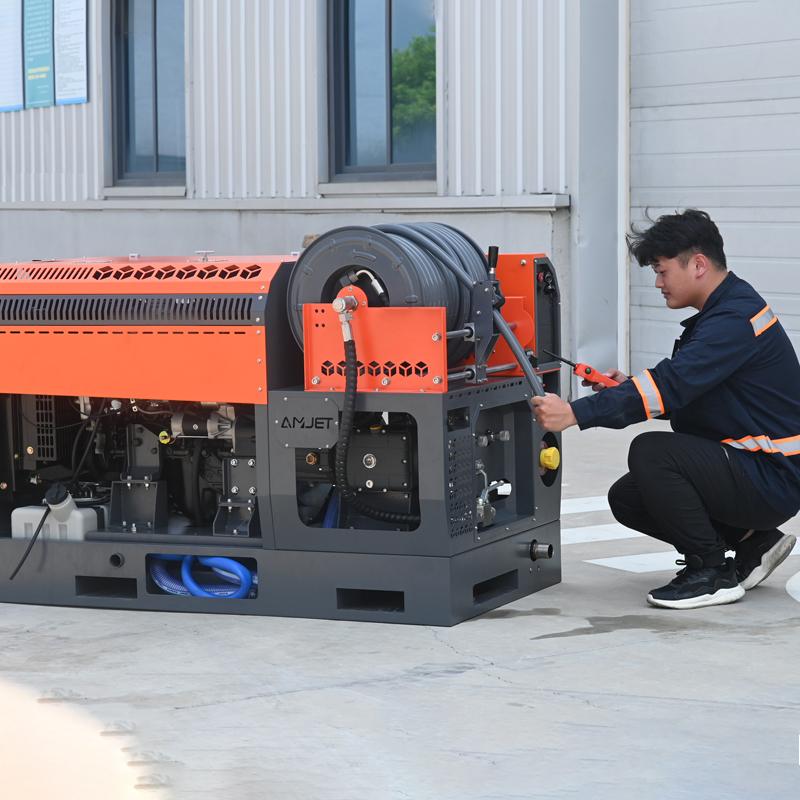
Most budget jetting machines hide their real cost in the pump. Instead of a forged brass head and ceramic plungers, you get a cast aluminum manifold that pits after a few hundred hours on hard water. The pressure gauge might read 4,000 psi on day one, but the unloader valve starts bleeding pressure once the seals heat up. That's the corner nobody sees until the nozzle stalls mid-line.
Frames and hose reels are another giveaway. A cheap unit will have a powder-coated steel reel that bends when you pull 100 feet of hose sideways. Swivel joints leak because they use a single O-ring instead of a stacked seal. And the hose itself is often thermoplastic rated just above the machine's max pressure, with no safety factor. Burst ratings on paper don't survive a kink behind a toilet flange.
Safety shut-offs and thermal relief valves get stripped first. The pistol-grip trigger might lack a locking sleeve, so a dropped wand becomes a live snake. Engine mounts are thin plates that crack at the welds after a season of bouncing in a truck bed. You can replace individual parts, but by then you've spent the difference on downtime and fittings that should have been brass from the start.
Matching a Sewer Jetter to the Jobs You Actually Bid On
Many contractors make the mistake of focusing on maximum pressure and flow when buying a jetter, rather than the jobs they actually bid on. If you primarily handle residential lines, diameters of 2 to 4 inches, and runs under 100 feet, a smaller trailer-mounted unit will likely cover you. It’s tempting to buy a machine that puts out 4000 PSI and 18 GPM, but if your daily work only needs half that power, you’re wasting fuel and maintenance money.
On the flip side, if you regularly bid on municipal or commercial projects involving 6 to 12 inch mains, long distances, and heavy grease or root blockages, you need a jetter with higher flow and enough pressure to push the nozzle through. Flow rate (GPM) often matters more than pressure because the water has to carry debris back. A unit with 3000 PSI but 8 GPM might outperform a 4000 PSI machine at 4 GPM, depending on the situation.
Also consider the types of blockages common in your area. Sand, silt, and roots call for different nozzles and jetting angles. If you work in root-heavy regions, you may need a machine with a rotating or vibrating nozzle that cuts rather than just pushes. The best approach is to look at your bids from the past year, tally the most frequent pipe sizes, lengths, and blockage types, then pick a jetter that performs well within those parameters while still leaving some headroom.
Questions That Make a Sales Rep Stop and Think
A question like "What does your current process actually cost you when it fails?" can stop a sales rep mid-sentence. Not because it's clever, but because it shifts the conversation from features to consequences. The best reps learn to sit with that silence instead of filling it. They realize a pause often means the prospect is running the numbers in their head, not losing interest.
Another kind of question that does this is one that exposes a mismatch between what a buyer says they need and what they've already ignored. "You mentioned retention is a priority, but your team hasn't changed onboarding in three years—what's holding that back?" That kind of question feels risky. It can rub people the wrong way if delivered poorly. But when it comes from genuine curiosity, it makes a rep stop selling and start diagnosing.
These questions aren't scripted. They come from listening hard enough to notice the gap between a company's stated goals and its daily habits. A rep who asks them stops treating the conversation as a pitch and starts treating it as a mirror. That's when the prospect leans in, and the sales rep realizes the most persuasive thing they can do is ask something that hasn't been asked before.
Getting Clear Answers on Delivery Timelines and Spare Parts
Nothing stalls a project quite like the vague “it’s on its way” without a date attached. When you ask about delivery timelines, push past the polite ambiguity — request the exact dispatch date, the carrier’s tracking window, and the latest confirmed arrival slot. Reliable suppliers will volunteer this without flinching; those who dodge the question are often hiding stock gaps or logistical snags that will surface later at your expense.
The same directness applies to spare parts availability. Ask whether the quoted part is sitting in a local warehouse or must be flown in from overseas, because that distinction determines whether your downtime is measured in hours or weeks. A supplier worth keeping on speed dial will tell you the part number, the remaining shelf count, and the realistic replenishment cycle before you ever have to ask twice.
And if the answer still sounds soft, make it concrete: have them email you the delivery commitment with a named contact and a fallback option. Clarity here isn’t rudeness — it’s the difference between a vendor who guesses and one who actually runs the floor.
After the Sale, Spare Parts, Support, and the Details Most Buyers Miss
A machine that runs flawlessly for the first month tells you almost nothing about the next five years. The real test starts when a proprietary sensor fails, a firmware update breaks a workflow, or the only authorized tech lives three states away. Smart buyers ask for the spare parts price list before signing, not after. They check whether common wear items like seals, filters, and drive belts are stocked locally or have to be air-freighted from a warehouse overseas. If the vendor cannot show you an exploded parts diagram with real lead times and prices, assume you'll be the one holding the downtime cost.
Support quality is equally easy to misread. A responsive sales engineer is not the same as a competent service desk at 2 a.m. Ask for a sample of actual support tickets, not just the nine-minute average response claim. Find out who answers the phone on a holiday, whether remote diagnostics are included, and what the escalation path looks like after three failed fixes. Many buyers forget that software maintenance may be a separate annual line item, and skipping it can quietly void access to critical calibration tools or security patches.
The details most buyers miss tend to cluster around interfaces and consumables. Power cords with non-standard connectors, proprietary communication protocols, or a USB port glued shut by warranty tape can turn a simple repair into a costly service call. Check the manual for torque specs, backup battery part numbers, and whether firmware downgrades are allowed. If the only person who understands the machine leaves the distributor, you should still have clear, written documentation and the right to buy parts from third parties. Otherwise, the purchase price was never the full price.
FAQ
Start with their actual manufacturing background and whether they focus on high-pressure drain cleaning equipment. A live factory video call or a walk-through video showing real production lines tells you much more than polished marketing photos.
Look closely at the core components: the pump brand, engine or motor, hose reel frame, and overall weld quality. Ask for close-up photos of the fittings, hose connections, and base frame. Suppliers who willingly share these details usually have nothing to hide.
Yes, if you pick a supplier with a proper export parts program. Ask them to list the most commonly replaced parts, confirm delivery times to your country, and send a technical question before ordering to see how quickly and clearly they respond.
It can be, especially if you only compare prices. Lower the risk by checking their export license, asking for customer references in your region, and testing the waters with a smaller trial order before committing to a larger purchase.
Pay attention to flow rate and pressure together, not just one number. For typical commercial or municipal drain lines, a combination around 4,000 PSI with 4 to 5 GPM usually performs well. Also check the hose length and whether the nozzle kit fits your common pipe sizes.
Request a detailed breakdown from each supplier: pump model, engine brand, hose reel type, included nozzles, warranty coverage, and shipping terms. Two machines with the same pressure rating can differ a lot in real-world reliability and long-term cost.
A solid supplier typically offers at least 12 months of coverage on the pump and engine, plus practical troubleshooting help. They should provide video support, send replacement parts within a reasonable window, and stay reachable after you have paid.
Most established Chinese manufacturers can customize for you: trailer or skid mount, diesel or electric power, different pump brands, extra hose storage, or special nozzle sets. Explain your typical job site conditions and let them suggest a practical configuration.
Conclusion
Choosing a sewer jetting machine supplier in China means digging past the glossy brochures. A factory audit report only matters if you read between the lines—look for signs like outdated calibration stickers, inconsistent weld quality, or test bays that are suspiciously quiet. Cheap machines tend to hide their compromises in the pump seals, hose fittings, and engine mounts, which fail exactly when you are on a job site. Instead of chasing the highest pressure or flow numbers, match the jetter to the pipe diameters and blockage types you actually encounter. Ask the sales rep questions that demand specifics: which bearing brand sits inside the pump, how the motor windings are insulated, and what happens when a nozzle gets stuck.
Delivery timelines need hard answers, not vague promises. Get the sales rep to commit to a production schedule for both standard and custom units, and ask where spare parts are stocked—China only, or in a regional warehouse. After the sale, support details separate serious suppliers from one-time sellers. Check whether the operation manual is written for real technicians, if repair videos exist, and how fast common wear parts like nozzles, hoses, and O-rings can reach you. A supplier who hesitates on these points is telling you something. Ask for a reference customer who runs similar jobs and call them. The goal is not the cheapest machine, but one that keeps working when your crew depends on it.
Contact Us
Contact Person: Mike
Email: [email protected]
Tel/WhatsApp: +86 19545555505
Website: https://www.amjeting.com/