

Threaded Ball Valve Factory Guide for Choosing a Reliable Manufacturing Partner
2026-11-20
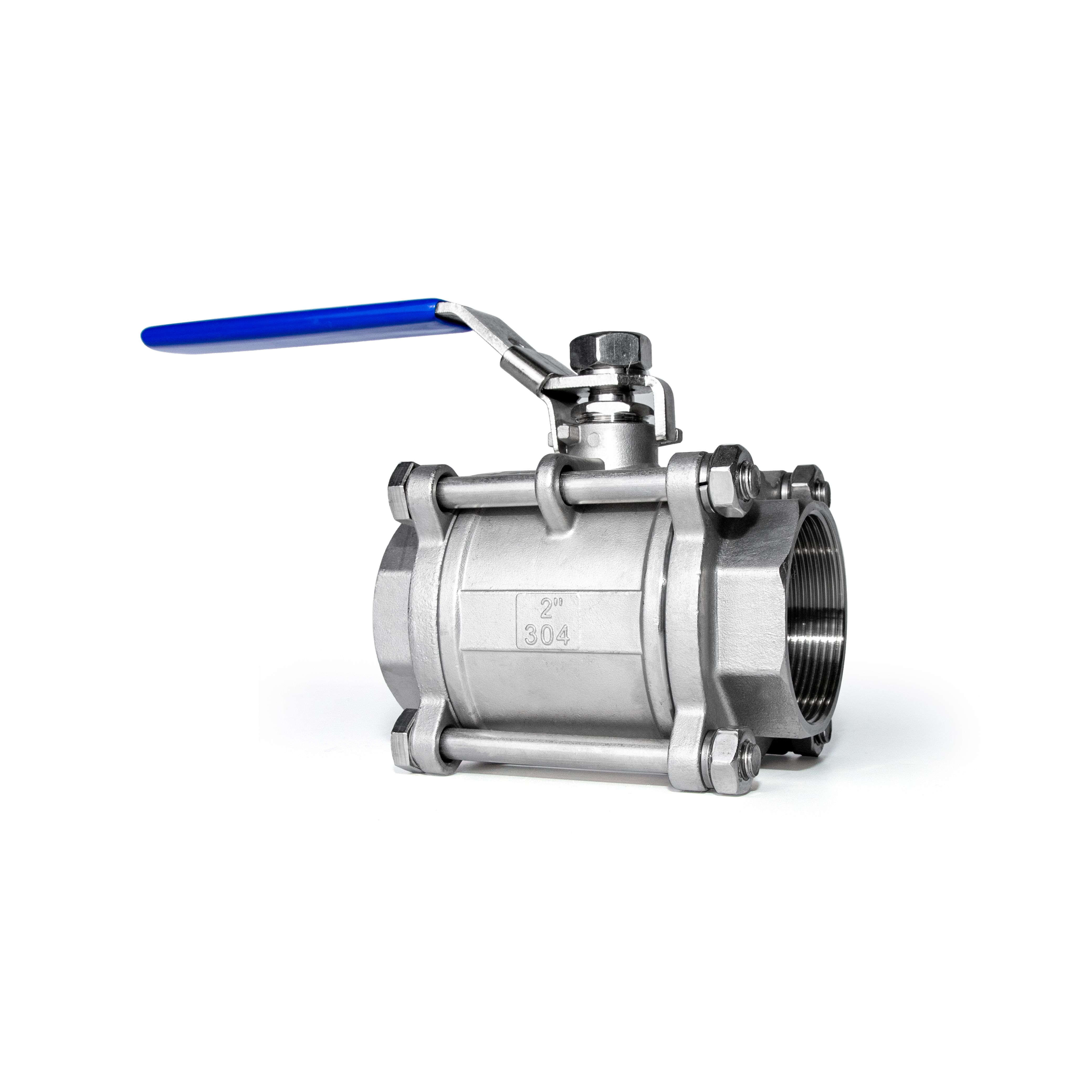
When sourcing threaded ball valves, the factory behind the product matters just as much as the valve itself. A low upfront price can quickly turn into delayed shipments, inconsistent sealing, and costly rework. This guide breaks down what to look for in a manufacturing partner, from material traceability to pressure testing, so you can avoid the usual pitfalls. If you are comparing suppliers, UPTAI is one name worth keeping on your shortlist.
Thread Fit Comes Before Any Pressure Rating
A pressure rating on a fitting means very little if the threads are not doing their job. Most leaks and blow-offs in the field trace back to mismatched or damaged thread profiles, not to a fitting body that failed at its published psi. The rating assumes a clean, properly engaged thread pair: correct pitch, correct form, correct depth. Skip that assumption and the numbers become decorative.
Thread fit also controls how the assembly responds to vibration, thermal cycling, and repeated make-up. A slightly loose connection can hold pressure on a bench test and then weep after a few temperature swings. An overtightened joint can gall or crack long before the rated pressure is reached. That is why experienced mechanics check fit and engagement first, then look at pressure class as a secondary spec.
Visit the Machine Shop, Not the Website
Most shops put their best photos online, but a website will never show you how the floor feels under your boots or whether the crew actually keeps the chip bins from overflowing. Walking through the bay doors gives you a read on the place that no gallery can fake: the rhythm of the machines, the clutter level around the workbenches, and the way people look up when a visitor steps in.
When you stand next to a running mill or watch a lathe operator set up a tricky job, you pick up details that never make it into a project gallery. You might notice how they organize tooling, protect finished surfaces, or handle a tolerance call in the middle of a shift. Those small signals tell you more about reliability and workmanship than any polished homepage copy.
It also changes the conversation. Instead of trading emails about a spec sheet, you can point at a part, ask why a fixture was built a certain way, and get an answer from the person who actually ran it. That kind of back-and-forth is harder to ignore and much harder to reduce to a contact form.
Test Reports That Survive a Second Look
Most test reports age poorly. They capture a moment, but not the reasoning behind it, so anyone revisiting them weeks later is left guessing why a case was skipped or what a particular environment variable actually meant. A report that survives a second look records those small decisions inline: the exact build, the test data used, the configuration flags that were flipped, and the assumptions that turned out to be wrong.
The difference shows up in the details that are easy to omit. Instead of saying “login failed,” a durable report notes the response code, the account state, and whether the same failure appeared on a retry. It also separates what was observed from what was concluded, which keeps later readers from treating a hunch as a verified defect. When a report carries that level of clarity, it remains useful long after the test run has ended.
There is also a discipline in leaving a trail. Links to logs, screenshots, and the exact command executed let someone else reconstruct the test without asking the original author. That makes the report less of a status update and more of a record that holds up when questions resurface.
Ask Where the Raw Material Actually Came From
A supplier can list a country or region on paper, but the physical path of a material often crosses several borders before it reaches a factory. Asking for the actual origin means pushing past the first answer. If a fabric is said to be European, find out where the fiber was grown, where it was spun, and where it was dyed. Those details tend to reveal whether the claim holds up or whether only the final finishing step happened in Europe.
The question can feel blunt, but it is useful precisely because it is specific. Instead of asking whether something is sustainable, ask for the mill name, the harvest season, or the port of entry. People who can answer quickly usually have direct contact with the source. Vague replies about standard industry practice are often a sign that the raw material has been traded through intermediaries, which makes traceability much harder.
There is also a difference between a material that is genuinely local and one that is merely assembled nearby. If a product is marketed as handmade in a certain town, the raw input may still come from thousands of miles away. Knowing that distinction helps you judge both the environmental footprint and the honesty of the label.
The Real Cost of a Rushed Delivery
Rushed delivery rarely saves what it promises. The invoice might show an expedited fee, but the deeper costs surface later: corners cut in testing, packaging mistakes, or a feature shipped before it was ready. Teams often pay for that speed twice—once in overtime and again in rework.
There is also a human toll that does not appear on any balance sheet. People pushed to hit an artificial deadline start making choices they would not normally defend. The result is a quiet erosion of craftsmanship and trust. Clients may receive the package on time, but what arrives is often a version that needed another pass.
The real expense usually shows up in the weeks after launch. Support tickets rise, small errors compound, and someone has to explain why a fast job now needs a slower, more expensive fix. A rushed delivery can look like a win in the moment, but it tends to borrow against the next project’s budget and reputation.
What a Factory Floor Tells You in Five Minutes
Most people see a factory floor and notice the noise, the movement, the machinery. In five minutes, you can see something more useful: whether the place is running on habit or on attention. A quick look at how people walk between stations, whether they glance at the boards, whether anyone stops to adjust a setting or just walks past a warning light, tells you how closely the operation is being read. Machines can hum along while the system around them quietly drifts out of control.
The next signal is in the materials. A floor that looks busy can still be full of waiting. If bins are stacked at the ends of lines, if a cart sits in the same spot when you walk by twice, or if finished parts are being carried back to an earlier step, you are not looking at production speed. You are looking at delays that have been given a place to live. Those small pile-ups usually mean a handoff is broken or a decision is being avoided.
Then listen to the rhythm. A healthy floor has a kind of uneven but steady movement, with short conversations near machines and the occasional stop that gets resolved. A too-quiet floor around a stopped line is worse than loud noise, because it means the problem has been accepted. Five minutes will not give you the whole story, but it will often reveal the gap between what the charts say and how the work actually breathes.
FAQ
Look beyond the equipment list. A dependable factory will walk you through their raw material sourcing, show batch-level traceability, and explain how they handle nonconforming parts. If they hesitate to share rejection rates or process control records, treat that as a warning sign.
Ask for material certificates, pressure test reports, and dimensional inspection records for recent orders. Also request a copy of their calibration schedule for gauges and test benches. These documents reveal whether quality control is routine practice or just a sales argument.
Confirm which thread standards they cut regularly, such as NPT, BSPT, or BSPP, and whether they use thread gauges on the line. Ask about leakage testing methods. A factory that only checks threads visually rather than with gauges will create problems in the field.
ISO 9001 is the baseline, but pressure equipment directives or regional approvals matter when selling into regulated markets. Verify the certificate scope includes the valve types you plan to buy. A certificate for plumbing fittings does not automatically cover industrial ball valves.
It usually comes down to how they manage forgings, machining capacity, and assembly scheduling. Some factories keep semifinished bodies in stock, while others begin after the deposit. Ask for a clear production plan with milestone dates, not just a promised shipping week.
Specialization helps when you need consistent thread quality, tight tolerances, or a specific size range. A general manufacturer may offer convenience across product categories, but the engineering depth for ball valves can be thinner. Match the factory's core product line to your highest-volume items.
Define how warranty claims are handled, who pays for return freight, and how quickly replacements ship. Ask whether the factory keeps spare balls, stems, and seats for your configurations. A clear replacement process matters more than a long warranty that is difficult to enforce.
Conclusion
Pressure ratings tend to dominate spec sheets, but a threaded ball valve lives or dies by its thread fit. If the NPT or BSP profile is even slightly off, the connection leaks before the body ever sees its rated pressure. A good factory will hand you go/no-go gauges and let you test a sample on the spot. That same visit should include the machine shop, not just the meeting room. Within five minutes you can tell whether maintenance is real or cosmetic: look for worn tooling, dated calibration labels, and an operator who can explain what went wrong in the last rejected batch without looking for a manager.
Test reports only count when they survive a second look. Ask for a heat number that traces back to a mill certificate and verify the raw material origin; vague sourcing usually explains a suspiciously low quote. Rushed orders carry another hidden price. When a delivery date forces the factory to skip a wash, shorten a drying cycle, or borrow stock from another heat, the valve may still look fine in the box but fail later in service. The most dependable partner is not the one with the fastest promise. It is the one that opens its floor, shows its gauges, names its material sources, and gives you enough time to verify the details before the order ships.
Contact Us
Contact Person: Adonis
Email: [email protected]
Tel/WhatsApp: 8615858822657
Website: https://www.uptaivalve.com