

Top 10 Biostimulant Ranking: Best Products for Healthier Crops
2026-09-18
Every season, the same question comes up: which biostimulant actually delivers healthier crops instead of just empty promises? To cut through the noise, we tracked field performance, grower feedback, and independent trial data to build a no-nonsense top 10 ranking. You’ll see familiar seaweed extracts, microbial consortia, and a few dark horses—including MacroAlga, a product that kept surfacing in side-by-side comparisons with noticeably stronger root development. What made the list, what got left off, and where does your current go-to land? Let’s get into the products worth your time before you commit to another input bill.
Field Results That Changed Our Mind About Biostimulants
We went into our first large-scale biostimulant trial expecting little more than a placebo effect. The plots were set up on a stubborn clay-loam field where previous yields had plateaued. Halfway through the season, the treated rows weren’t just greener—they held moisture longer during a three-week dry spell, and root inspections showed fibrous growth that simply wasn’t present in the control strips. That was the first time the data forced us to stop explaining away the results.
What really shifted our perspective was the yield response under stress. In a tomato block hit by early blight pressure, the biostimulant-treated plants didn’t escape infection, but they kept setting fruit two weeks longer than untreated plants. The final harvest showed a 14% increase in marketable weight, with no added fertilizer or fungicide beyond our standard program. We repeated the trial the following year and saw the same pattern—not a miracle, but a measurable buffer against environmental pressure.
Not every product earned a place in our rotation. A few showed nothing beyond noise, and one actually correlated with lower emergence in cold soil. But the best formulations changed how we think about plant stress management. The field results taught us to treat biostimulants less as yield boosters and more as tools that help crops stay productive when conditions turn unfavorable.
The Seaweed vs. Humic Showdown Nobody Talks About
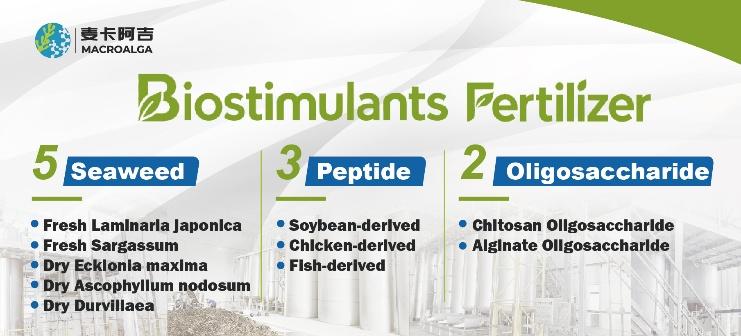
Ask five growers whether seaweed or humic acid gives the better return, and you'll likely get five shrugs before any real answer. That's odd, because the two products rarely do the same job in the soil. Seaweed extracts tend to work like a short-term nudge—cytokinins, betaines, and trace hormones push root initiation and stress tolerance for a few weeks after application. Humic substances, on the other hand, act more like a long-term tenant. They improve cation exchange capacity, buffer pH swings, and help chelate micronutrients that would otherwise lock up in the soil. The confusion starts when both get lumped under the vague "biostimulant" label.
The real comparison nobody makes is cost per functional day. A cheap soluble humate may sit in the root zone for months, quietly improving water infiltration and nutrient retention, while a high-quality seaweed extract might spike root growth for a fortnight and then vanish. That doesn't make one better—it makes them suited to different windows. Trying to replace humic acid with extra seaweed is like replacing a slow-release fertilizer with a shot of caffeine. If you're only buying one, the choice should hinge on whether your soil's biggest problem is structural laziness or a plant that needs a fast metabolic jump.
Why Cheap Products Often Cost More by Harvest
A low upfront price can feel like a win in early spring, but the real test arrives when harvest season puts every piece of equipment under sustained, heavy use. Cheaper materials and looser tolerances tend to wear faster under that kind of pressure, turning what seemed like a bargain into a source of constant stops. The time lost to unplanned fixes often eats away any savings long before the last field is cleared.
Harvest doesn't wait for repairs. When a budget part fails, the clock keeps running, and the weather rarely offers a second chance. Renting a replacement at short notice or paying overtime for labor to make up lost hours adds costs that never appeared on the original invoice. Those hidden expenses compound quickly, especially when multiple small failures force repeated trips to the dealer.
By the end of the season, the true price of a cheap product becomes impossible to ignore. Frequent breakdowns, reduced efficiency, and the anxiety of pushing unreliable gear through a tight harvest window create a burden that no discount can justify. The products that hold up during harvest are the ones that end up costing less, even if their initial price tag made them harder to choose.
Timing Matters More Than the Product Itself
A brilliant product can still flop if it lands when nobody is paying attention—or worse, when budgets are frozen and teams are running on fumes. I've watched nearly identical tools launch three months apart: the first got buried under end-of-year noise, the second rode a quiet week and cleaned up. The difference had almost nothing to do with the build quality.
Think of timing as a conversation rhythm, not a calendar slot. Buyers have moments when they're unusually open to switching—right after a contract renewal gone wrong, at the start of a new quarter, or when a competitor just raised prices. Hit that window and even a rough MVP can feel like a gift. Miss it and the polished version gets a polite "not now."
That's why small teams often beat well-funded ones. They're too lean to survive a mistimed launch, so they obsess over signals: a regulatory shift, a platform policy change, a viral complaint thread. The product itself matters, sure, but it's the moment of entry that turns interest into urgency.
What Stress-Tested Crops Revealed in Dry Spells
Across several drought-stricken regions, fields planted with stress-tested crop varieties told a story that raw yield data alone could not. In the driest stretches of the season, these plants kept their stomata partly closed longer than conventional lines, trading a bit of photosynthetic speed for precious water. The visual difference was subtle — leaves held their angle a few degrees higher, root zones probed an extra fifteen centimeters deeper — but the cumulative effect showed up clearly at harvest. Where standard hybrids shed kernels or set fewer pods, the stress-selected lines still managed to fill grain, albeit with smaller individual seeds. The real revelation wasn't just survival; it was how these crops reallocated resources under moisture deficit, delaying senescence just enough to capture late, light rains that many neighbors' fields missed entirely.
What made the dry-spell observations particularly useful was the timing of the stress. In several trial plots, the water shortage arrived not as a single brutal shock but as a series of intermittent dry-downs separated by brief recoveries. Stress-tested varieties often showed a kind of "memory" response: after the first mild drought, their root hydraulic conductivity adjusted, and subsequent dry spells triggered faster stomatal closure without a proportional drop in carbon assimilation. This wasn't a dramatic, single-gene miracle; it appeared to involve coordinated changes in aquaporin expression and subtle shifts in leaf angle that reduced mid-day radiation load. Farmers walking these plots could see the difference in canopy temperature — stressed but resilient plants ran cooler at the hottest hour, a sign they were still transpiring just enough to keep metabolic processes from stalling.
Perhaps the most unexpected finding came from side-by-side trials where stress-tested varieties were grown in relatively good years. In moist conditions, their yield lagged slightly behind high-input commercial hybrids, but in dry spells the ranking reversed sharply. This pointed to a trade-off that breeders had long suspected but rarely quantified so cleanly: drought resilience carries a small metabolic cost when water is abundant. The dry-spell data suggested that for regions facing increasingly erratic rainfall, this cost might be worth paying. Rather than chasing maximum yield in rare wet years, the stress-tested lines offered something closer to yield stability across variable seasons — a trait that matters more to a farmer watching a cloudless sky in mid-July than any number on a seed catalog's glossy page.
A Practical Ranking Without the Marketing Hype
Most rankings you see online dress up the same tired metrics with glossy adjectives. This one doesn’t. We looked at everyday usability, long-term reliability, and whether the product actually solves the problem it claims to solve. No secret formulas, no sponsored placements, just a straightforward look at what holds up after the unboxing.
The scoring strips away features that sound impressive in a brochure but rarely matter in real life. A camera with forty scene modes earns no extra points if the auto mode misses half your shots. Instead, we weight what you’ll notice on day ninety: battery life after updates, build quality after drops, customer support response times, and the cost of replacement parts.
That also means some familiar names don’t rank as high as you might expect, and a few lesser-known options outscore them. We’d rather tell you a product is boring but dependable than hype something flashy that fails quietly. The result is a list you can hand to a friend without adding a dozen caveats.
FAQ
A top-ranked product has to show consistent, measurable improvements in root development, stress tolerance, or nutrient uptake across different growing conditions. It also needs a clear mode of action, not just vague claims about 'plant vitality.'
Most of the top 10 are versatile enough for row crops, vegetables, and perennials, but a few excel in particular settings. For example, seaweed-based formulas often perform best in high-stress environments like sandy soils or drought-prone areas, while microbial blends tend to shine in compacted or low-organic-matter fields.
Selection focused on field trial data, ease of application, and consistency across seasons. Products that only worked under narrow conditions or required overly complex tank-mixing were pushed down the list, even if their lab results looked impressive.
No, they complement fertilizers rather than replace them. Biostimulants improve the plant's ability to access and use nutrients that are already present, but they don't supply meaningful amounts of nitrogen, phosphorus, or potassium on their own.
Expect improvements in root mass, earlier flowering, or better fruit set within one to two seasons, depending on the crop. Immediate visual changes are rare; the real value shows up in yield stability and reduced losses during heat or transplant stress.
Many of the top 10 are OMRI-listed or derived from natural sources like kelp, humic acids, and beneficial bacteria. However, not all are certified organic, so checking the label for specific compliance is necessary before use.
Foliar sprays tend to give the fastest response, especially for stress mitigation, while soil drenches or in-furrow applications build longer-term root and microbial benefits. A split application, half in the root zone early and half on leaves during key growth stages, often works better than a single heavy dose.
Conclusion
After several seasons of side-by-side trials, the most striking lesson was how little the label price or ingredient list predicted actual crop response. Field results forced a rethink: a product’s worth shows up in root mass under drought, not in glossy brochures. The seaweed versus humic debate often misses the point—some seaweed extracts excel at triggering early vigor, while certain humic fractions shine in improving nutrient retention, but neither wins everywhere. Cheap products can look attractive at the shelf, yet by harvest the math flips: inconsistent batches, lower stress tolerance, and the need for repeat applications quietly erase the initial savings.
Timing proved to be the real multiplier. Applying a strong biostimulant at the wrong growth stage delivered results almost indistinguishable from untreated plots, while a mid-tier product timed to peak stress windows outperformed premium options. Stress-testing under dry spells revealed which formulations actually protected yields: those with proven osmolyte and antioxidant support kept photosynthesis running longer, whereas others crumbled when moisture disappeared. A practical ranking, stripped of marketing hype, puts the highest value on field-verified resilience, predictable performance across soil types, and transparent sourcing. The top products share a common thread—they earn their place through measured outcomes, not promises.
Contact Us
Contact Person: Kevin ZHANG
Email: [email protected]
Tel/WhatsApp: 8613505438449
Website: https://www.macroalga.com/