

Top 10 PVC Pipe Production Lines for Reliable Manufacturing
2026-11-22
Choosing the right PVC pipe production line often comes down to details that don't show up on a basic spec sheet: repeatable output, stable extrusion, and support when something drifts out of tolerance. This list of ten reliable manufacturing setups is built for operators who care less about flashy claims and more about day-to-day performance. Along the way, we also reference equipment and sourcing insights from COMRISE, a name worth knowing if you are comparing proven systems rather than gambling on unverified shortcuts.
Signs a PVC Pipe Line Can Hold Tolerance Over Time
Most PVC pressure lines that stay within tolerance show a few quiet, physical clues. The pipe sits squarely in its hangers without being pulled to one side, and the gap between supports doesn't develop a visible belly over the course of a full season. At joints and transitions, the fittings remain aligned rather than carrying a slight kink or twist, which usually means the assembly was not forced during installation and the material isn't fighting its own locked-in stress.
Another sign is stability during routine thermal swings. A line that holds dimension will expand and contract without leaving fresh rub marks, cracking at brackets, or letting threaded connections loosen. Pressure tests also tend to repeat with only minor needle movement, and the outside diameter stays round rather than flattening where the pipe crosses rigid supports. Small shifts in reading are less important than whether the line returns to the same behavior after temperature and load cycles.
Long-term tolerance in PVC often comes down to whether the material was allowed to behave predictably. Low-creep compounds, properly sized expansion loops, and supports that don't lock the pipe down all help. When those details are right, the line doesn't announce itself through leaks or odd noises; it just keeps the same clearances, slope, and pressure response month after month.
Material Handling Choices That Keep Output Steady
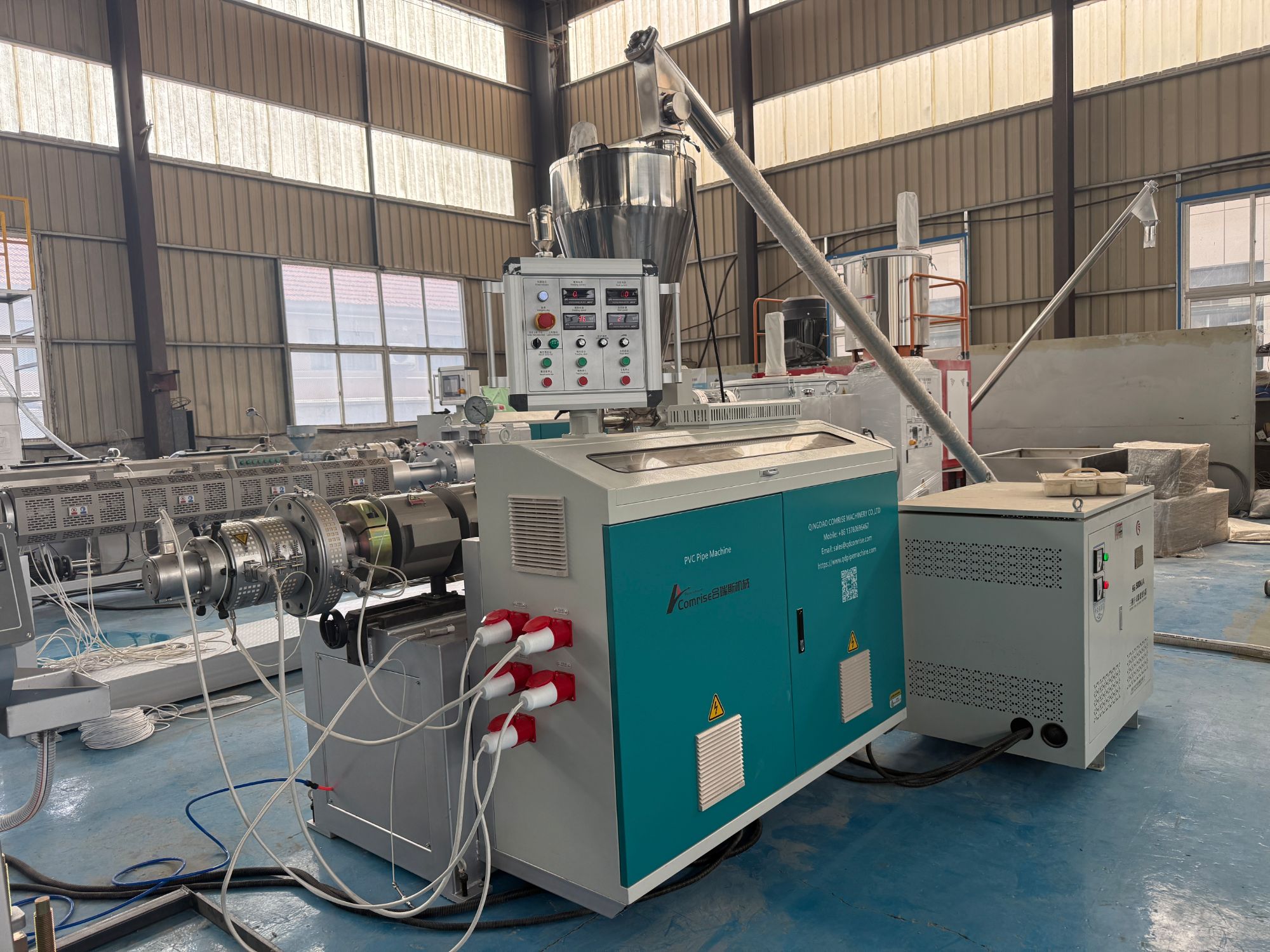
A conveyor that jams once a shift can quietly drain more throughput than a slow machine ever will. The most overlooked lever in steady output is not speed but rhythm. Replacing a fixed-speed transfer point with a modular roller section that buffers three or four units at a time smooths the pauses between upstream batches and downstream packing, letting operators work to a cadence instead of reacting to stoppages.
In one packaging hall, swapping rigid pallet staging for guided carts on an oval loop cut the average line stoppage by nearly a third. The carts themselves were nothing exotic; the difference came from decoupling the arrival rate from the consumption rate. When a labeler paused for a roll change, finished cartons accumulated in the buffer rather than forcing the filler to idle. This kind of small autonomy at transfer points tends to do more for daily output consistency than adding another high-speed machine.
Material choices matter more than layout drawings suggest. Rollers with a slightly textured surface keep wet or waxy cases from skating sideways on declines. Replacing a chute with a short belt incline eliminates the slam that loosens caps and tears film. These adjustments rarely show up in a payback calculation, but they show up every hour in fewer alarms, fewer reworks, and a steadier stream out the door.
Extruder Zones and Why Temperature Stability Matters
A single-screw extruder rarely behaves as one uniform heater. The feed throat, compression zone, metering section, and adapter all impose different thermal demands on the melt. Running the rear zone too hot can cause pellets to soften early and stick to the screw root, while a cold compression zone may leave the polymer partially unmelted before it reaches the die. Each zone has to be tuned to match the resin's viscosity curve and the screw's shear input, not just to hit a generic barrel setpoint.
Temperature swings do more than change the melt's appearance. A few degrees of drift in the metering zone shifts viscosity enough to alter backpressure, output rate, and the way the melt fills the die lips. That translates into parts with uneven wall thickness, surface blemishes, or warpage after cooling. With heat-sensitive resins, repeated overshoot near the die can cause discoloration or black specks; with semi-crystalline materials, low-temperature bands can produce haze and weak weld lines.
Stable control is less about getting one perfect reading and more about keeping the whole profile predictable. Well-placed thermocouples, reasonable heater soak times, and PID settings that don't chase every tiny fluctuation help the barrel respond smoothly to load changes. Once the zones settle into a repeatable pattern, operators spend less time adjusting temperatures and more time watching product quality. That repeatability is what makes the difference between a line that runs itself and one that needs constant correction.
Sizing and Cooling Details That Lower Scrap Rates
Getting the part to hold a stable dimension often comes down to how evenly the cavity fills and how deliberately heat leaves the mold. Wall thickness transitions that look harmless on a print can create uneven shrinkage once the material starts to freeze. A slightly thicker rib root or a boss tucked behind a thin wall holds heat longer, pulls the adjacent surface inward, and shows up later as sink or a dimension drifting out of tolerance. Matching gate placement to those thicker sections, rather than forcing the flow through a thin edge, gives the material a chance to pack before the gate freezes.
Cooling is usually treated as a cycle-time lever, but it has a direct effect on scrap. Channels placed too far from the cavity, or running the same coolant temperature across areas with very different mass, leave the mold with hot and cold zones. The part ejects looking fine, then continues to move as it cools on the bench. Bumping the channel diameter in heavy sections, adding a dedicated circuit near a deep core, or lowering coolant temperature on the stationary side can keep the part in the mold long enough to set its shape. Turbulent flow matters more than a slight drop in coolant temperature because a lazy boundary layer insulates the mold steel from the fluid.
A practical approach is to stop treating sizing and cooling as separate checkboxes. When a dimension keeps failing on one shift, the first check is usually the cooling circuit pressure and flow, not the part drawing. Small changes like balancing the loop lengths, drilling a bubbler into a stubborn core, or moving a fitting to reverse the flow direction can shift a dimension more than tweaking the cavity steel. The parts that hold tolerance are rarely the result of tighter nominal dimensions alone. They come from removing the thermal imbalance that makes every shot move in a slightly different direction.
Automation and Controls That Fit a Lean Production Floor
Automation on a lean floor earns its place only when it removes a real burden. That can be a sensor that stops a spindle before scrap piles up, a pick-to-light rack that eliminates hunting, or a torque driver that refuses to run until the right sequence is complete. The machinery rarely needs to be impressive. It needs to shorten the gap between a problem occurring and a person noticing it.
Controls should stay close to the work. Buttons, pull cords, and simple status lights often outperform layered menus because they can be read from across the cell and reset without a technician. A useful setup records cycle times and stoppage reasons automatically, but the feedback belongs at the station, not buried in a weekly report. When an andon board shows the same red light for a missing part as it does for a jam, the control is already failing the team.
Good integration also respects changeover. Lean production lines shift frequently, so wiring that takes two days to reroute or a controller that needs outside programming for every new variant quickly becomes a constraint. The better path is movable controls, guarded parameters that trained operators can adjust in minutes, and mistake-proofing that guides the correct sequence without making small improvements impossible. Automation should support standard work, not freeze it in place.
Routine Care That Keeps Pipe Lines Running Longer
Most line failures don’t start with a dramatic rupture. They begin quietly: a slight change in pressure, a fitting that weeps during temperature swings, a section of support that has shifted just enough to put stress where it was never designed to sit. Walking the route with a simple checklist sounds basic, but catching those small shifts before they become cracks is what turns a reactive repair budget into a predictable maintenance plan.
Fluid compatibility gets overlooked more often than people admit. A cleaner that works fine on stainless can eat away at seals or accelerate corrosion in galvanized runs, and by the time the damage shows up, the pipe wall has already thinned. Keeping a short log of what moves through each line, and when, helps you spot patterns that routine pressure tests alone will miss.
Seasonal checks matter as much as daily rounds. Underground sections expand and contract with ground temperature, while above-ground supports collect debris that holds moisture against the surface. Cleaning those contact points, reapplying protective coating where it has worn thin, and checking hangers after cold snaps will usually add more service life than any single major upgrade.
FAQ
It usually comes down to how well the extruder holds temperature and melt pressure over long runs. A reliable line keeps wall thickness consistent without constant operator correction, and the downstream haul-off and cutter stay synchronized as line speed changes.
Not really. Higher output can amplify small instabilities, especially if the screw design or cooling tanks are not matched to the pipe diameter. Many plants get better day-to-day reliability by running a slightly conservative output with very stable melt quality.
The screw and barrel condition, vacuum calibration tank design, haul-off traction stability, and the control system's ability to log and adjust parameters. These affect daily reliability more than brand labels or cosmetic features.
Automation helps mainly by removing human delay. Closed-loop control of temperature, melt pressure, and line speed can catch drift before it becomes scrap. But it only works well when sensors are placed where they measure the real process rather than approximate values.
A practical routine includes checking screw and barrel wear every few thousand hours, cleaning calibration sleeves and vacuum slots weekly, inspecting haul-off pads for uneven wear, and verifying cutter blade clearance before it affects pipe ends. Logging small changes helps more than waiting for visible defects.
Yes, but only if the changeover parts such as calibration sleeves, spacers, and cutting fixtures are well designed and easy to align. Lines that claim a very wide diameter range demand extra setup discipline, otherwise quick changeovers can introduce inconsistency.
Look at scrap rates, wall thickness variation, and the number of manual adjustments per shift. If operators are constantly trimming speed or temperature to keep pipe in spec, the line is not stable. Reliable manufacturing shows up as fewer interventions and predictable startup after changeovers.
Conclusion
Reliable PVC pipe manufacturing rarely hinges on one dramatic upgrade or a single performance claim. The lines that earn a place in a top ten list tend to share quieter, harder-to-copy traits: stable thermal control across every extruder zone, sizing and cooling setups that pull scrap rates down before operators notice a problem, and material handling paths that neither starve nor flood the screw. A line that holds tolerance over time usually has these details working together. Temperature drift in one barrel zone can undo the consistency that precise vacuum calibration and downstream cooling are trying to preserve, and inconsistent feeding can make even the best temperature controls look unreliable.
The stronger options also fit the way a lean production floor actually operates. Controls matter less for how many features they carry and more for how clearly they present setpoints, trends, and alarm limits. Routine care should be possible without shutting down half the plant, so accessible barrels, sensible sensor placement, and simple automation tend to keep pipe lines running longer because maintenance gets done instead of postponed. Across the top PVC pipe production lines for reliable manufacturing, the pattern is not louder output claims. It is fewer interruptions, lower scrap, and dimensions that stay inside spec after thousands of running hours.
Contact Us
Contact Person: LISA LEE
Email: [email protected]
Tel/WhatsApp: +86 13780696467
Website: https://www.qdpipemachine.com