
Top 10 Smart Street Furniture Innovations Transforming Urban Spaces
2026-10-01
Urban streets are shedding their old skin. Solar-powered benches, self-monitoring trash bins, and bus stops that adapt to weather are no longer sci-fi—they’re appearing on corners worldwide. Smart street furniture is quietly rewriting the rules of public space, blending utility with digital intelligence. Companies like zemso are at the heart of this shift, crafting pieces that feel both familiar and futuristic. Below, we break down ten innovations that are turning everyday sidewalks into living labs.
Benches That Recharge More Than Your Phone
A bench used to be a simple place to catch your breath. Now, some of them quietly top up your phone while you rest—but the real charge comes from what happens around them. These are not just slabs of wood and metal with a USB port bolted on; they are small public living rooms where a dead battery becomes an excuse to slow down, look up, and maybe trade a nod with a stranger.
The best versions hide their tech in plain sight. A sloped seat angles toward the sun, feeding a battery tucked under the frame. A thin strip along the armrest glows just enough to show where to place a phone for wireless charging. No flashing screens, no bulky kiosks. When your device is charging, the bench does something subtler—it gives you permission to sit a little longer, to finish your coffee while it is still warm, to watch the street without scrolling.
In parks, campuses, and transit stops, these benches turn a five-minute pit stop into a pause that actually restores people. The phone might go from twenty percent to sixty, but your shoulders drop, your pace changes, and the city feels less like a hallway. That is the part nobody prints on the spec sheet.
Streetlights That Dim When No One’s Around
Most streetlights burn at full brightness all night, even when the only audience is an empty sidewalk and a few moths. Adaptive lighting flips that habit: sensors pick up motion or body heat and signal the lamp to brighten only when someone actually passes. The rest of the time, the fixture settles into a low, amber-tinted standby level instead of blazing away.
That simple shift cuts a surprising amount of waste. A single corridor can drop its overnight energy use by half or more without ever going fully dark, since the lamps never switch off, they just ease back. Residents often can’t tell the difference until they notice how much quieter the street feels without that constant white glare spilling into bedroom windows.
The trick is tuning the response so the light feels helpful, not jumpy. If a sensor waits too long, a cyclist can race past before the beam catches up; if it’s too sensitive, every stray cat and swaying branch triggers a light show. Good installations use a short delay, a gentle ramp-up, and a standby level just bright enough to keep walkways legible from a distance.
Bins That Tell the City They’re Full
You can spot them in a few places already: public bins with a small sensor tucked under the lid, quietly measuring how much room is left. When the rubbish reaches a set level, the bin sends a signal to the city’s waste team. No guesswork, no fixed calendar dictating when a truck should roll by. The bin itself asks for a pickup only when it actually needs one.
The mechanics are less flashy than the outcome. A basic ultrasonic or infrared sensor checks the distance to the top of the pile, and a low-power radio sends that reading a few times a day. City crews see the data on a map, with full bins marked in red. A route can be redrawn in minutes, skipping nearly empty containers and heading straight for the ones about to spill over.
The difference shows up in quieter streets and cleaner corners. A bin near a school might fill by lunchtime and get emptied before the afternoon rush, while a residential bin sits untouched for three days without a wasted stop. Trucks burn less fuel, drivers spend fewer hours circling, and the old sight of a bin with a lid propped open by an overflowing bag becomes rarer.
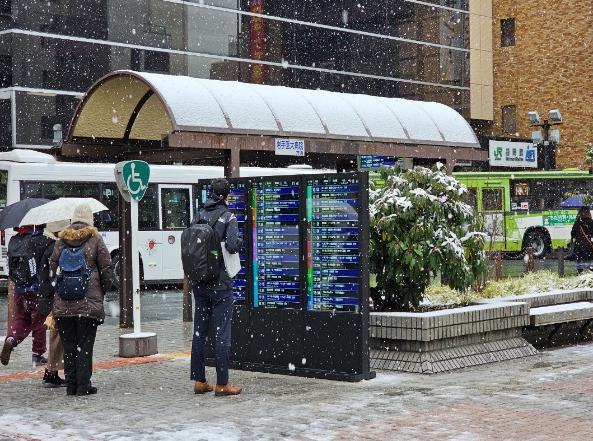
Bus Stops That Feel Like Living Rooms
In some cities, a bus stop has quietly turned into a shared front room. There is a worn loveseat bolted to the pavement, a small shelf of paperbacks with curling covers, maybe a lamp that switches on when the light fades. People waiting for the 7 a.m. bus pour tea from a thermos into mismatched cups and talk about weather, rent, or nothing much. It feels less like transit infrastructure and more like a neighbor’s porch that happened to be placed beside the road.
These stops usually start as a single gesture: an old armchair left under a shelter, or a few potted plants lining the curb. Over weeks, others add to it—a rug, a wall clock, a basket of dog treats, a framed photo of a street cat. The result is a small, lived-in space where regular riders know which cushion has the broken spring and which book is passed around most often. No official plan designed them. They grow the way a living room does, from habit and small acts of care.
What makes a bus stop feel like a living room isn't just furniture. It's the sense that someone has decided this waiting space should also be a place to sit deeply, to stay a little longer than necessary. You see it in the way a stranger can doze off on the sofa without being bothered, or how the stack of week-old magazines keeps moving but never disappears. For a few minutes between destinations, the city slows into something closer to home.
Kiosks That Speak Your Language
Imagine walking up to a self-service kiosk in a bustling airport, and instead of fumbling with a fixed set of language options, the screen greets you in the dialect you grew up speaking. That’s the quiet magic behind modern kiosks designed to adapt in real time. By tapping into lightweight language-detection and instant translation layers, these machines don’t just translate words—they mirror the rhythm and tone of local speech, making unfamiliar spaces feel a little more like home.
Beyond simple word swaps, truly responsive kiosks learn from each interaction. A traveler from Osaka might see polite, understated prompts, while a visitor from São Paulo encounters warm, direct phrasing. The interface stays intuitive: large touch targets, adjustable font sizes, and voice guidance that respects regional accents. Over time, usage patterns help the system refine its suggestions, so a frequent user might notice the kiosk remembering their preferred language and even offering shortcuts to common tasks.
This goes far beyond convenience—it’s about dignity. When a machine speaks your language without making you search for a flag icon or struggle through a third language, it signals that your presence matters. Airports, hospitals, retail hubs, and transit stations are adopting these multilingual kiosks not as a novelty, but as a basic courtesy. The result is fewer frustrated queues, clearer instructions, and a subtle but real sense of belonging that no static sign can replicate.
Green Towers That Scrub the Air
Picture a high-rise that doesn't just house people but actively cleans the skyline. These aren't your typical glass-and-steel boxes; they're wrapped in living facades, where every balcony hosts a cluster of air-filtering plants and moss panels. The outer layer works like a giant set of lungs, pulling in particulate matter, carbon dioxide, and even volatile organic compounds, then releasing oxygen-rich air back into the street canyon. On a hazy morning, the difference is tangible — the air around these towers feels a notch fresher, as if the building itself exhales.
The trick lies in the choice of greenery and how it's arranged. Certain species, like ivy, ferns, and particular grasses, are natural sponges for nitrogen oxides and fine dust. Instead of planting them randomly, architects position them along prevailing wind paths, turning each facade into a passive filtration curtain. Rainwater captured on the roof drips slowly through the root systems, keeping the plants hydrated without wasting a drop. Over time, the roots even help cool the concrete, reducing the urban heat island effect while they scrub.
What makes these towers stand out is that they don't shout about their eco-credentials. No giant signs, no glossy brochures. You simply notice it when you walk by — the air smells like after a rainstorm, the walls ripple with green instead of glare, and birds actually nest on the fifteenth floor. That quiet shift from carbon emitter to air purifier is what turns a building into a citizen of the city, not just a structure in it.
FAQ
真正智能的街道设施不只是塞进一块屏幕或 USB 口,而是能够感知环境、联网并主动响应。例如,一张长椅可以监测空气质量、自动调节遮阳角度,同时向市政平台发送人流数据。关键在于它能否减少人工干预并提升公共空间的实际使用体验。
实时公交站牌可能是影响最大的一个,因为它直接改变了等车的不确定性。好的设计会整合到站时间、车内拥挤度甚至附近共享单车的可用数量,让通勤者能当场调整路线,而不只是盯着手机。
这类长椅通常配备低功耗组件和储能电池,即使在日照较弱的地区,也能通过高转化率面板和智能电源管理维持基本功能。有些版本还支持动能回收或可更换电池组,确保在连续阴雨天也能给手机应急充电。
对于小城镇,智能垃圾桶的价值在于按需清运而不是固定班次,能省下不少燃油和人力成本。只要选择模块化设计、只保留满溢感应和压缩功能,回本周期往往比想象中短,还能避免垃圾满街的尴尬。
制造商现在普通采用防破坏外壳、隐藏式螺丝和远程锁定功能,部分设备一旦被剧烈晃动会立即向管理中心报警并上传定位。还有些城市选择把易损部件(如充电线)做成可替换模块,降低维护成本,而不是直接放弃安装。
智能路灯会基于实时人流和车流调光:无人时段保持低亮度或只开启每隔一盏,有人经过时提前渐亮。这样既省电,又避免突然全黑带来的安全隐患。有些城市还把它们作为电动车充电桩和 Wi-Fi 节点的载体。
最大的担心是持续采集人脸、手机标识或行为轨迹。负责任的项目会在设备端做匿名化处理,只上传统计数字而非原始影像,并公示数据用途与保留期限。部分城市还引入隐私影响评估,允许市民通过二维码查看该设备当前收集哪些数据。
巴塞罗那是个常被引用的例子,但更值得关注的是哥本哈根把智能长椅、智慧路灯和实时交通信息整合进同一套城市数据平台。街头设施之间能互相通信,例如垃圾桶满溢会通知附近清洁人员,而路灯则根据同一区域的传感器数据调节亮度,整体协同效果远好于单独试点。
Conclusion
Urban streets are becoming smarter in ways that feel practical rather than gimmicky. Take the humble bench—it no longer just offers a place to sit, but can top up a phone battery while you rest. Streetlights quietly adjust their brightness when foot traffic fades, saving energy without leaving anyone in the dark. Even litter bins have joined the network, sending a signal to waste crews when they're nearly full instead of being emptied on a fixed schedule. These small upgrades add up to a city that responds to real-time needs instead of guessing. They also signal a shift away from passive public furniture toward active partners in daily city management.
Some innovations blur the line between infrastructure and hospitality. A bus stop can be designed like a cozy living room, with warm lighting, comfortable seats, and real-time arrival updates. Information kiosks switch languages based on who's standing in front of them, making navigation easier for visitors and residents alike. Meanwhile, green towers fitted with air-cleaning plants and filters scrub pollutants from busy streets, turning a piece of furniture into a quiet piece of environmental engineering. Together, these ideas show that smart street furniture isn't about flashy screens or data for its own sake—it's about making public spaces more livable, responsive, and human. Rather than replacing the physical world with technology, they weave the two together in ways that often go unnoticed until you need them.
Contact Us
Contact Person: Leo
Email: [email protected]
Tel/WhatsApp: +86 18901905138
Website: https://www.zemsogroup.com/