

Top Filling and Sealing Machine Features That Improve Packaging Efficiency
2026-11-20
Packaging efficiency is rarely about one dramatic upgrade. It is the cumulative result of filling and sealing details that either keep a line moving or quietly drain its capacity. The features covered here are the ones that separate consistently high-output lines from those stuck in reactive mode—with a look at how Wanying Machinery designs them into real-world equipment.
Overpour control starts at the nozzle
Ask a line operator where overpour comes from and you'll usually hear about timer settings, air pressure, or trigger feel. Those things matter, but they are all reactions to a problem that starts earlier. The nozzle is the last physical boundary the fluid crosses, and small differences in its shape, seat, and shutoff action decide how much extra material can escape after the flow is supposed to end.
That's why repair kits and pressure adjustments often fail to fully cure the drip. A nozzle with a long land or a blunt exit edge leaves a small volume of fluid hanging exactly where it can fall or smear after the cycle. Shortening that path and sharpening the cutoff point reduces the residual that becomes an overpour. Even the seat durometer plays a part: a seal that lands without bounce prevents the tiny pressure kick that pushes out a final drop.
Downstream controls work best when the nozzle stops cleanly first. Once the fluid truly stops at the outlet, timers and sensors no longer have to compensate for a leaky endpoint. The whole recipe becomes easier to hold, and operators stop chasing a drip that was never really a timing problem.
Seal verification baked into every cycle
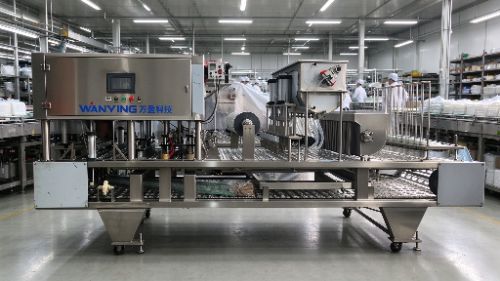
Instead of treating seal integrity as a separate checkpoint, this approach folds verification directly into the rhythm of each production cycle. The result is less downtime waiting for off-line checks and fewer chances for a faulty seal to slip through between scheduled inspections.
Every cycle now leaves behind a measurable trace. Pressure decay, temperature drift, and closure force are sampled in the same moment the seal is formed, so the machine knows whether the joint is sound before the next part even arrives. Operators see a clear pass or flag on the line display without digging through batch records.
That tight feedback loop matters most when speeds climb. Rather than catching problems after hundreds of units are already built, the system stops or reroutes at the first weak signal. It turns what used to be a periodic audit into a continuous, working habit of the line itself.
Toolbox-free container changeovers
Switching from one container size to another used to mean tracking down the right wrench, loosening several bolts, and hoping none of the small parts rolled under the machine. With a toolbox-free design, those steps disappear. Hand-tightened clamps, spring-loaded levers, and quick-release collars hold the container in place, so operators can make the swap with their hands alone and get back to production before the line even cools down.
The real benefit shows up on days when multiple short runs are scheduled. A single operator can move from a 20-liter pail to a 5-liter jug in roughly half a minute, without walking to the tool crib or waiting for a maintenance technician. Because no torque settings or alignment tricks are involved, the changeover is repeatable across shifts and less experienced staff can handle it confidently after seeing it once.
Eliminating tools also keeps the area around the filling head cleaner. There are no wrenches resting on ledges, no spare bolts in pockets, and far less chance of metal fragments ending up near the product path. For food, cosmetic, or pharmaceutical lines, that reduction in loose hardware is just as valuable as the time saved between batches.
Automated washdown between batches
Switching from one product to another used to mean pulling hoses, dragging squeegees, and hoping the crew caught every corner before the next run. The automated washdown setup changed that routine entirely. Fixed spray nozzles mounted along the conveyors, hoppers, and mixing zones activate in a timed sequence, using controlled bursts instead of a constant flood. Operators only need to confirm the line is clear and select the cleaning recipe for the upcoming product.
Because the cycle runs the same way each time, there is no guessing about whether a shadowed spot behind a baffle got rinsed. The nozzles are positioned to hit those awkward angles that manual cleaning often misses. Detergent and rinse water are metered precisely, so the system avoids both excessive chemical waste and half-hearted washdowns. After the final rinse, a short air purge helps remove standing moisture from key contact surfaces, reducing the chance of cross-contamination without waiting hours for drip-drying.
What makes this approach practical is how it fits into a tight production schedule. A full changeover sequence can run during the time it takes to swap out minor tooling or update lot codes, rather than requiring a separate extended shutdown. The controls log each washdown with start and finish timestamps, giving the quality team a clear record of what was cleaned and when. Over time, those logs also help spot patterns, such as a nozzle that may be losing pressure before it causes a failed swab test.
On-the-fly adjustments for mixed containers
Mixed containers rarely stay fixed once the real work begins. A carton gets pulled for a quality check, a pallet arrives taller than the manifest said, or a last-minute order changes the priority of what needs to ship first. On-the-fly adjustments let floor teams reshuffle slots without stopping the line, keeping the original load plan useful instead of treating it as a fixed script.
The practical side comes down to small, fast decisions. Weight limits, crush resistance, and temperature separation all matter, but so does the physical order of loading. When a container's contents shift, the adjustment might mean swapping two cartons from different zones or moving a fragile item away from the door. Real-time feedback shows whether the change still respects axle weights and unloading sequence, which is where most static plans start to break down.
What makes this work is a mix of clear constraints and human judgment. The system flags what cannot move, suggests what can, and leaves the final call to someone on the dock who can see the actual pallets. That balance keeps the process quick without turning every small change into a full replanning exercise.
Full-size output in a compact frame
There is a quiet kind of magic in fitting an entire command center into a footprint no larger than a paperback novel. The keyboard doesn't feel cramped in the way cheap ultra-portables often do. Instead, every key lands under the finger with a satisfying, deliberate stroke, and the layout breathes even when the surrounding bezels barely exist. You stop noticing the size after about ten minutes, because the machine stops apologizing for it.
That is the trick most small devices miss: they treat compactness as a sacrifice rather than a design goal. Here, the trackpad has room to glide, the hinges open wide without wobble, and the ports sit where your hands naturally reach. The result is a tool that doesn't ask you to adapt to its constraints. It simply gives you the full-size working rhythm you already know, minus the bulk you never really needed on a desk, a tray table, or a borrowed corner of a coffee shop.
What lingers after a few hours of use is not the smallness but the ease. You forget you are on a reduced footprint until you slip it into a bag that would not accept a larger laptop. And then it hits you: nothing essential was left behind. The screen, the keys, the comfort, the port selection, even the battery stamina all behave as if they belong to a machine twice the apparent volume. That is the whole point. Compact frame, full-size output.
FAQ
Servo-driven piston fillers adjust the draw and discharge stroke on the fly, so fill volume stays accurate even when viscosity shifts or hopper levels change. That precision reduces overfills and dripping between cycles, which keeps the line moving without constant operator corrections.
Spring-loaded or pneumatic sealing heads float with minor height differences and seal with even pressure across the rim. Instead of stopping to adjust for each batch, the machine compensates automatically and avoids crushed cups or weak seals at full speed.
Tool-free changeover lets operators swap filling nozzles, guide rails, and sealing dies in a few minutes rather than half a shift. Shorter changeover windows mean smaller production runs stay profitable and the equipment spends more time producing finished packs.
With automated clean-in-place cycles, rinse and sanitizing steps run through the product path without full disassembly. Crews can clean between flavors or formulations faster, and the machine returns to production sooner, which lifts daily throughput.
These sensors confirm a container is present and correctly positioned before the fill cycle starts. That stops product from coating the conveyor and triggering cleanup downtime, while also preventing half-filled or misaligned packs from reaching the sealer.
Stored recipes let a technician load the exact fill volume, seal temperature, and dwell time for each product with one selection. It removes manual dial-in guesswork, so the line reaches stable output faster after every product changeover.
A rigid stainless frame with a variable-speed conveyor and automatic spacing keeps containers indexed precisely under the fill and seal stations. Vibration stays low, jam recovery is simpler, and the machine can hold consistent throughput across longer shifts.
Pulse-sealing technology applies heat in short, controlled bursts only when the film is in contact with the sealing die. That reduces standby energy draw and heat buildup around the tooling, while still producing uniform seals at high cycle rates.
Conclusion
Packaging lines rarely fail because a single feature misses the mark; they lose time through small, repeated interruptions. That is why the most useful filling and sealing equipment treats the nozzle as the first point of waste control. Overpour is cut off at the source, so product ends up in the container rather than on the line or in a drip tray. At the same time, seal verification is not a separate sampling step but is built into every cycle, catching weak seals before they leave the machine. When a line has to switch from one container shape to another, toolbox-free changeovers remove the usual wrench-and-bracket routine, letting operators reposition guides and rails in minutes instead of stopping for a mechanical overhaul.
Between batches, automated washdown routines take over the cleaning sequence that would otherwise eat into production time. The machine handles rinse cycles, detergent application, and final flush without manual scrubbing of contact parts. For facilities running multiple container types in the same shift, on-the-fly adjustments keep the line moving because fill volumes, seal dwell, and rail positions can shift while product continues to flow. What ties these points together is the machine's footprint. It delivers full-size output without demanding a full-size floor plan, which matters in plants where every square foot has to justify itself. The result is not just a faster filler, but a packaging cell that holds its pace across changeovers, washdowns, and mixed runs.
Contact Us
Contact Person: Tyson
Email: [email protected]
Tel/WhatsApp: +8613396971296
Website: https://www.wanyingmachinery.com