

Wholesale 4G Core Network Essentials for Modern Telecom Growth
2026-11-16
The wholesale 4G core network is quietly becoming the growth engine for modern telecom—yet many operators are still stuck with rigid, legacy cores that throttle innovation. Whether you're enabling MVNOs, private networks, or mass IoT, the core you choose decides how fast you can move. IPLOOK has been turning that complexity into a competitive edge with cloud-native, scalable core solutions. In this post, we break down the essentials that actually matter when building or buying a wholesale core.
Why 4G Still Anchors Wholesale Carrier Economics
Wholesale carriers continue to lean heavily on 4G infrastructure because it delivers a rare blend of broad coverage and cost predictability that newer technologies have yet to match. While 5G grabs headlines with promises of ultra-low latency and massive bandwidth, the reality for most wholesale buyers is that their customers still depend on LTE for everyday connectivity. The economics are simple: 4G equipment is fully depreciated across many networks, spectrum licenses are already paid for, and the ecosystem of compatible devices is mature. That translates into lower per-gigabyte costs and fewer deployment risks compared to rolling out dense 5G small cells or standalone core networks.
Another reason 4G remains the backbone of wholesale economics is its resilience in rural and suburban markets where return on investment for 5G is weak. Wholesale operators serve a patchwork of MVNOs, IoT providers, and enterprise resellers who need reliable, ubiquitous coverage without the premium pricing of cutting-edge networks. LTE networks already cover over 99% of populated areas in many countries, making them the default choice for wholesale agreements that prioritize volume over speed. Upgrading to 5G would require massive capital outlays for new antennas, backhaul upgrades, and core network virtualization—costs that would inevitably be passed down the wholesale chain, squeezing margins for everyone involved.
Finally, the wholesale market itself is structured around long-term contracts and steady, predictable traffic patterns. 4G networks offer stable quality of service metrics that are well understood by both carriers and their wholesale clients. IoT applications, fleet tracking, point-of-sale systems, and fallback connectivity for consumer devices all operate perfectly fine on LTE, often at a fraction of the cost of 5G-based alternatives. Even as 5G coverage expands, it serves as a premium overlay rather than a replacement. For the foreseeable future, wholesale carrier economics will continue to be anchored by 4G because it delivers the right balance of scale, reliability, and cost efficiency that the market demands.
From Backhaul to Core: Rethinking Network Levers
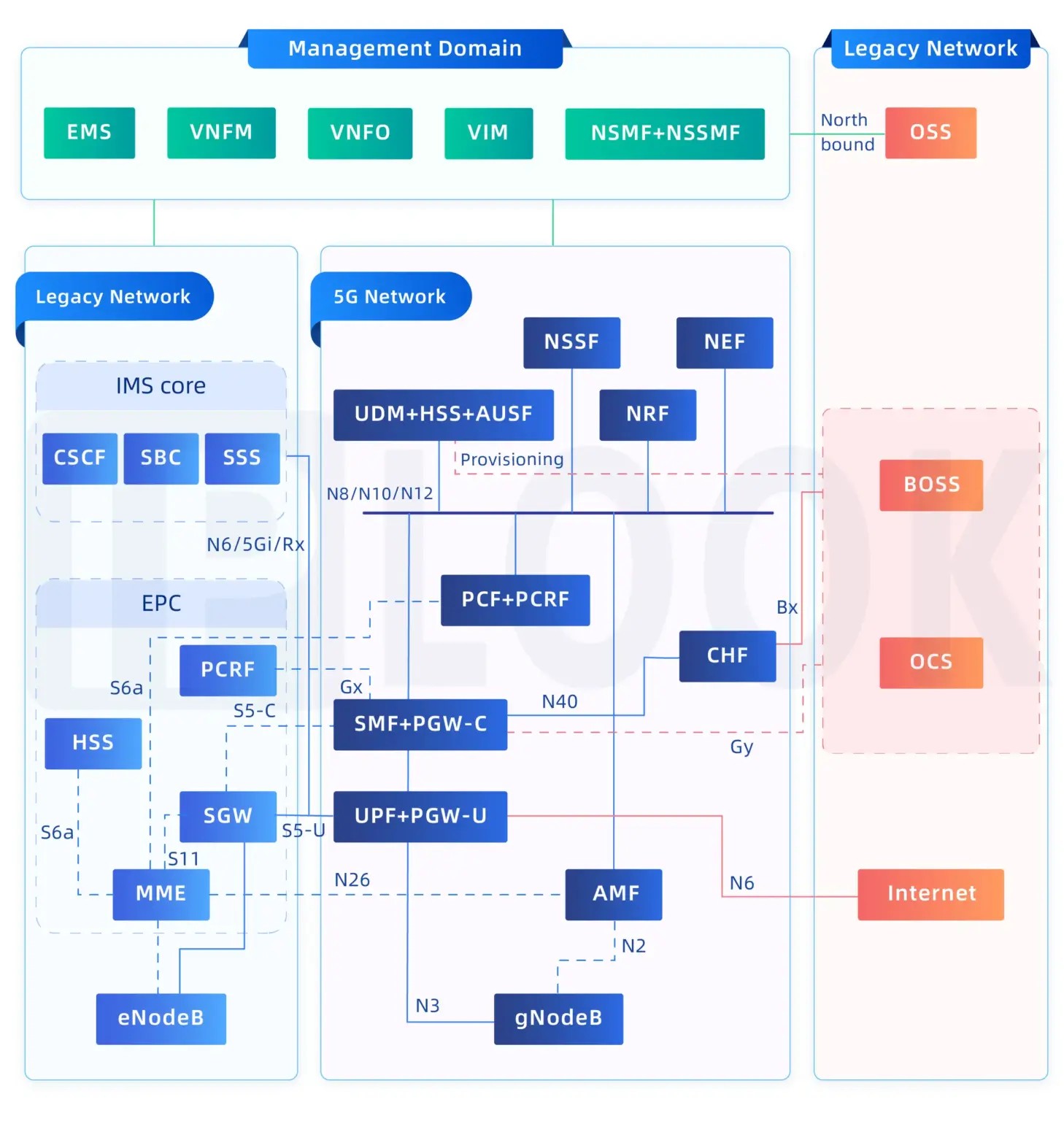
The old assumption that backhaul capacity alone dictates network performance no longer holds. Operators have spent years pouring resources into middle-mile expansion, yet user experience still suffers when the core fails to adapt. A quieter shift is underway: the control points that matter most are moving inward, where routing intelligence, policy enforcement, and session state now determine whether the entire chain feels fast or fragile.
Rethinking network levers means treating the core not as a passive aggregation layer but as an active instrument for shaping traffic behaviour. Instead of adding more backhaul bandwidth and hoping for the best, teams are beginning to tune how the core steers flows, isolates congestion, and rebalances load in real time. Those adjustments often yield more visible improvement than another fibre build-out, because they alter the way existing capacity is actually used.
This does not make backhaul irrelevant, but it reframes its role. Backhaul becomes one variable among several, not the default answer to every performance problem. The more durable advantage comes from re-architecting core functions so the network can sense pressure and respond before users notice. In that sense, the real leverage has shifted from the pipes in between to the logic at the centre.
Scaling Without the Capex Hangover
Growing a business used to mean writing big checks before seeing a single new customer. You bought servers, leased warehouse space, hired a full team—and then prayed the demand curve matched your guess. When it didn't, you were stuck with underused assets and a balance sheet that looked like a bad hangover.
The modern playbook flips that order. Instead of owning infrastructure, you rent it by the hour, the API call, or the transaction. Cloud compute, third-party logistics, fractional talent—these let you scale capacity up and down with actual usage, not a forecast. The capital you would have sunk into fixed assets stays liquid, ready for product experiments or market moves that actually drive growth.
That said, swapping capex for opex isn't a free lunch. Unit costs can creep up as volume grows, and you can wake up years later to find that renting cost more than buying would have. The discipline is to track contribution margin per unit and revisit the rent-vs-own decision at least twice a year. Scale without the hangover means staying sober about the numbers, not just avoiding the upfront expense.
Interop That Doesn't Demand an Army
The old playbook for interoperability usually involved dedicated teams, endless meetings, and a roadmap measured in quarters. Today, that's no longer the default. Modern protocols, well-documented APIs, and cloud-native tooling have made it possible for a single developer to connect systems that once required a full-time integration squad. The shift isn't about stripping away complexity—it's about embedding that complexity into reusable layers, so the burden doesn't fall on your headcount.
Consider the humble webhook. A few lines of configuration can push real-time data from one service to another without standing up middleware, hiring consultants, or signing off on a six-month project. The same goes for RESTful APIs with clear schemas or message queues that handle retries and delivery guarantees under the hood. These aren't just conveniences; they're force multipliers. A two-person startup can now orchestrate a payment gateway, a CRM, and an analytics pipeline in an afternoon—not because they have superpowers, but because the underlying ecosystem has already done the heavy lifting.
That's the real promise of interop that doesn't demand an army: it democratizes integration. You no longer need a specialized department to make your tools talk to each other. Instead, you get composable building blocks that snap together with minimal friction. For small teams and solo builders, this means more time spent on the product itself and less time fighting integration fires. And when something does break, the fix is usually a config tweak rather than a cross-org rescue mission.
Monetizing the Subscriber Surge Before 5G Steals It
The past eighteen months have handed telecom operators a rare gift: a sudden, sticky wave of new subscribers who shifted to remote work, streaming, and online gaming. Churn rates dropped, data usage spiked, and the monthly invoice became a fixed line in household budgets. But this surge won’t last in its current form. Once 5G coverage matures, aggressive price competition from virtual operators and the bundling of connectivity into broader tech ecosystems will erode the premium that carriers currently enjoy. The window to convert today’s captive audience into long-term, higher-margin relationships is shorter than most executives admit.
Smart operators are moving beyond flat data plans and looking at how subscribers actually use their connections. Instead of selling gigabytes, they’re packaging latency-sensitive experiences: cloud gaming passes, real-time translation for video calls, or prioritized bandwidth for home office suites. One overlooked lever is the family plan—not just adding lines, but attaching shared storage, security monitoring, or smart home controls that make the carrier account a hub rather than a dumb pipe. The key is to avoid discounting the core connectivity; instead, anchor its value by pairing it with services that feel indispensable before a rival can offer the same for less.
Speed matters more than perfection here. Every quarter spent perfecting a new billing system or negotiating content rights is a quarter where a competitor can undercut on price or where Apple and Google deepen their own subscription bundles. The carriers that will thrive are those that treat the next two years as a land grab for the subscriber’s digital wallet—not through aggressive upsells, but by making the monthly plan feel like a necessary piece of infrastructure with layers that quietly become habitual. Once 5G makes raw connectivity a cheap commodity, the opportunity to charge for anything beyond a basic data pipe will shrink fast.
The Quiet Resilience Buyers Actually Ask About
When buyers walk through a property, they rarely mention the word resilience. They run a hand along a window frame to feel for drafts, pause in the basement to sniff for dampness, and glance up at the roofline after a hard rain. What they are silently testing is whether the house can hold its own against time, weather, and the wear of daily life. This quiet resilience is not a spec sheet item, but it shapes almost every quiet conversation a buyer has with themselves before making an offer.
Materials tell part of the story. Fiber-cement siding that keeps its color through five winters, timber framing that has already settled into a steady rhythm, and stone foundations that have carried the same weight for a century all speak a language buyers understand without technical training. They may not know the R-value of the insulation or the tensile strength of the beams, but they notice the absence of hairline cracks, the way doors close without resistance, and the solid thud of a well-built floor. Those small observations add up to a felt sense that the home will not demand constant attention.
Resilience also lives in the less visible choices: the slight slope of a driveway that keeps water moving away from the garage, the generous eaves that shield walls from driven rain, and the native plantings that need little irrigation. Buyers often cannot name these details, yet they sense when a property has been designed to shrug off stress rather than fight it. That instinct, more than any checklist, is what turns a cautious walkthrough into a confident decision.
FAQ
It gives operators shared access to the packet core functions—like subscriber management, policy control, and data routing—without requiring each operator to deploy and maintain their own physical or virtualized core. This becomes the backbone for launching mobile services quickly, especially for those without licensed spectrum or large capital budgets.
Building a full core demands heavy upfront investment and specialized engineering talent. A wholesale arrangement lets MVNOs skip that grind, plug into an existing core, and focus their energy on branding, billing, and customer acquisition rather than running network infrastructure.
The MME, SGW, PGW, HSS, and PCRF form the non-negotiable set. Multi-tenancy support inside the HSS and PCRF matters most for wholesale because multiple operators share the same core without seeing each other's subscriber data or policies.
It compresses launch cycles dramatically. Instead of a year-long core rollout, an operator can onboard to a wholesale core in weeks, run interoperability tests, and start selling SIMs or data plans almost immediately because the heavy lifting is already done at the wholesale layer.
Common structures include per-subscriber monthly fees, tiered usage-based pricing, or revenue-sharing on data consumption. Some wholesalers charge an upfront integration fee and then a sliding scale based on active SIMs, which helps smaller operators manage cash flow while scaling.
The biggest friction points are API mismatches between the operator's BSS and the wholesaler's core, roaming agreement gaps, and unclear responsibility for troubleshooting subscriber sessions. Without a clean handoff on QoS profiles and real-time charging triggers, service degradation gets blamed on the core even when the issue sits elsewhere.
Yes, because 5G non-standalone deployments still rely on a 4G core for mobility management and fallback. Wholesale providers that evolve toward cloud-native cores and expose 5G-ready interfaces can keep serving operators through the transition without forcing a sudden rip-and-replace on the customer side.
They should probe for real-time analytics visibility, flexible policy control hooks, and a track record of handling MVNO churn without service drops. A good partner will also offer clear escalation paths for network incidents and let buyers test QoS changes in a sandbox before touching production traffic.
Conclusion
The wholesale 4G core keeps earning its place not because it is flashy, but because it turns existing spectrum and backhaul into dependable margin. Operators that treat the core as a commodity miss the levers hiding in plain sight: smarter session handling, tighter QoS mapping, and cleaner interconnects with MVNOs and roaming partners. None of that requires a rip-and-replace. It requires a core that scales in software, not in forklifts, and that speaks the older protocols without forcing an integration army onto the payroll. When capacity is sold wholesale, the buyer's real question is never just throughput. It is how the network behaves at 3 a.m. under asymmetric load, how fast a new APN can be provisioned, and whether a fault in one tenant stays in one tenant.
That operational quietness is what turns a wholesale agreement into a renewal. Subscriber growth in emerging corridors is still overwhelmingly 4G, and the money is in capturing that surge before 5G marketing budgets redirect it. The core that wins is the one that lets a wholesaler say yes to odd requests: a private APN for a utility, a low-latency slice for a logistics fleet, a temporary capacity burst for an event. It is not about building a showcase. It is about keeping the network boring in the best sense, stable enough that customers stop asking about resilience and start asking about the next region to light up.
Contact Us
Contact Person: Shimmy
Email: [email protected]
Tel/WhatsApp: 85253392231
Website: https://www.iplook.com