

How Can the Right Cable Drum Trailer Reduce Downtime and Make Cable Handling Safer?
2026-04-27
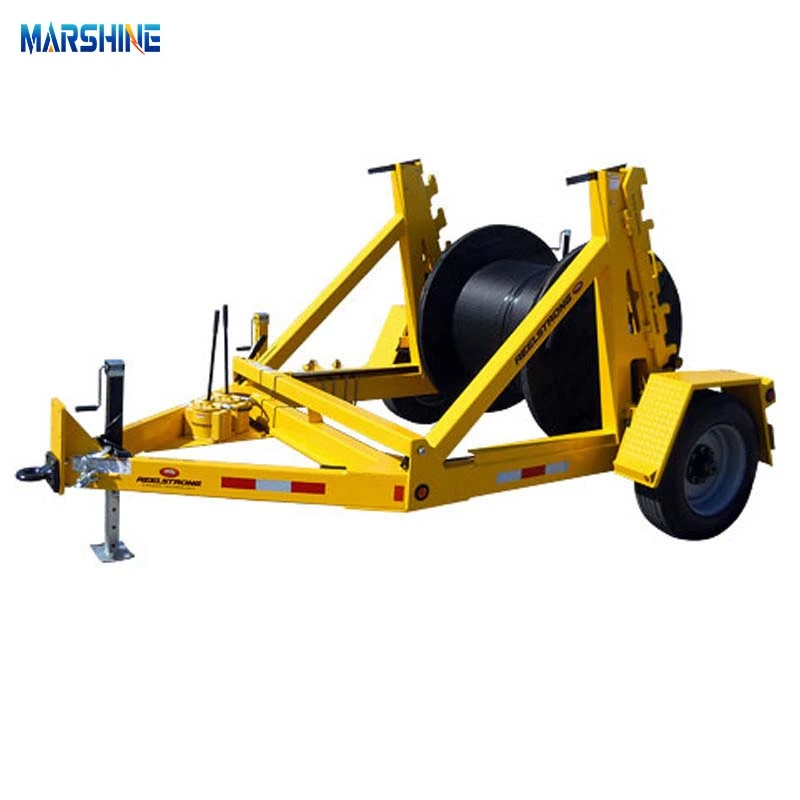
When I look at how cable installation teams actually work on site, I rarely see problems caused by cable alone. More often, delays come from poor handling, unstable transport, difficult loading, and equipment that does not match the reel size or job conditions. That is why I think it makes sense to pay close attention to the trailer itself. In conversations around field efficiency, Ningbo Marshine Power Technology Co., Ltd. often comes into the picture because practical cable handling equipment matters far more than flashy specifications. A well-designed Cable Drum Trailer does not simply move a reel from one place to another. It helps me transport heavy drums with more stability, control payout with less waste, and protect both workers and cable during installation.
In this article, I want to explain what really makes a good Cable Drum Trailer, what jobsite problems it can solve, and how I would evaluate one from a buyer’s point of view. Instead of repeating generic product language, I will focus on the real questions contractors, utility teams, and cable installation professionals ask before they commit to a purchase.
Why Do So Many Cable Installation Projects Slow Down at the Reel Handling Stage?
From my experience, reel handling is often treated as a secondary task until it starts affecting labor, safety, and scheduling. A team may have the right cable, the right route plan, and enough manpower, yet still lose hours because the drum is difficult to load, transport, or unwind. That problem gets worse when the reel is large, the ground is uneven, or the site changes from paved roads to rough terrain.
- I may face unstable drum positioning during transport.
- I may lose time when lifting or mounting large cable reels.
- I may see payout become uneven, which can lead to cable stress or tangling.
- I may need additional equipment or workers just to manage a basic movement task.
- I may increase the safety risk when the trailer structure is not balanced for the actual load.
These issues are exactly why a dependable Cable Drum Trailer matters. It supports the reel, but more importantly, it supports the workflow.
What Should I Expect from a Professional Cable Drum Trailer Instead of a Basic Transport Trailer?
I do not judge this type of equipment only by whether it can carry a drum. That is the lowest standard. A professional trailer should help me control the entire handling process with more confidence. I want it to be easier to load, secure, tow, position, and unwind without creating extra manual work.
Here is what I would normally expect from a serious Cable Drum Trailer used in cable laying or utility work.
- Stable structural support for different drum sizes and weights
- Reliable axle and frame construction for road and site transport
- Easy loading and unloading method that reduces lifting difficulty
- Controlled drum rotation during cable payout
- Braking and towing performance suitable for field movement
- Durable materials that can handle outdoor and long-term use
- Design logic that reduces unnecessary labor rather than adding complexity
When those points come together, the trailer becomes part of the installation system, not just a metal frame with wheels.
How Does a Better Trailer Design Improve Safety for My Team?
Safety is one of the first things I think about when working with heavy cable drums. A large reel carries both weight and momentum. If the support is weak or the rotation is hard to control, a simple handling task can become dangerous very quickly. That is why I pay attention to structure, balance, and braking rather than only capacity figures.
A good Cable Drum Trailer helps me reduce several common risks.
| Common Jobsite Risk | How a Suitable Trailer Helps | Why It Matters to Me |
| Drum shifting during movement | Provides stable support and secure positioning | Helps prevent accidents and protects the reel |
| Uncontrolled payout | Allows smoother rotation and better handling | Reduces cable damage and installation mistakes |
| Difficult manual loading | Improves mounting efficiency with more practical structure | Lowers strain on workers and saves time |
| Poor towing stability | Supports balanced transport on roads and job sites | Improves confidence during relocation |
| Frame wear in outdoor use | Uses durable construction for repeated operations | Extends service life and reduces replacement pressure |
For me, safety and productivity are not separate decisions. A more stable trailer usually means fewer interruptions, less manual correction, and lower risk at the same time.
Which Features Actually Matter When I Compare One Trailer with Another?
Not every buyer needs the same configuration, but I would still compare trailers using a few practical criteria. It is easy to get distracted by broad sales language, so I prefer to focus on the features that affect daily field performance.
- Load compatibility — I need to know whether the trailer fits the drum dimensions and load range used on my projects.
- Frame strength — I look for a solid structure that can handle repeated transport without losing stability.
- Towing convenience — I want a trailer that moves efficiently between storage, road, and site conditions.
- Drum loading efficiency — I value designs that reduce setup time and simplify drum placement.
- Payout control — Smooth cable release helps me avoid waste, tangling, and damage.
- Maintenance practicality — I prefer equipment that is straightforward to inspect and maintain.
- Adaptability — A trailer that supports different work scenarios usually offers better long-term value.
If I am selecting a Cable Drum Trailer for frequent field use, I care less about marketing language and more about how well the design fits daily operations. The best choice is usually the one that prevents small problems from becoming expensive delays.
What Pain Points Can a Cable Drum Trailer Solve for Contractors and Utility Teams?
When I talk to contractors, power line teams, and cable installation buyers, the same frustrations come up again and again. Most of them are not looking for abstract innovation. They want a solution that makes work faster, safer, and more predictable.
Here are some of the pain points a well-designed Cable Drum Trailer can help solve.
- I do not want my team wasting time improvising drum transport methods on site.
- I do not want cable reels damaged during relocation or payout.
- I do not want to rely on excessive manpower for routine handling tasks.
- I do not want poor equipment balance to create towing or braking concerns.
- I do not want installation schedules disrupted because drum handling takes longer than expected.
- I do not want to buy equipment that looks capable on paper but performs poorly in real field conditions.
That is why choosing the right trailer is often more important than buyers first assume. It affects handling speed, cable protection, labor planning, and jobsite control in ways that show up every single day.
How Can I Tell Whether a Trailer Is Built for Real Field Conditions Rather Than Just for Specification Sheets?
I usually start by asking whether the design reflects real use conditions. A trailer may look acceptable in a catalog, but field work quickly exposes weak logic. If the trailer is hard to load, awkward to tow, or unstable with a full drum, the numbers alone do not help me.
I would normally assess it through this lens.
| Evaluation Point | What I Look For | Operational Benefit |
| Ease of setup | Simple drum mounting and positioning | Faster deployment on site |
| Transport stability | Balanced frame and reliable wheel system | Safer movement with heavy loads |
| Payout performance | Smooth reel handling during cable release | Cleaner installation process |
| Durability | Construction suited to repeated outdoor use | Longer service life |
| Workforce efficiency | Less need for manual correction and extra support | Lower labor pressure |
If a trailer performs well across those areas, I am much more likely to trust it in demanding environments.
Why Does the Right Equipment Choice Matter So Much for Overall Project Cost?
Some buyers focus only on purchase price, but I think that is too narrow. In cable installation work, the real cost often comes from lost time, damaged materials, inefficient labor use, and avoidable safety issues. A lower-priced trailer can become more expensive if it creates friction across the project.
For example, a capable Cable Drum Trailer can improve total operating value by helping me:
- shorten setup and reel movement time
- reduce cable handling errors
- avoid unnecessary labor allocation
- improve site safety practices
- support repeat use across multiple projects
- maintain better installation consistency
That is why I think buyers should measure value over the life of the equipment, not only at the time of payment. A trailer that works reliably under pressure often pays for itself through smoother execution.
Which Buyers Benefit Most from Using a Professional Cable Drum Trailer?
In my view, this type of equipment is especially useful for teams that handle cable reels regularly and cannot afford avoidable delays. It is not limited to one narrow application. Depending on the project, different users may benefit from it in different ways.
- Power transmission and distribution contractors
- Underground cable installation teams
- Utility maintenance departments
- Telecom and infrastructure cable projects
- Industrial plant installation teams
- Rental fleets serving field engineering companies
For all of these users, the core need is similar. They need cable reels handled with more control, more safety, and less wasted motion. That is exactly where a strong Cable Drum Trailer becomes useful.
What Should I Ask Before Sending an Inquiry for a Trailer?
Before I contact a supplier, I like to organize my real operational needs clearly. That helps me avoid choosing equipment that is either oversized, undersized, or poorly matched to my workflow.
These are the questions I would ask myself first.
- What reel sizes and weights do I handle most often?
- Will the trailer be used mainly on paved roads, mixed terrain, or active job sites?
- Do I need easier drum loading to reduce manpower?
- How important is payout control during cable laying?
- Will this trailer be used occasionally or across many projects each month?
- Do I need a model that supports more than one type of cable installation task?
Once I have those answers, it becomes much easier to communicate with a manufacturer and request a configuration that actually fits the job.
How Do I Make a Smarter Purchase Instead of Choosing on Price Alone?
If I want a trailer that continues to perform well after delivery, I need to evaluate it as working equipment, not as a simple transport accessory. The smartest purchase is usually the one that fits the operating environment, protects the cable, and supports efficient field use from the first project onward.
I would make my decision by balancing these factors together.
| Decision Factor | Why I Consider It Important |
| Actual drum handling needs | Helps ensure the trailer matches day-to-day operations |
| Stability and safety | Protects workers, cable, and transport process |
| Ease of use | Improves field productivity and reduces labor burden |
| Durability | Supports long-term use and lowers replacement frequency |
| Supplier understanding of the application | Makes it easier to get a practical solution rather than a generic one |
When I see the purchase this way, I stop asking only whether a trailer can carry a drum. I start asking whether it can help my team work better every day.
What Makes This Equipment Worth Discussing with a Serious Supplier?
For me, the value of a trailer becomes clear when I think about the entire cable handling process from storage yard to jobsite payout. A dependable Cable Drum Trailer can reduce wasted time, improve safety, protect the cable reel, and support smoother installation across demanding work conditions. Those are practical gains, not theoretical ones.
If you are reviewing trailer options for upcoming cable projects and want equipment that fits real field needs, this is the right time to compare your requirements carefully. If you would like to discuss reel size, application conditions, or a suitable handling solution, contact us to start the conversation. The team at Ningbo Marshine Power Technology Co., Ltd. can help you explore a more practical Cable Drum Trailer option for your project and next purchasing plan.