

Why Is a Ceiling TV Flipper Becoming the Smarter Choice for Space-Saving AV Projects?
2026-04-01
When I look at the way modern interiors are evolving, one thing becomes very clear: people want technology to stay accessible without letting it dominate the room. In residential suites, yachts, executive offices, hotel rooms, and multifunction meeting spaces, that balance is not always easy to achieve. This is where Guangzhou Junnan Audiovisual Technology Co,.Ltd. gradually comes into the conversation through practical, project-oriented AV solutions, especially when clients need a clean installation that protects both design aesthetics and user convenience. Among those solutions, the Ceiling TV Flipper stands out as a reliable answer for anyone who wants a screen to appear only when needed and disappear neatly when not in use.
I have seen many buyers struggle with the same core questions. How do we save wall space without sacrificing viewing comfort? How do we keep a room elegant while still integrating a large display? How do we avoid bulky brackets, awkward furniture placement, or exposed equipment that interrupts the overall design? In those situations, a well-designed Ceiling TV Flipper is not just a hardware accessory. It becomes a functional architectural tool that improves layout flexibility, visual neatness, and day-to-day usability.
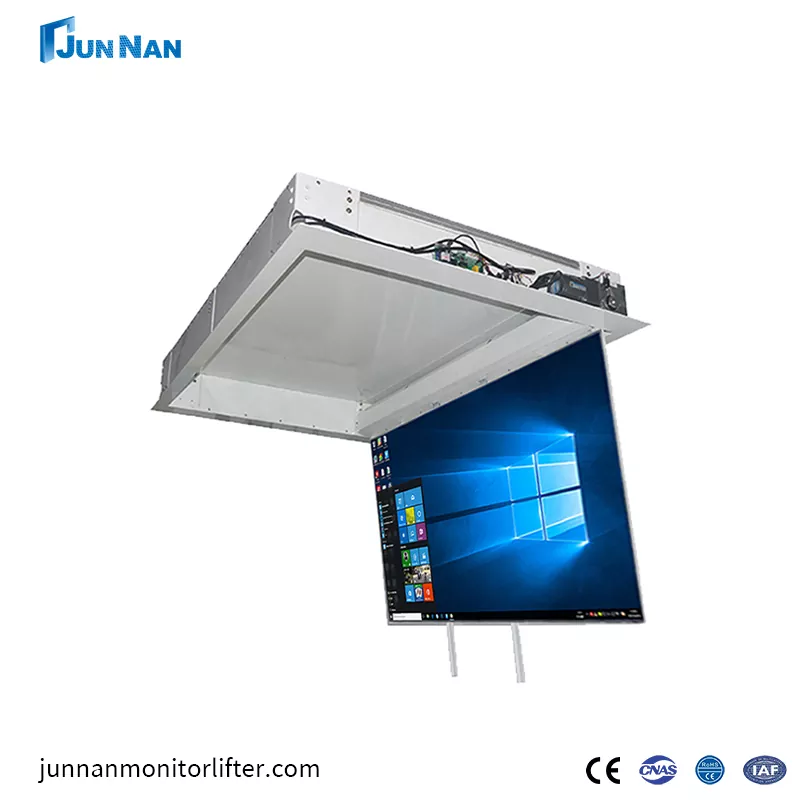
What Problems Does a Ceiling TV Flipper Actually Solve?
I think many buyers first consider a motorized display lift because they are frustrated with conventional mounting methods. A fixed TV bracket may be simple, but it can create long-term compromises in space planning, viewing angles, and design consistency. Once the screen is mounted, the room must often be arranged around it. That is not ideal for people who want a more adaptable environment.
A Ceiling TV Flipper solves several practical issues at the same time:
- It frees up wall space for windows, artwork, shelving, or decorative finishes
- It helps preserve a clean ceiling-line and room symmetry when the screen is hidden
- It creates more flexibility in luxury residences, hospitality rooms, and boardrooms
- It reduces visual clutter by concealing the display when it is not in use
- It supports a more premium user experience through motorized movement and smart control
From my perspective, the biggest value is not only the lifting action itself. It is the freedom that comes with integrating a screen without permanently giving up visual space. That is exactly why this type of solution is increasingly relevant in modern AV design.
How Can Hidden Display Design Improve the User Experience?
When I evaluate AV products for real-world applications, I always pay attention to what the end user experiences after installation. A product might look impressive in a catalog, but if it is noisy, inconvenient, or unstable during everyday use, it quickly becomes a problem rather than a feature.
A properly engineered Ceiling TV Flipper improves user experience in several important ways. First, it allows users to keep their room visually calm until entertainment or presentation time begins. Second, it introduces a sense of automation and ease that feels aligned with high-end interior expectations. Third, it can make a space feel larger and more organized because the display is stored away overhead rather than occupying a constant visual position.
I also think this matters a lot in mixed-use spaces. A hotel room may serve as both a relaxation area and a work area. A conference room may need an open, non-technical appearance for some meetings and a full display system for others. A luxury residence may prioritize minimalist decor during the day but want immersive viewing at night. In all of these cases, hidden screen integration creates a better daily rhythm.
Why Do Designers and Integrators Prefer Ceiling-Mounted TV Mechanisms?
In my experience, designers and AV integrators usually care about more than just the screen movement. They want installation logic, finish compatibility, maintenance convenience, and system coordination. That is why ceiling-mounted mechanisms attract serious project attention. They help solve both design challenges and technical constraints in a single system.
Here are some of the reasons they are often preferred:
- They make better use of underutilized ceiling space
- They support discreet integration in luxury or minimalist interiors
- They reduce the need for visible furniture-based mounting structures
- They work well in places where wall installation is limited or undesirable
- They can be combined with remote control, smart home, or centralized automation systems
I have noticed that this preference becomes even stronger in custom projects. Integrators do not want a product that simply moves. They want one that fits smoothly into the broader AV ecosystem. A dependable Ceiling TV Flipper gives them that confidence because it supports both visual discretion and operational consistency.
Which Product Features Should I Look for Before Choosing a Ceiling TV Flipper?
If I were comparing options, I would never focus on appearance alone. The real purchasing decision should be based on performance, compatibility, safety, and long-term value. Buyers who only ask about price often end up missing the features that affect reliability after installation.
I would recommend checking the following points carefully:
| Feature | Why It Matters | What I Would Check |
| Load Capacity | Ensures the mechanism can support the TV safely | Maximum screen size and weight range |
| Motor Stability | Affects smoothness, noise level, and service life | Movement consistency and motor quality |
| Control Method | Determines how easily users can operate the unit | Remote control, wall switch, RF, RS232, or smart integration |
| Installation Flexibility | Important for different ceiling structures and project layouts | Mounting options and dimensional adaptability |
| Safety Protection | Reduces operational risk during opening and closing | Limit switches, stable stop positioning, secure structure |
| Finish and Concealment | Influences the final visual effect in the room | How neatly the display hides into the ceiling area |
| Maintenance Access | Helps reduce service difficulty later | Ease of inspection and after-sales support |
For me, a good product is one that performs quietly, moves smoothly, fits the intended screen size, and integrates into the room without drawing attention to itself. That is usually what buyers really want, even if they describe it in different words.
How Does a Ceiling TV Flipper Add Value in Different Project Scenarios?
One reason I find this category so useful is that it is not limited to one type of space. The same product logic can serve very different environments, as long as the lifting mechanism is selected appropriately for the project.
| Application Scenario | Main Client Need | How the Solution Helps |
| Luxury Residences | Keep interiors clean and elegant | Hides the screen when not in use and preserves room aesthetics |
| Hotels and Resorts | Improve guest experience without crowding the room | Saves space and creates a premium, modern impression |
| Boardrooms | Maintain a professional room layout | Allows display deployment only when presentations begin |
| Yachts and RVs | Maximize limited space | Uses overhead space efficiently in compact interiors |
| Private Cinemas | Blend technology into custom entertainment design | Supports immersive viewing while keeping equipment discreet |
What I like most is the versatility. Buyers are not investing in a one-dimensional mechanical product. They are investing in a layout solution that improves how the room functions. That is why a Ceiling TV Flipper often makes sense not only for luxury projects, but also for practical spaces where every square meter matters.
Why Does Product Reliability Matter More Than a Low Purchase Price?
I understand why many buyers start by comparing quotations. Budget always matters. But in motorized AV systems, a lower upfront price can become expensive later if the mechanism is unstable, noisy, hard to install, or poorly supported after delivery.
When a hidden TV system fails, the problem is more than inconvenience. It can interrupt hospitality service, delay a project handover, damage user confidence, and create extra labor costs for rework or replacement. This is why I always believe reliability should be treated as a purchasing priority rather than an optional bonus.
A dependable supplier should offer more than a product sheet. Buyers should expect consistent manufacturing quality, responsive technical communication, reasonable customization support, and practical understanding of how the mechanism will be used in real environments. That is also why many professional buyers prefer to work with manufacturers that focus specifically on AV lift systems instead of generic hardware suppliers.
What Makes Installation Planning So Important Before Ordering?
Even the best mechanism can underperform if the installation planning is weak. I often see buyers focus heavily on display size and overlook ceiling depth, structural conditions, control requirements, and service access. Those details matter a great deal.
Before placing an order, I would usually confirm the following:
- Screen size and exact weight
- Ceiling structure and available installation depth
- Power supply requirements
- Control preferences such as remote, switch, or automation integration
- Desired opening angle and viewing position
- Maintenance accessibility after installation
- Interior finish expectations for concealed integration
Good planning makes procurement easier, installation smoother, and final results more predictable. It also reduces misunderstandings between designer, contractor, integrator, and end client. In my view, this is where an experienced supplier can make a real difference by helping the buyer align specifications before production and delivery.
How Can I Tell Whether a Supplier Understands Real Buyer Needs?
I think the answer is simple. A serious supplier listens to application details instead of pushing a one-size-fits-all product. If I ask about screen compatibility, operation control, installation depth, or project use case, I expect clear and practical answers. I do not want vague promises. I want technical clarity that supports my purchasing decision.
That is one reason a specialized manufacturer such as Guangzhou Junnan Audiovisual Technology Co,.Ltd. can draw attention from buyers who need more than standard catalog hardware. In this market, real value comes from understanding concealed AV requirements, product adaptation, and the practical realities of installation. Buyers are often looking for a partner that can help them reduce risk, not just ship a unit.
When I assess supplier credibility, I usually look for these signs:
- Clear understanding of project-specific requirements
- Stable focus on AV lifting and concealment solutions
- Willingness to discuss dimensions, control options, and load range
- Ability to support customization or tailored recommendations
- Responsive communication before and after the sale
That combination matters because concealed AV systems are not impulse purchases. They are specification-based buying decisions that require confidence at every stage.
Could a Ceiling TV Flipper Be the Better Long-Term Investment for Modern Spaces?
I believe the answer is yes for many projects, especially where visual order, flexibility, and user experience matter. A fixed display may still work in simple environments, but it cannot offer the same hidden integration, space efficiency, or premium feel. As interiors become more refined and multifunctional, the value of concealed motorized display systems becomes easier to recognize.
A well-chosen Ceiling TV Flipper helps buyers solve practical room-planning problems while also supporting a cleaner design language. It allows technology to remain available without being constantly visible. That balance is exactly what many modern clients are asking for today.
If you are planning a residential, commercial, hospitality, or marine AV project and want a smarter way to integrate screens without compromising the room design, now is the right time to evaluate the right solution. Contact us to discuss your project requirements, screen size, installation environment, and control preferences. The right product choice starts with the right conversation, and we are ready to help you find a Ceiling TV Flipper solution that fits your application with confidence.